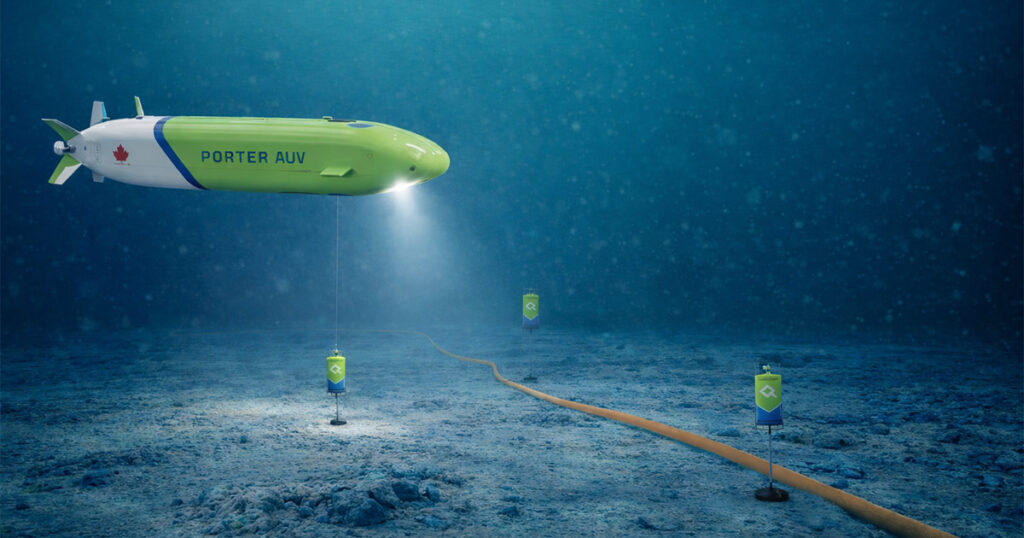
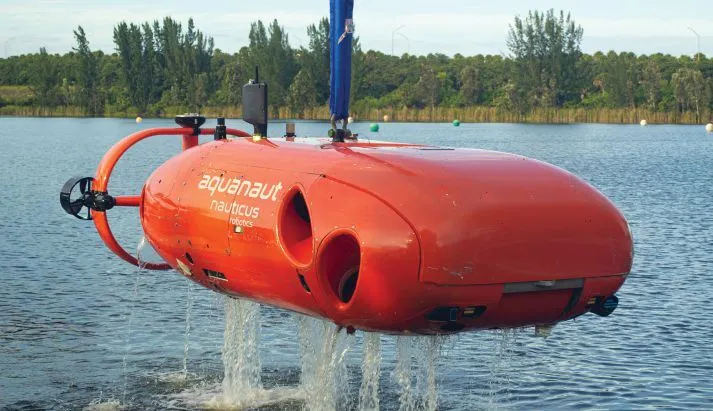
At the center of this effort is the Aquanaut®—Nauticus’ flagship autonomous subsea robot—paired with the company’s advanced Nauticus ToolKITT™ software suite. Together, these systems have been operating subsea for the past two years and are now entering the early stages of consistent, successful hardware inspection.
In 2024, Aquanaut® completed its first commercial project, gathering data for multiple clients on subsea infrastructure across the Gulf of Mexico. In 2025, the system expanded its capabilities even further, including a milestone test to 2,300 meters water depth. Each round of testing brings new challenges, but they are the essential steps toward achieving fully autonomous, reliable subsea inspections.
THE TESTING CHALLENGE
One of the biggest hurdles in developing autonomous inspection capabilities is the sheer cost and complexity of offshore testing. Vessel time is expensive, and adapting software in real time to unpredictable ocean environments makes iteration slow and costly.
Attempting to tackle this challenge head-on led to strategic collaboration with Advanced Ocean Systems (AOS), based in Stuart, Florida. AOS specializes in the engineering and integration of autonomous systems and intelligent robotics into the at-sea operations of the defense, offshore energy, seabed infrastructure, and scientific markets, and so directly aligns with Nauticus Robotics’ focus on advancing subsea autonomy. Under a Memorandum of Understanding, the two companies began to collaborate on shared opportunities to scale momentum in this space.
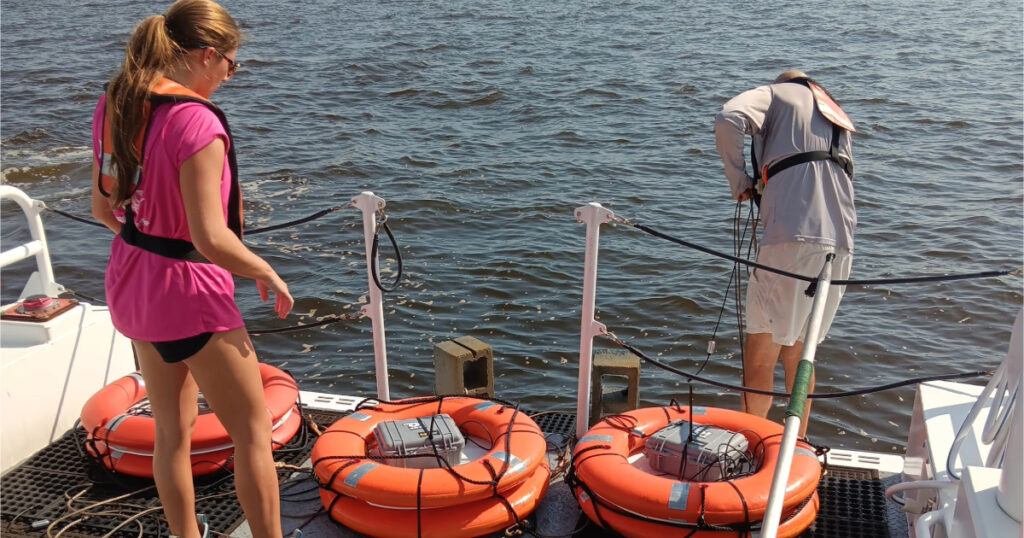
AOS’s group of companies has full and immediate access to a substantial and protected freshwater test lake—50-feet deep and large enough to simulate full offshore operations.
This is the ideal marine environment for rapid, consistent testing. Since early October 2025, one of Nauticus Robotics’ Aquanauts® has taken up residency in Florida and averaged 40+ hours of in-water trials each week, allowing for comprehensive testing schedule at a pace and cost impossible to achieve offshore.
Why does this matter? Because in-water hours are directly tied to field readiness. The insights gained cannot be replicated through simulation alone. The testing allows for realtime parameter changes, data quality and analysis, and operational consistency.
OPERATIONAL WORKFLOW TESTING
The Stuart test site has become a subsea proving ground for Nauticus Robotics, with operators onsite working seamlessly with a remote group of engineers based out of our Houston HQ replicating and demonstrating real-world, real-time client workflows at a fraction of the cost.
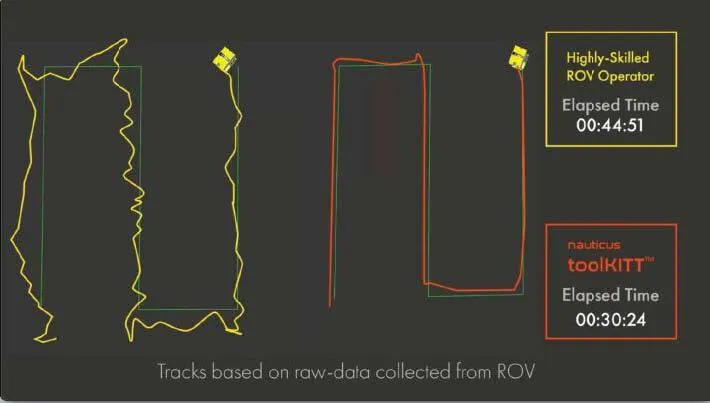
For example, the team is currently developing tetherless, autonomous mooring line inspections. A sample section of mooring line—matching offshore platforms—has been installed in the lake. This allows Aquanaut® and Nauticus ToolKITT™ to repeatedly test perception-driven line-following, data capture, and the definition of operational procedures. With low-cost access, these workflows can be run dozens of times per week, refining parameters, validating sonar and visual data quality, and preparing the system for performance in the field.
Current lake-based development includes:
- Vertical inspections: mooring lines, chains, and risers
- Orbiting and tracking behaviors
- Upcoming tests for pipe and cable tracking
This rapid-iteration environment significantly accelerates capability development—something offshore operations could never achieve at similar cost or frequency.
Just as importantly, Nauticus Robotics is building these workflows in direct collaboration with our end clients, offshore operators planning to bring the technology into their fields as early as Q1 2026. Data standards, testing protocols, and operational procedures are being co-developed to ensure a seamless transition from a dynamic testing environment to offshore deployments in active sites.
USV-ENABLED REMOTE OPS
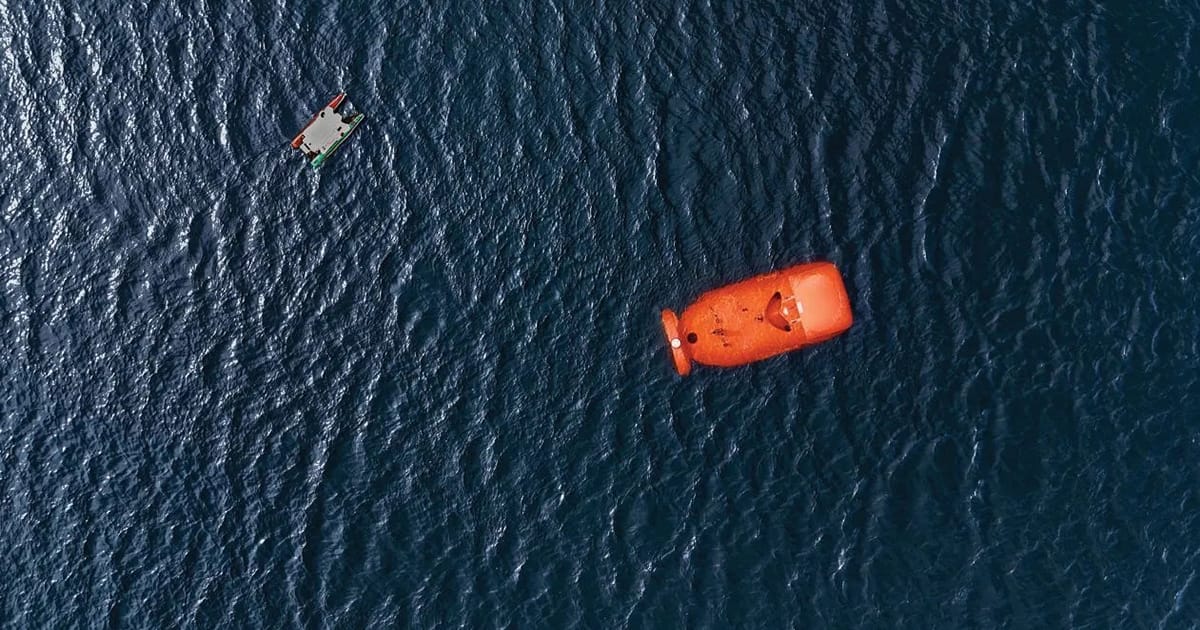
The collaboration with the AOS group of companies, which includes premier designer and manufacturer of uncrewed surface vehicles (USVs) SeaRobotics, has also presented the unique opportunity to run a series of exercises with Aquanaut® interacting with various USVs equipped with acoustic modems and USBL navigation. This pairing allows both systems to launch directly from shore—enabling nearshore inspections without requiring a vessel at all.
The implications of a scaled solution of this nature are significant and include an exponentially reduced operational footprint; lower costs; greater safety, and increased access to near-shore assets.
Offshore testing planned for 2026 will define operational ranges, but current projections show Aquanaut® could deploy from shore, operate up to 40 km offshore, complete its mission, and return—all on a single charge. With the continued diversification of the USV industry, both in terms of form and factor, all but guaranteed in the coming years, the potential for AUVs like Aquanaut® to work collaboratively with other surface-based autonomous systems brings an entirely new dynamic to the potential of multitasking, over-the-horizon missions.
DEFINING THE FUTURE
The future of ocean technology is not a far-off frontier or concept that we must grapple with to realize—it’s already here. Now is the time to scale and commercialize what we know works and what we know developers are looking for to transform offshore operations with safety and efficiency top of mind. Nauticus Robotics is now leveraging the Aquanaut® and Nauticus ToolKITT™ platforms to demonstrate what next-generation subsea operations will look like.
The benefits present a win-win for all ocean stakeholders:
- Drastically reduced environmental footprint
- Fewer personnel exposed to dangerous offshore conditions
- Higher quality, richer data for more informed decision-making
Autonomous subsea operations are becoming a reality, and Nauticus Robotics is helping define how the industry gets there.
This feature appeared in ON&T Magazine’s 2026 January Special Edition, The Future of Ocean Technology Vol. 6, to read more access the magazine here.