For ocean industries, from offshore energy and research to marine infrastructure and defense, the implications are clear: smaller sensors and vehicles are now expected to perform under pressure, repetitively and in diverse environments.
At General Oceans, an underwater technology group comprised of Nortek, Tritech International Ltd, Klein Marine Systems, Reach Robotics, Strategic Robotic Systems, and RS Aqua, developing new technology has been a focus of 2025 with new products set to hit the market in the future.
RELIABLE SUBSEA POSITIONING
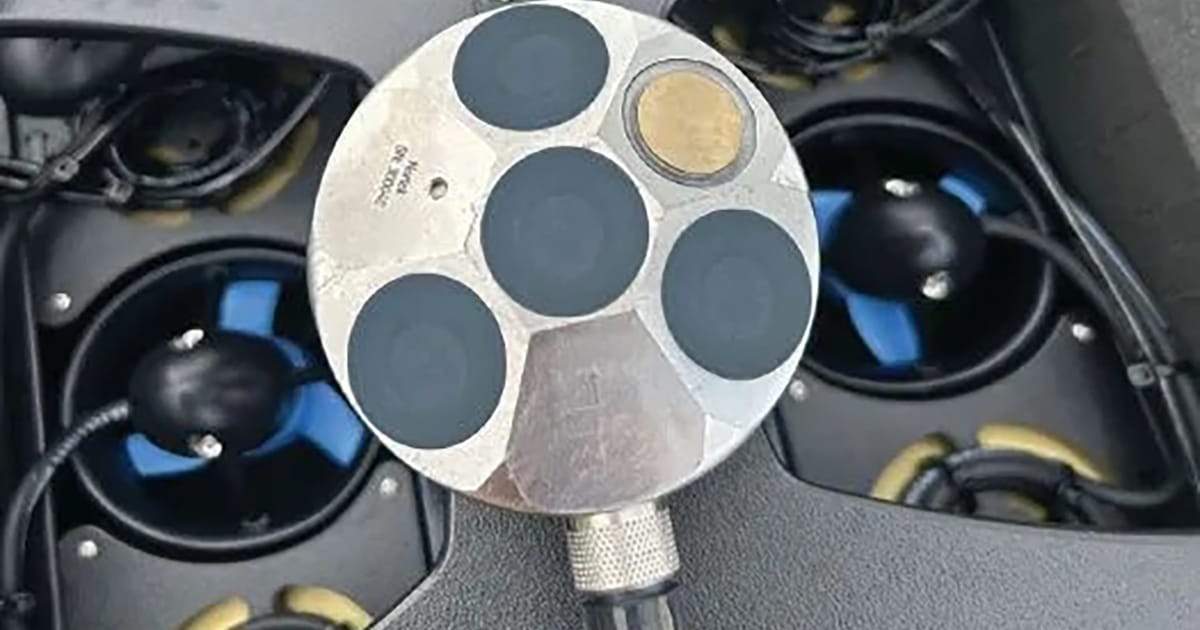
Navigation is integral for any successful underwater intervention mission and General Oceans’ leading brand, Nortek, specializes in making accurate navigation of subsea vehicles possible. For example, the Nucleus 1000 from Nortek combines Doppler Velocity Log (DVL), AHRS/INS and altimeter/pressure sensors into a compact unit, specifically optimized for smaller ROVs and AUVs.
For AUV navigation, the Nucleus 1000 can be paired with Tritech International Ltd’s MicronGemini: a compact multibeam imaging sonar designed for navigation and obstacle avoidance. By identifying obstacles using sonar technology, collisions can be avoided and underwater vehicles protected, which can mean less expensive operations and increased vehicle longevity.
BROAD AWARENESS TO CLOSE INSPECTION
Underwater imaging is an essential part of many underwater operations, with water visibility often too low to rely on cameras. Advancements in imaging sensors can enable faster operations: an operator can deploy to locate a target, then perform a detailed inspection without swapping out sensors, due to the availability of dual frequency sonars. This reduces deployment time, allows for a smaller vehicle size and can enable greater mission agility.
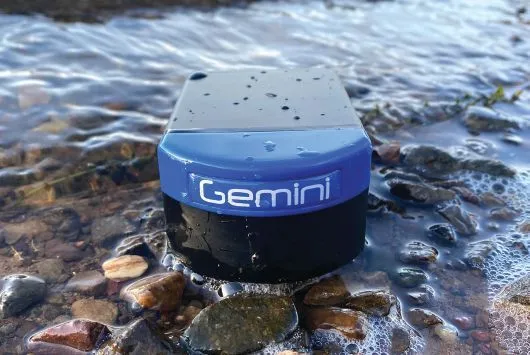
The Gemini range from Tritech offers compact multibeam imaging for small vehicles, with high beam counts and angular resolution suited for real-time obstacle avoidance and inspection tasks. In early 2025, Tritech launched the Gemini 1200id: a deep rated, dual frequency multibeam imaging sonar often used by larger Work Class Vehicles and ideal for depths of up to 4,000 m.
UNDERWATER DEXTERITY
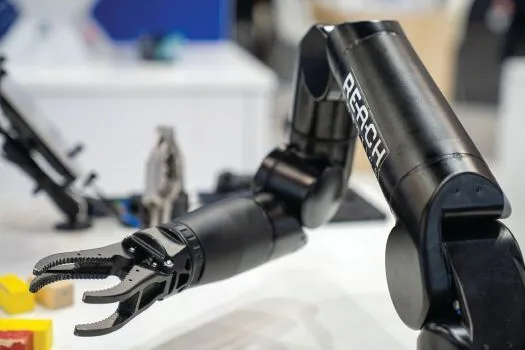
Designed for human-like dexterity, modularity and lightweight form-factors, the Reach X series of modular manipulators has been widely adopted by commercial and defense users for routine tasks such as valve turning, unscrewing shackles, cleaning structures and intervention on portable platforms.
Throughout 2025, we saw increased reliance on manipulators for underwater operations reliant on intervention class vehicles. Today, more than ever, manipulators are seen as the preferred tool for executing standard subsea intervention work—not just exceptional tasks.
For operators this can mean smaller crews, shorter mobilization, less logistical complication and greater mission flexibility. The industry adoption of electronic manipulation is underway and a key focus for Reach Robotics is ensuring tasks can be repeated reliably with intervention-class platforms.
SYSTEMS INTEGRATION
A significant evolution in the intervention class of underwater vehicle is the increasing integration of intelligent navigation sensors, imaging sonars, and electric manipulators into coherent platforms rather than individual technologies operating separately. Systems like the FUSION ROV from Strategic Robotic Systems combine a flexible sensor suite (made up of imaging and navigational sensors as well as some optional add-ons), easy-to-control electric manipulators, and a user-friendly interface to aid field-ready deployment.
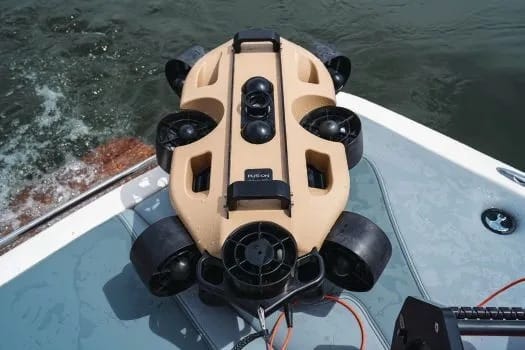
FUSION offers users both an ROV mode for active control and an AUV mode to enable more autonomous operations. The battery-powered system is the only hybrid ROV with a Nadir gap-filling technology. With so much innovation packed into such a compact form (the unit can be transported as excess checked baggage, the real-world value of this integration lies in reduced operator training time, fewer custom configurations, and faster mobilization.
2026 & BEYOND
For subsea operators supporting critical underwater activities, the demand for versatile platforms that are both easily to deploy and dependable in a range of marine environments appears to be growing. General Oceans’ brands work closely with end users to understand their needs and offer robust, reliable tech which can be integrated into varied platforms.
In 2025, General Oceans’ brands have worked hard to develop new technologies to further support their customers as underwater operations become more complex, with these developments set to further enable the underwater operations of the future.
This feature appeared in ON&T Magazine’s 2026 January Special Edition, The Future of Ocean Technology Vol. 6, to read more access the magazine here.