INNOVATION COMMUNITY
For more than 60 years the Marine Technology Society (MTS) has served precisely this purpose. From the beginning, MTS was built on the belief that ocean innovation doesn’t happen in isolation. Successful ocean innovation requires a connected community willing to identify challenges, test ideas, share data, and work together to build the technology and talent pipelines that can be used to solve tough marine problems. Our founders created a place where engineers, scientists, operators, and policymakers could come together to guide the shared growth of the sector. Over time, that approach shaped standards, informed best practices, and helped the broader community develop and deploy cutting-edge technologies.
That work continues today, though the landscape looks different. The ocean economy, which now includes major defense, security, energy, fisheries, and mineral verticals, is at the center of national and global conversations. With that shift comes a broader set of expectations. MTS can’t just convene people—though convening remains vital—we also must help the community see what’s coming and prepare for it. In practice, that means leaning into next-generation technology development, articulating competency standards, strengthening workforce pathways, and helping translate technical reality into regulatory and policy frameworks that make sense.
NAVIGATING CHANGE
MTS’s programs reflect this broader mission. The MATE ROV Competition is producing an ocean-ready workforce with hands-on technical skills. Ocean Exchange is investing scaling capital directly to innovators and early-stage companies. Our Ocean Enterprise Initiative is strengthening the entire business ecosystem by improving data, coordination, and shared understanding. And in our sections and committees, members are advancing the technical foundations of the field every single day.
The Ocean Economy will only become more complex in the years ahead. Meeting that moment will require organizations that can see the whole picture and help the community navigate it with a long-term view. That’s the role professional societies are uniquely positioned to play and it’s the work MTS has been doing for decades. I invite all who work on and for the ocean to engage with communities like MTS—because shaping the future requires all of us, working together, to build and maintain it.
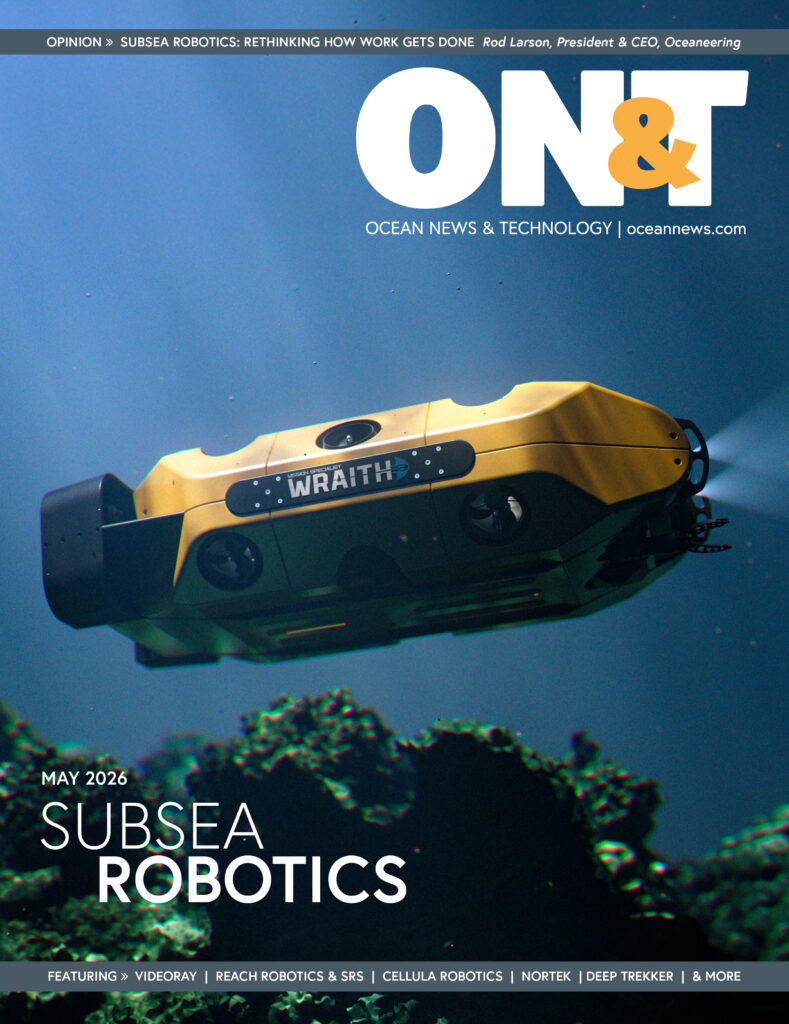
This spotlight appeared in ON&T Magazine’s 2026 January Special Edition, The Future of Ocean Technology Vol. 6, to read more access the magazine here.