Real-WorLD Threats
In the Arctic for example, melting ice is opening new transit routes, increasing submarine activity and demand for persistent, covert underwater monitoring over vast areas and anti-submarine warfare (ASW). Manned platforms lack the endurance and stealth to sustain continuous presence, while satellites and surface assets offer limited subsurface visibility. Extreme remoteness, harsh weather, and limited infrastructure make frequent recovery, refueling, or mothership support impractical.
Beyond the Arctic, chokepoints such as the Strait of Hormuz highlight how quickly undersea threats can disrupt global trade. Modern naval mines are increasingly advanced, with low signatures and sophisticated triggering mechanisms, requiring persistent mine countermeasures (MCM), surveillance and rapid re-survey to ensure safe passage.
At the same time, the legacy of unexploded ordnance (UXO) remains a significant challenge. Large quantities of munitions from the World Wars continue to pose risks to offshore infrastructure, shipping, and energy development, demanding sustained, high-resolution seabed mapping.
Across ASW, MCM, and UXO missions, the need is clear: long-range, persistent, and autonomous undersea monitoring in environments where traditional assets cannot operate effectively.
How the GREYSHARK™ could be deployed in swarm formation in the Strait Of Hormuz
Extending Subsea Endurance
Advancing Swarm Capabilities
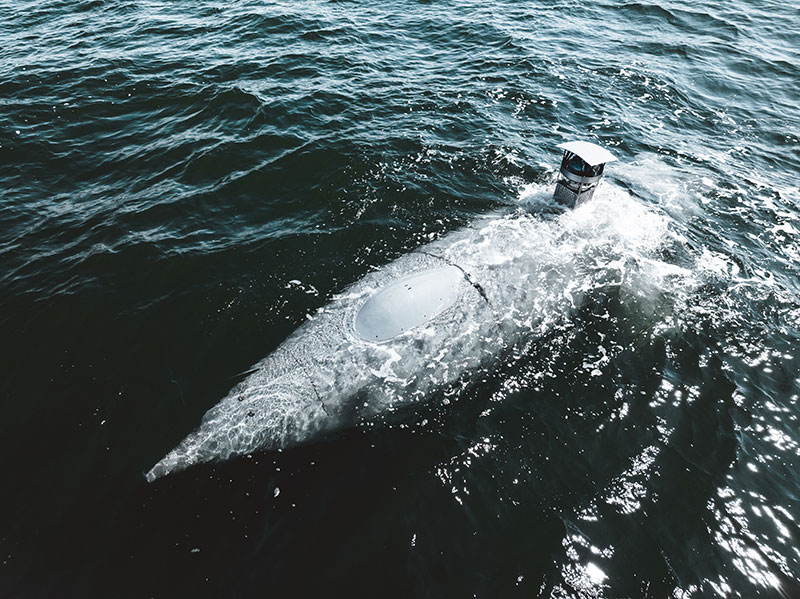
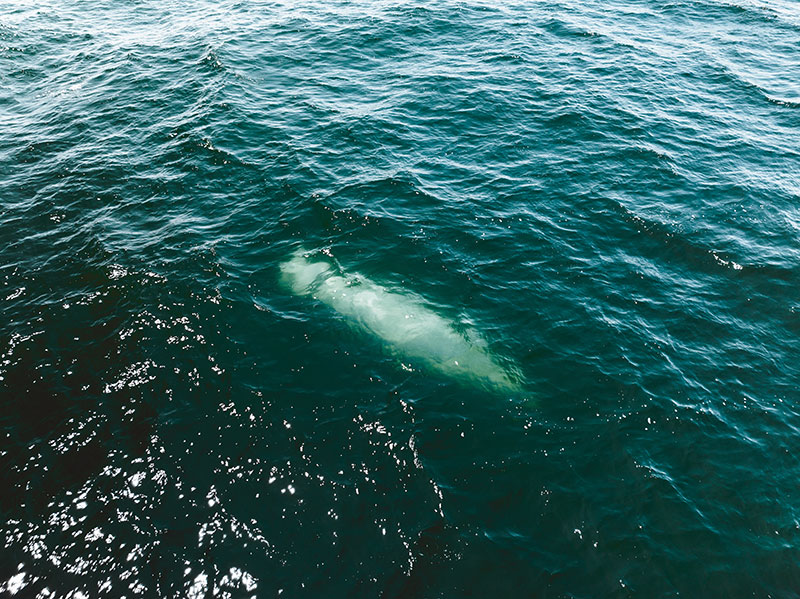
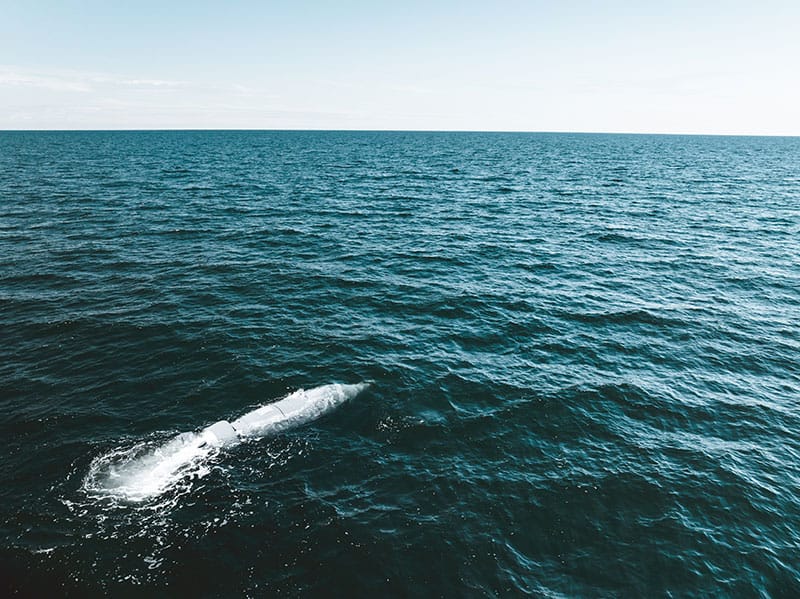
The company has developed two versions of the GREYSHARK™ AUV: Bravo (battery-powered) and Foxtrot (hydrogen fuel cell-powered). Both variants possess level 5 autonomy and swarming capability, with a difference in maximum endurance (5 days versus 16 weeks respectively). The AUVs can autonomously change its mission, avoid obstacles, and classify targets without operator intervention.
Speaking exclusively to ON&T, EUROATLAS Chief of Strategy and Partnerships Officer Verineia Codrean said: “We cannot deter what we cannot track. The need for long-range autonomous underwater vehicles is greater than ever, and NATO’s ability to fight hybrid war is lagging behind modern threats. In contested regions like the Arctic, navies simply do not have the luxury to recall or refuel undersea drones or deploy motherships to command them. GREYSHARK operates as a persistent swarm, monitoring vast ocean areas in real time, enabling full attribution and deterring grey-zone attacks on critical infrastructure.”