Extending Reach & Endurance
For decades, most ROV operations have depended on large, Dynamic Positioning (DP) class surface vessels. That model remains effective, particularly for complex offshore campaigns, but it also comes with high operating costs, significant emissions, and the safety considerations associated with maintaining personnel offshore. Using an XLAUV as a subsea deployment platform offers a different operating model, one that could reduce vessel dependence for certain classes of intervention tasks while extending reach and endurance.
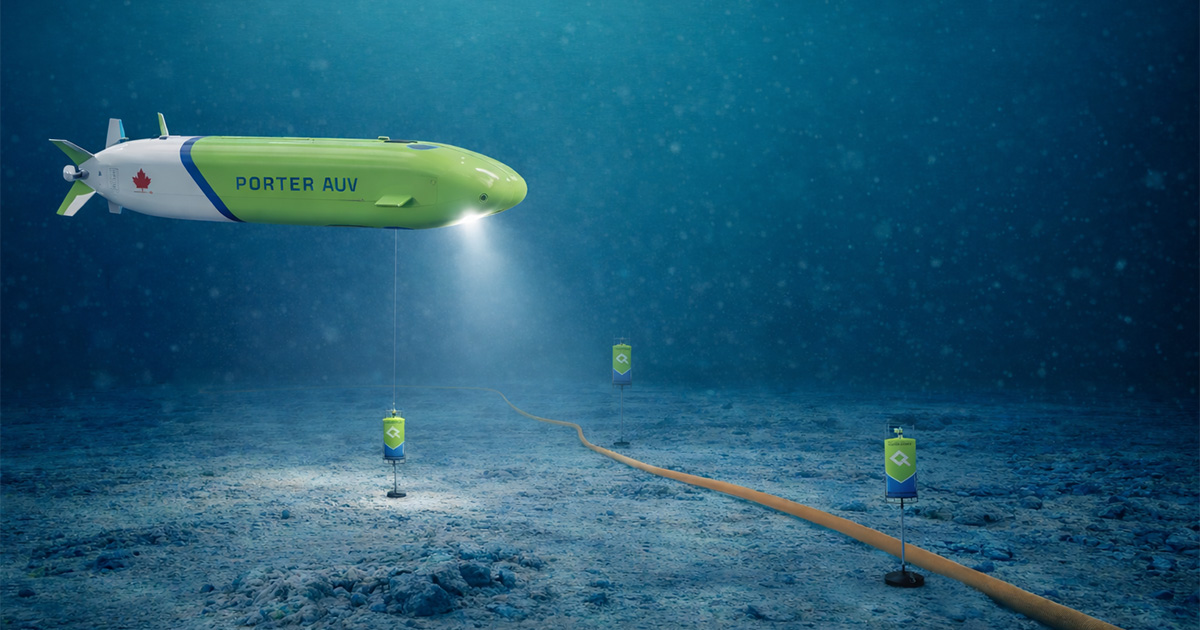
A recent offshore demonstration on Canada’s Pacific coast provided an early indication of what this model can look like in practice. In the trial, Aberdeen-based Honu-Worx deployed a Seatronics VALOR ROV from a Cellula Robotics Porter XLAUV®. The entire operation was managed from a shore-based control center using cloud-based software and satellite communications. More than a standalone technical milestone, the demonstration helped validate a different architecture for subsea intervention: one in which a long-endurance autonomous vehicle can transport, position, and support a remotely operated system at range.
A Safe & Cost-effective Transition
The potential advantages are both economic and operational. In conventional offshore intervention, the support vessel typically represents the largest share of campaign cost and major contributor to emissions associated with subsea inspection, repair, and maintenance (IRM). A long-endurance XLAUV, particularly one powered by hydrogen fuel cell, creates the possibility of conducting missions with reduced reliance on large support vessel.
Porter XLAUV®, for example, is a hydrogen fuel cell powered vehicle designed for longrange operations capable of up to 5,000 km range at 3 knots and endurance up to 45 days, depending on mission configuration. That kind of persistence could allow direct transit from port to remote sites such as offshore wind developments or deepwater assets. This transition not only slashes daily operational costs but also offers a pathway to decarbonization, with the potential to save thousands of tonnes of CO2 emissions per vessel displaced annually.
There are also safety benefits to this model. Moving pilots and technical specialists from an offshore vessel to a shore-based remote operations center can reduce personnel exposure to offshore transfers, vessel motions, and other risks associated with working at sea. At the same time, because an XLAUV operates below the surface, subsea operations may be less affected by wave conditions than conventional surface- launched systems. This all-weather capability ensures higher reliability for critical infrastructure inspections.
Advancing Supervised Autonomy
The integration of ROVs into XLAUV platforms represents the next stage of supervised autonomy. In this model, the XLAUV performs the long-range transit and subsea positioning autonomously, while the ROV is reserved for higher-precision inspection and intervention tasks. Key technical considerations remain, particularly around communications and power management. Communications can be enabled through wireless links and satellite connectivity via deployable buoyant communications arrays, while advances in marinized fuel cell technology are helping provide the endurance and onboard energy needed to support longer, more capable missions.
For the subsea sector, the significance is clear. Ship-free intervention is no longer only a conceptual ambition. Early demonstrations suggest it can become a practical operating model for selected use cases, with meaningful implications for cost, safety, emissions, and offshore reach. As these systems mature, XLAUV-enabled intervention may become an increasingly important part of how the industry approaches subsea inspection and light intervention at range. cellula.com