
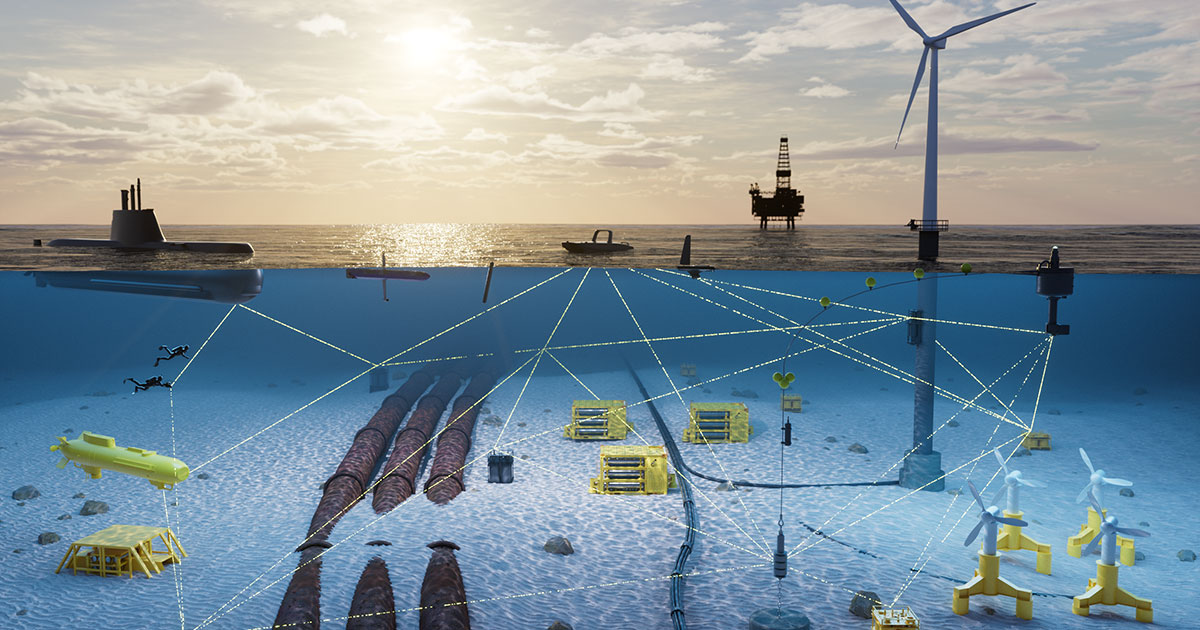
One of the greatest difficulties lies in the operating environment itself. The underwater domain is vast, difficult to access and only partially observable. Conventional protection concepts quickly reach their limits when assets are distributed across hundreds of kilometers of seabed or located in remote offshore areas. The need is therefore for technological solutions that enable persistent surveillance, early threat detection, and rapid response—ideally in an autonomous, scalable, and cost-effective manner.
This is precisely where the Gabler Group, together with its companies GABLER, SubCtech, DEVELOGIC and, provides an integrated response. The Group combines robust underwater systems, enduring energy supply, reliable communications, and a sovereign digital intelligence layer. The objective is not merely to collect more data, but to make the underwater domain continuously observable, understandable, and operationally actionable across different sensors, platforms, and manufacturers.
Persistent Presence Not Occasional Surveillance
Protecting underwater infrastructure begins with the ability to continuously monitor activities within the maritime environment. While conventional patrols or individual inspection missions provide only isolated snapshots, modern security concepts require a persistent presence throughout the operational area.
Autonomous and unmanned systems play a central role in achieving this objective. They can collect information over extended periods, document environmental changes, and identify potential threats without requiring personnel to remain permanently on site. For operators of offshore facilities and authorities responsible for monitoring vast maritime areas, this represents a significant operational advantage.
GABLER contributes decades of expertise in military underwater technology. The company’s experience in developing highly robust submarine systems provides the technological foundation for next-generation autonomous maritime operations. The focus extends beyond individual platforms to the integration of diverse sensors, carrier systems, and operational assets into a comprehensive, networked system.
Autonomous underwater vehicles (AUVs), for example, can perform regular inspections of designated security zones, monitor critical infrastructure or document suspicious activities. Combined with autonomous surface vehicles (ASVs), they create a multi-layered operational picture that enables earlier detection of potential threats.
Energy as the Key Enabler
One of the greatest challenges facing autonomous underwater systems remains reliable energy supply. The longer sensors, communication nodes, and autonomous vehicles can operate without maintenance, the more effective and economically viable underwater surveillance concepts become.
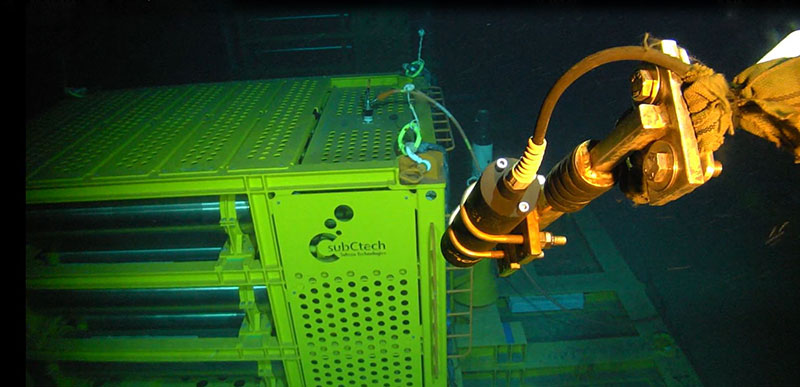
SubCtech plays a pivotal technological role in this field. The company develops high-performance lithium-ion battery systems and subsea energy platforms designed for demanding offshore and defense applications. These systems enable extended operational endurance under harsh environmental conditions while providing the foundation for permanently available underwater sensor networks.
This capability is becoming increasingly important for protecting critical infrastructure. Distributed seabed sensors, stationary monitoring systems, and autonomous inspection vehicles all require reliable power supplies to remain operational for weeks or even months without intervention. Advanced battery technologies provide the necessary endurance while simultaneously meeting stringent requirements for safety, reliability and operational resilience.
Furthermore, combining advanced energy systems with intelligent sensor technologies creates entirely new opportunities for maritime security architectures. Permanently deployed sensor platforms can continuously monitor environmental conditions, vessel movements, and unusual underwater activities, providing early indicators of potential threats.
Networked Sensor Systems
Collecting data alone is not sufficient. The decisive factor is the ability to connect distributed assets and combine information from multiple sources into a reliable and actionable operational picture.
This is where DEVELOGIC’s communication and networking technologies complement the capabilities of the Gabler Group. Underwater communication systems connect fixed sensors, autonomous vehicles and other maritime assets into an integrated surveillance network. Information can be exchanged almost in real time and made immediately available for operational assessment.
The result is a continuous flow of mission and sensor data. Yet connectivity is only the first step: the information must also be harmonized, geospatially contextualized, and assessed across time, systems, and organizational boundaries. This is the point at which ‘s digital capabilities become a central element of the overall architecture.
Trusted Underwater Common Operational Picture
As the number of autonomous systems continues to increase, so does the volume and variety of data. Sonar, bathymetry, video, platform telemetry, environmental measurements, and historical mission data frequently originate from different suppliers and arrive in different formats. Operators, therefore, require a common digital layer that can integrate these sources without creating dependence on a single sensor or platform ecosystem.
north.io provides this vendor-neutral integration and intelligence layer. Its Ocean Big Data and geospatial analytics capabilities ingest, manage, harmonize, and contextualize data from heterogeneous underwater systems. Advanced analytics and AI-supported processing help identify changes, anomalies and recurring patterns, transforming individual sensor readings into a persistent and trusted Underwater Common Operational Picture.
This approach supports the entire operational cycle—from mission planning and tasking to monitoring, assessment, and response. It also strengthens data sovereignty: sensitive information remains under the control of the respective organization while selected insights can be shared securely with authorized partners. Drawing on experience in defense, mine countermeasures, and critical underwater infrastructure, enables civil operators, public authorities and armed forces to move from isolated data products towards cross-system decision support.
An Integrated Approach
The future protection of critical underwater infrastructure will not depend on individual technologies, but on their intelligent integration. Autonomous systems, resilient energy supply, distributed sensor networks, secure communications, and sovereign data intelligence must work together as part of a holistic security architecture.
The Gabler Group follows precisely this integrated approach: GABLER contributes underwater systems and operational expertise; SubCtech provides subsea energy solutions; DEVELOGIC connects and monitors distributed assets; and creates the manufacturer-independent data and intelligence layer across them. Together, these capabilities cover the chain from sensing and endurance to connectivity, understanding and action.
At a time of growing geopolitical tensions and increasing dependence on maritime infrastructure, the ability to connect heterogeneous systems and create a reliable underwater operating picture is becoming a decisive factor for national resilience. The combination of physical subsea capabilities with’s sovereign digital layer enables earlier threat detection, faster assessment and more informed response—while preserving the openness and independence required in a rapidly consolidating underwater market.
