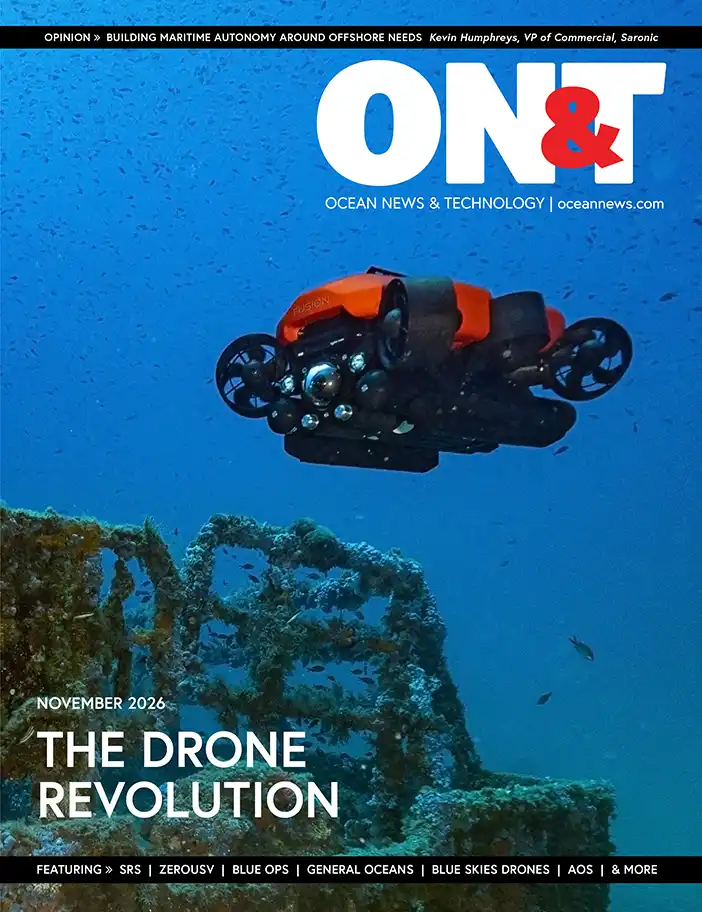
QYSEA’s FIFISH inspection-class ROVs provide a practical solution for inspecting submerged infrastructure, collecting critical data, and performing selected maintenance tasks while reducing the need for routine diver deployments.
Reducing Costs & Dive Time
Underwater inspections can involve significant expenses associated with dive teams, vessel support, mobilization, and operational downtime.
Inspection-class ROVs allow operators to examine offshore platform structures, pipelines, vessel hulls, propellers, and submerged equipment using high-definition cameras, powerful lighting, and integrated or accessory sonar systems.
Sonar provides additional situational awareness in low-visibility environments, helping operators locate structures, identify potential hazards, and navigate when cameras alone are insufficient.
By conducting preliminary assessments and routine inspections remotely, maintenance teams can identify problems, prioritize repairs, and reduce unnecessary dive deployments.

Specialized Tools Expand ROV Capabilities
Modern inspection-class ROVs are evolving beyond visual inspections through specialized sensors and intervention tools.
QYSEA ROV platforms can be configured with compatible equipment for cathodic protection (CP) measurements and ultrasonic thickness (UT) testing. CP measurements help assess corrosion protection on submerged metallic structures, while UT measurements provide valuable information about material thickness and potential deterioration.
For marine cleaning applications, compatible cavitation cleaning systems can remove marine growth and accumulated deposits from underwater surfaces. These tools support targeted cleaning of hulls, structural components, and inspection areas without requiring a diver for every cleaning operation.
Robotic manipulators further expand capabilities by allowing operators to retrieve objects, handle equipment, and perform selected light intervention tasks.
Together, these technologies provide maritime operators with versatile underwater inspection and maintenance solutions.
Commercial divers remain essential for complex repairs and specialized underwater operations. However, ROVs can perform preliminary assessments, routine monitoring, cleaning, and post-maintenance verification while keeping personnel at the surface.
For offshore platforms and shipyards, this means fewer unnecessary diver exposures, better maintenance planning, and potentially shorter operational interruptions.
As inspection-class ROV technology advances, maritime organizations can establish underwater inspection capabilities without investing in large work-class systems.
Blue Skies Drones works with QYSEA to provide inspection-class ROVs, specialized sensors, cleaning tools, rentals, training, and technical support.
By combining visual inspection, sonar, CP and UT measurements, and light intervention capabilities, these systems help maritime operators reduce costs, save dive time, and improve safety.
The future of underwater inspection is not simply seeing below the surface. It is collecting actionable data and performing meaningful work without putting personnel unnecessarily at risk.