The General Oceans portfolio, which includes Nortek, Tritech, Klein Marine Systems, Reach Robotics, Strategic Robotic Systems, and RS Aqua, consists of teams of engineers and product specialists who work to develop technologies that extend the limits of what is possible in our oceans.
RELIABLE NAVIGATION
In subsea operations, there is huge value and requirement in achieving more with fewer resources: fewer people offshore, reduced vessel time, and greater operational efficiency. It involves equipping autonomous and remotely operated systems with the awareness and intelligence required to operate independently while maintaining absolute confidence in their data and positioning. The integration of navigation and obstacle avoidance technologies sits at the center of this evolution.
Reliable navigation ensures that an autonomous underwater vehicle (AUV) knows where it is and where it is heading. Obstacle-avoidance systems ensure that it can recognize and safely maneuver around hazards in its path. Together, they form the operational backbone of safe and efficient remote missions—whether mapping a harbor, inspecting critical infrastructure, or surveying a coastline.
Accurate subsea navigation has long presented a complex technical challenge. Traditional GPS signals do not penetrate the water column, and using inertial systems alone can accumulate drift over time. For AUVs operating continuously for hours or days without surfacing, navigational confidence is essential.
PINPOINT POSITIONING
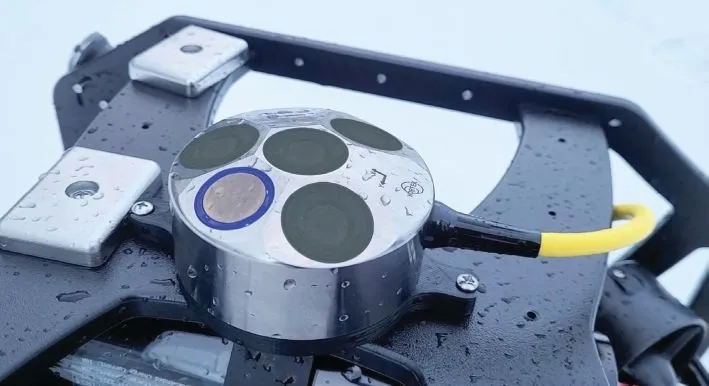
The Nortek Nucleus 1000 navigation sensor addresses this challenge by integrating velocity, temperature and pressure measurements with inertial sensors into a single compact package. The system calculates the vehicle’s position by combining accelerometer, gyroscope, and magnetometer data with precise velocity measurements derived from Nortek’s Doppler Velocity Log (DVL) technology. When these data are fused using onboard navigation algorithms, the Nucleus 1000 offers a positional accuracy of 2% Distance Traveled (DT), offering quality navigation sensor performance to even the smallest vehicles.
For vehicle manufacturers, the Nucleus 1000 offers both simplicity and precision. It eliminates the need to integrate multiple sensors from different suppliers while achieving reliable navigation accuracy. For operators, the benefits include consistent navigation accuracy, reliable data collection even when the seabed is out of range, and reduced integration effort due to the Nucleus 1000’s pre-synchronized sensors. The Nucleus offers reliable bottom track as close to 0.1 m from the seabed or at ranges up to 50 m, reducing positional uncertainty. Navigation systems such as the Nucleus 1000 not only enable autonomy but also lessen the operational burden on human teams.
SITUATIONAL AWARENESS
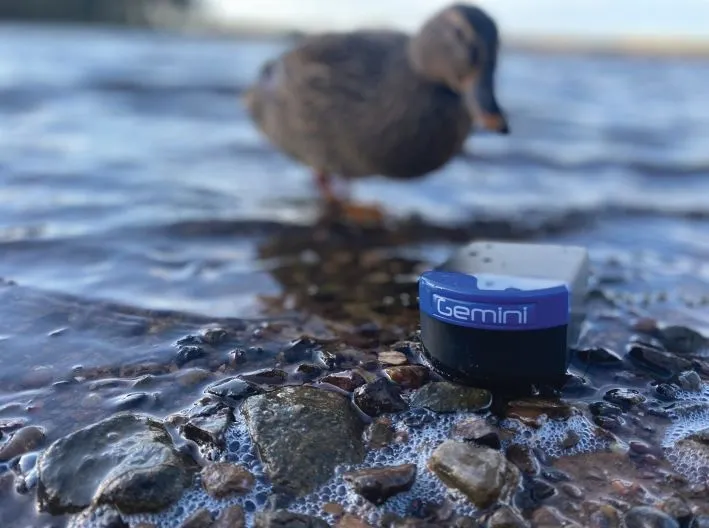
While navigation sensors help to inform a vehicle of its location, situational awareness ensures its safety enroute. In complex underwater environments such as ports, wind farms, or subsea structures, AUVs must detect and avoid obstacles in real time to prevent damage and downtime. This is the role of Tritech International’s MicronGemini multibeam imaging sonar.
Designed for small AUVs and remotely operated vehicles (ROVs), it provides realtime acoustic imaging that enables operators, or the vehicle itself, to identify and avoid obstacles ahead. Its wide field of view and rapid update rate allow for the detection of objects and terrain changes even in turbid or low-visibility conditions where optical systems are ineffective.
The MicronGemini’s compact design and low power consumption make it ideal for integration with smaller, more agile platforms. By imaging potential hazards, it supports autonomous and manually controlled systems to adjust course, avoid collisions, and maintain mission integrity. When integrated into the AUV’s control system, the sonar becomes part of an intelligent loop, continuously informing both navigation and decision-making.
CULTURE OF COLLABORATION
When considered together, navigation and obstacle-avoidance systems enable AUV operations in challenging underwater environments. The Nucleus 1000 can reduce positional drift and uncertainty; the MicronGemini can reduce operational risk and downtime. Individually, each represents advanced underwater technology; together, their combined effect supports longer missions, fewer interventions, and high data quality.
Across the defense, energy, and research sectors, operators can deploy the systems across large areas per deployment, access confined spaces, and make informed decisions more rapidly. Moreover, increased efficiency reduces vessel time and associated emissions, which may contribute to broader sustainability goals.
General Oceans combines technological capability with a developing culture of cooperation through seminars, online meetings and knowledge sharing groups, bringing together expertise across the Group.
This feature appeared in ON&T Magazine’s 2025 November Edition, Remote Operations & Force Multiplication, to read more access the magazine here.