
The previous administration established the AUKUS trilateral agreement with our close allies the UK and Australia. However, the rationale and importance driving the need for this agreement seemed to get lost in translation. This lack of communication has led many Americans to either underestimate or even completely lack awareness of the AUKUS agreements’ critical importance to our National Security.
Similarly, the US Navy (USN) created the Submarine Industrial Base (SIB, now the Maritime Industrial Base, MIB) to better understand and collaborate with the broader industry to remedy the various issues within the supply webs. Doing so results in a nation better prepared to defend and deter against the growing threats overseas. MIB/SIB is working hard with their partners to raise the much-needed awareness and support of American manufacturing, technical trades, and the bolstering of the supply chain that supports the entire MIB.
The buildsubmarines.com effort that can be seen at major sporting events and in commercials is a wonderful and inspiring message. However, there are still those who don’t understand that it is, in fact, a call to action to the American public to pick up a new career of purpose and meaning to help build not only submarines but also the much-needed components and systems, and of course AUVs and UUVs, etc. that outfit those submarines.
STRENGTH THROUGH COLLABORATION
The DoD, US manufacturing, and technical trades have been dwindling for years, only exacerbated by the COVID-19 pandemic. However, the need for US manufacturing is not a nicety for our country—it is a necessity. Focusing as a nation on collaboration and peace through strength is not, and should not be, partisan politics. We owe it to our children to prepare and enable them to inherit and maintain a secure and free country. Politics aside, there is finally a stronger governmental message that aligns with very real concerns common among the defense community; that is, the threats posed by powers in the East are very real. The time to rise has been engaged.
Concurrent to all of this, we as a nation are experiencing what could be called “the Great Conglomeration,” where big companies keep getting bigger through mergers and acquisitions. The result? A defense industry ruled by a small group of “one-stop-shop” companies, the majority of which are either publicly traded or owned by Private Equity or Venture Capitalists.
However, this model poses serious vulnerabilities, not least of which is the loss (intentional or unintentional) of critical technical capabilities these teams once held. The phrase, “jack of all trades, master of none,” comes to mind. Therefore, the importance of small technical businesses that can deliver products of the highest quality, without the red tape, and at a better value than that of their larger counterparts cannot be understated.
This is not to say that all bigger businesses are poor at delivering on certain things, but when it comes to what our country and allies need right now—collaboration and preservation of certain capability is essential. It is imperative that large companies seek to collaborate with smaller companies as much as possible, and small companies should seek to collaborate together as well. The larger companies and the DoD alike might discover that if big business spent as much time collaborating with small business as they do in trying to acquire them, there likely would be a much larger arsenal of tools available to the warfighter.
MEANINGFUL PARTNERSHIPS
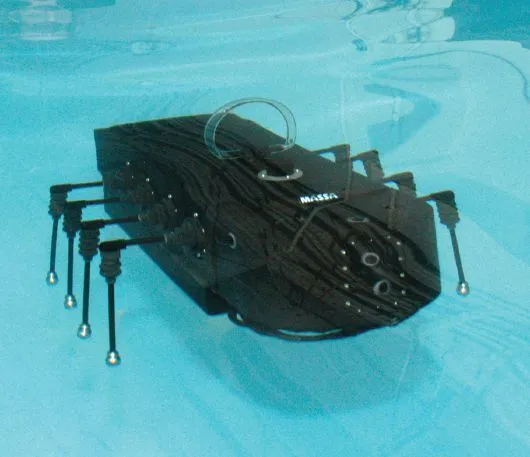
Synergy and collaboration between industry partners, university partners, and the government is paramount in protecting our nation and allies because it leads to increased responsiveness. This can be seen in the evolution and development of MassaSonic® RoboLobster®, which secured initial development contracts in the late 1990s and 2000s, but production contracts did not transpire at the time due to changes in geopolitics. Now, we are at a place where both the product and geopolitical situation are ready for the next phase.
A close collaborative relationship between the Navy and companies like Massa allows for the development and delivery of tools to the warfighter more quickly, and the RoboLobster is just one example.
Updating an existing design for a modern battlespace is, in many instances, faster than a “ground-up” design. Without that collaboration between companies and government, or companies with each other, it becomes much harder to utilize/upgrade past designs/experiences, which results in a less responsive relationship between the Navy and the industrial base. The world simply cannot afford to waste time or effort. The DoD also cannot afford to allow competition to dwindle down to only a few large chains of one-size-fits-all solutions within the pipeline.
SPEED TO MARKET
The size of a company is rarely reflective of its contributions, as evidenced by the fact that Massa celebrates its 80th year in 2025! Founded by industry pioneer Frank Massa, the company was conceived following Frank’s mission during WWII to advance the production of sonar transducers and arrays. Massa remains strong today because of the philosophy that facilitates expedient development, rapid modifications, and quality transfer-to-production of reliable and sophisticated products that the USN/ DoD rely on to protect our sailors and shorelines.
Whether it is a UUV, AUV, MCM, or submarine, the integrated sensors are essential and ought not to be thought of as a commodity item but rather a synergistic technology for mission-specific requirements. Massa takes this into consideration with the concepts for RoboLobster, AmberJack®, and several other sensor and sonar systems and families of products. When there is a close collaboration between the government and industry partners, the tools that are created end up working better with a stronger ROI than traditional acquisition methods. Creating partnerships removes roadblocks and clarifies needs, accelerating scalable product development.
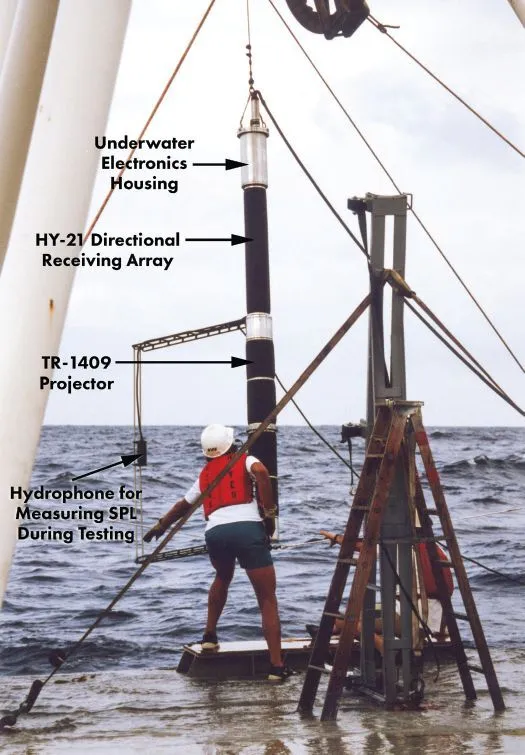
Massa remains a small business amongst giants and a trusted partner to the DoD for innovative technologies for deployment above and below the waterline. The immediate need today is to advance the way we did in WWII—when Frank created over 200 transducer designs and oversaw the conversion of 150 of those designs into rapid mass production. Now is the time for action.
This feature appeared in ON&T Magazine’s 2025 March Edition, Naval Defense & Intelligence, to read more access the magazine here.