The missions were undertaken with funding from the National Oceanic and Atmospheric Administration (NOAA) and conducted as part of a larger campaign of scientific exploration, mapping, and characterization in the Pacific, especially within the US EEZ.
Over a decade ago, when I was at NOAA, I was among those who established the priorities for this work to better understand and then protect the economic, natural, and cultural aspects of these waters.
The 2023 expedition was conducted by the Ocean Exploration Trust (OET) through the Cooperative Institute for Ocean Exploration, and the 2025 mission was undertaken by NOAA Ocean Exploration (OE). OET’s exploration vessel Nautilus, with its suite of onboard deep diving instrumentation, and NOAA Ship Okeanos Explorer, also equipped with ROVs and a suite of subsea instrumentation, operated by the Global Foundation for Ocean Exploration (GFOE), made a series of epic dives within Papahānaumokuākea’s 582,578 square miles of Pacific Ocean. Much of what was observed and documented had never been seen by human eyes until these missions.
A WINDOW INTO A SUBSEA WORLD
It wasn’t just the project scientists and subject matter experts— both aboard the vessels and supporting operations from shore-based command centers—that were party to this breathtaking footage, but also the millions of people who tuned in to the satellite feed. Telepresence was a key aspect of the campaigns, with hi-res ROV video from the deep broadcast in real time via the surface satellite connection. The world’s media also followed attentively, with thousands of headline stories published in more than sixty-five countries in thirty-five languages. The accumulated global audience surpassed several billion people.
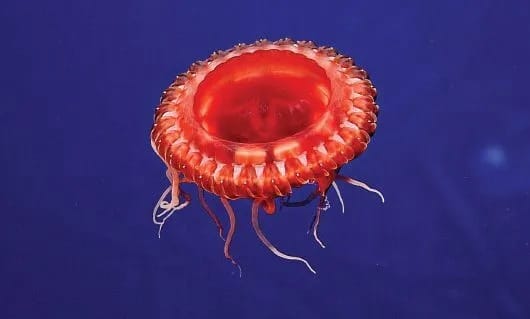
The 2025 dives presented the seabed in unprecedented detail— hard basaltic, ferromanganese encrusted, and indurated carbonate substrate—giving specialist geologists and marine biologists a breakthrough perspective. Rock samples, as well as the corals and sponges, were collected for further study and curation. Several possible new species of marine organisms were observed. These discoveries took place as the ROVs made their lengthy descents; some of the dives were dedicated to midwater observation.
The true nature of exploration is exemplified when dives like those take place, with discovery happening when the vehicles stop—or stay—in midwater. These dives focused on the mesophotic zone, observing marine organisms with video, sampling specimens, and collecting eDNA from the water in one of the least characterized regions of the ocean. This is the area of the deep scattering layer, one of the largest daily migrations on Earth, as expedition coordinator Samuel Cuellar noted, and it is a potentially large driver of surface-to-deep water mixing.
SPOTLIGHTING HISTORIC SHIPWRECKS
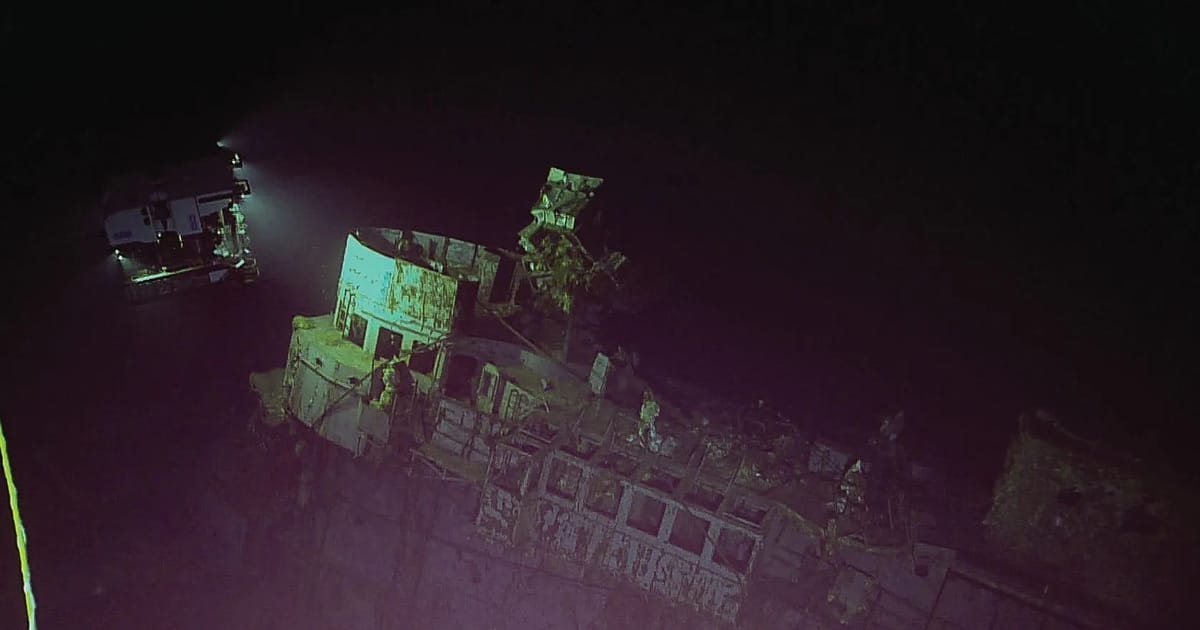
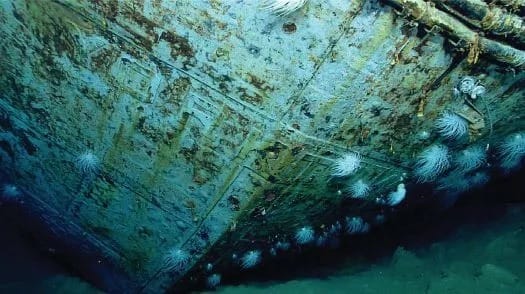
The targets of the other dives were shipwrecks from the naval Battle of Midway in June 1942. For the first time, during the 2023 expedition, two of the massive Japanese Imperial Navy carriers, Akagi and Kaga, both lost in the battle, were explored and documented. The dives revealed the scars of combat, as well as mute scenes that emerged from the darkness to remind all watching of the costs of service and sacrifice. Anti-aircraft weapons still aimed at the sky, an open hatch suggesting a heroic but doomed effort to repair a damaged steering system, and the extensive damage wrought by gasoline-fume-fed explosions and fire all made for a profoundly sobering experience. With telepresence as the link, we conducted those dives with colleagues in Japan.
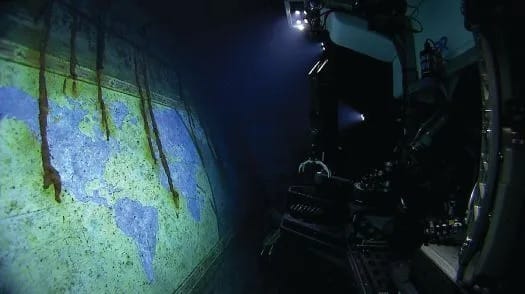
We also dived USS Yorktown in 2023 and again in 2025. Previously located and dived by Dr. Robert Ballard and team in 1998, Yorktown still had secrets to share as well as powerful visual evidence of battle damage. But what we also saw was the complete tableau of a mural painted by the ship’s crew of the carrier’s prewar cruises inside the No.2 elevator shaft, with the paint still bright and its legend readable. Struck and abandoned after the first deadly attack by aerial torpedo bombers, Yorktown did not sink. Reboarded by salvage crews, Yorktown returned to the fight as the men on deck cut free heavy equipment, including guns, to counter the severe list to port.
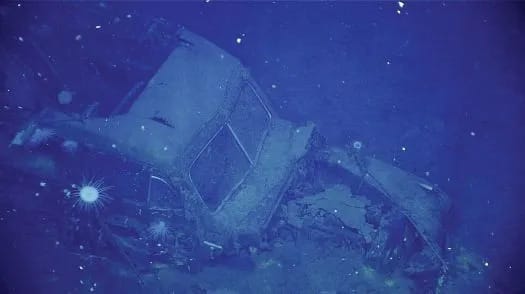
Yorktown might have survived the battle, but a torpedo attack by the Japanese submarine I-168 doomed it, as well as its destroyer escort USS Hammann, which was alongside and blown into two pieces by the torpedo blasts. Those wounds are buried in silt, but bomb holes in flight decks, the scars of fire, and the torpedo damage on the port side were all visible. It was, however, inside Yorktown that we made several new discoveries; the remains of combat aircraft, including two from the carrier USS Enterprise that participated in the attack that sank Kaga, and then returned, low on fuel, with unexploded bombs, the wing of a Dauntless SBD dive bomber, and a 1941 Ford Woody that was used as a sea service vehicle when the carrier was in port, and which survived the attacks on Yorktown and the sinking. The unexpected nature of that find was the largest media driver of the entire mission.
It is the unexpected, the new finds, the realization that new species, profound evidence of the human past, and the very intricate nature of the seabed and open ocean that have compelled and made these dives special. The ones we participated in are not unique, but they are recent examples of what the past decade has brought to the fore. That is the need for, the benefits of, and the amazing discoveries that inspire us to keep searching, exploring, and sharing what we find with the public.
This feature appeared in ON&T Magazine’s 2025 June Edition, Deep-Sea Exploration, to read more access the magazine here.