
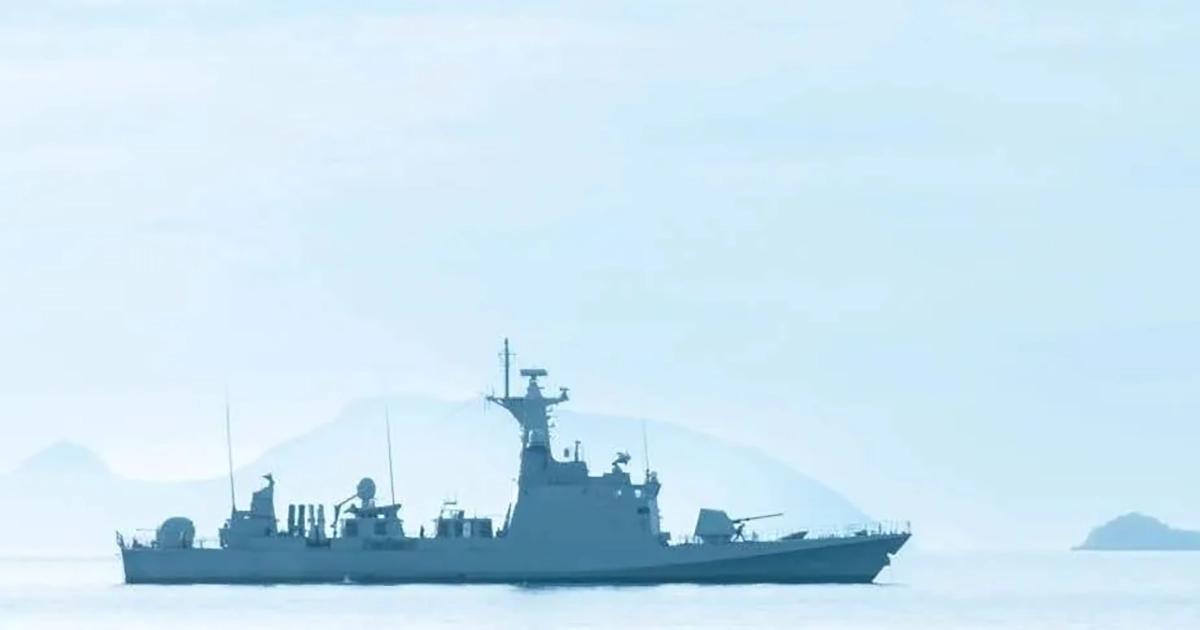
For example, Ukraine forces have weaponized modified jet skis and small boats to strike Russian targets. The Ukrainians even forced the entire Russian navy to retreat from their bases after sending waves of USVs to attack the Russian surface fleet at the Sevastapol Navy Base.
USV attacks have proven equally successful against both moving and stationary ships. Houthis in Yemen have used USVs to cripple offshore commercial shipping in the Red Sea and elsewhere. This rather inexpensive and adaptable method of attacking marine targets is slowly proliferating and sure to used more widely. And quite likely, with US Navy assets in the crosshairs.
MARINE BARRIERS
Navies are taking preventative action. Type I barriers—single walls or a series of interconnected buoys—were designed to stop boats over a specific, predetermined distance. However, their high cost and considerable size has limited their practicality over the last two decades.
Type II barriers, with double walls, were designed to stop approaching vessels immediately upon impact, dispersing kinetic energy into the surrounding waters. But these barriers are cumbersome, require continual maintenance, and do not allow for sufficient underwater protection, given that it would increase their already considerable environmental loads.
In response to a lack of viable commercial solutions, the US Navy developed its own Port Security Barriers (PSB)—floating fences of pontoons supporting a metal framework and a cargo net. While practical, this technology was never intended to handle certain environmental conditions for long periods of time and is nearing the end of its service life; the cost of maintaining this approach is prohibitive.
NEW MATERIALS
To include critical attributes that government testing has determined should characterize next generation barrier systems, Type III barriers will bring needed innovation that incorporates specific essential attributes: the capability to stop surface, subsurface, and remotely operated vehicle threats; a 20-year design life that also limits maintenance costs and extends longevity; the ability to withstand environmental conditions like wind and wave loads while maintaining operational integrity, and a rugged construction tailored for asymmetrical warfare scenarios.
Successful systems must be applicable for both static and dynamic deployments, whether as a perimeter or a gate, with the ability to detect tampering or impacts from USVs or other underwater intrusions such as by enemy divers. Importantly, new barriers must be flexible enough to allow passage of friendly underwater vehicles and swimmers. This delicate balance requires a combination of advanced underwater mechanics and sophisticated sensing technology, monitored by the new generation of tech-savvy warfighters.
THE FUTURE
Any next generation barriers should make the most of new operating principles and even high-friction low-profile surfaces that can halt the forward propulsion of a boat. This will be essential to ultimately stopping intruders from reaching our ships or shores.
New technologies that were simply not an option when earlier marine barriers were developed, such as new composites, rubber compounds and graphene-based materials, make these and more defensive capabilities possible. Navy forces know the requirements, and adapting these advances will meet them. It is time for our Navy to embrace what a new generation of barriers can offer to harden the defenses that our fighting forces and critical assets require and deserve.
This spotllight appeared in ON&T Magazine’s 2025 April Edition, Offshore Energy Transition, to read more access the magazine here.