
In these environments, the challenge of dissolved oxygen monitoring is having confidence in the data collected as conditions change. Sensors that perform well in controlled settings can struggle when exposed to fluctuating salinity, active biological growth, and dynamic water movement. Subtle measurement errors caused by these factors can quickly undermine trust in continuous dissolved oxygen readings.
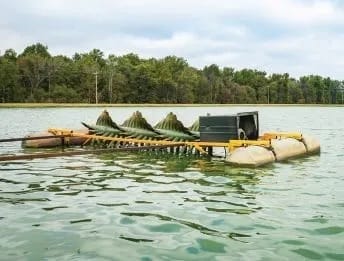
In coastal systems, salinity can change rapidly due to tides, storms, freshwater inflows, or circulation patterns around farms and pens. These shifts directly influence dissolved oxygen dynamics and can introduce error if not accounted for in real time. At the same time, biofouling accumulates on sensor surfaces, especially in nutrient-rich aquaculture environments, interfering with accurate oxygen measurements.
INTEGRATING MEASUREMENTS
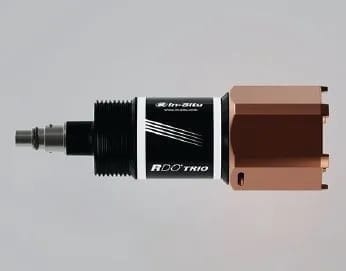
Designed for harsh, variable environments, the RDO® Trio integrates dissolved oxygen, temperature, and conductivity measurements into a single compact sensor. Measuring conductivity alongside temperature enables real-time salinity compensation, allowing dissolved oxygen readings to better reflect changing conditions in estuaries, lagoons, and coastal aquaculture sites. This integrated approach helps reduce drift and improves confidence in the data used for day-to-day decisions.
In aquaculture, low-oxygen readings can trigger changes in aeration, adjustments in feeding, or checks on circulation. To reduce false low-DO events caused by fouling, the RDO Trio pairs a wiper and copper-infused guard with an intelligent wiping feature. Users can set a dissolved oxygen threshold so that if readings fall below it, the wiper automatically engages while the sensor continues measuring. If dissolved oxygen rebounds after wiping, operators can avoid unnecessary aeration. If it does not, teams know that the low values are likely to reflect actual water conditions and can respond accordingly.
ADAPTABLE & DEPENDABLE
The RDO Trio is designed to fit into existing monitoring and control networks where dissolved oxygen data informs operations. Using an open Modbus protocol, the sensor connects to telemetry systems, PLCs controlling aerators, and third-party data platforms already in use, without disrupting established workflows.
Coastal and aquaculture environments are rarely stable, making dependable dissolved oxygen data essential. Accounting for salinity variability, managing biofouling, and supporting straightforward integration are key to maintaining confidence in oxygen measurements as conditions evolve. The RDO Trio integrates into In-Situ’s ecosystem, including VuLink telemetry, setup via the VuSitu mobile app, and uploads of data files to the cloud-based HydroVu data management platform.
This spotlight appeared in ON&T Magazine’s 2026 February Edition, Exploring the Deep, to read more access the magazine here.