This is in no way reflective of any lack of motivation to accelerate the rate of deep-sea exploration. It is, and always has been, a question of establishing scalable ways and means of operating in some of the harshest environments imaginable, conditions that become increasingly hostile as you descend from the Mesopelagic Zone (The Twilight Zone) to the Abyssopelagic Zone (The Abyssal Zone) and beyond.
BRIDGING KNOWLEDGE GAPS
Today, the urge to explore unchartered depths is more a question of necessity than curiosity. While there is still so much that we don’t know about the seabed, what we can say categorically is that it plays a critical role in the present-day, globalized world. We understand that it is home to a staggeringly rich biodiversity that interacts directly with our climate; we understand that it is home to critical underwater infrastructure— in particular, pipelines and submarine cables—that help to keep nations switched on and connected (subsea fiber networks carrying 99% of intercontinental data); we also understand that the seabed, amid escalating geopolitical tensions, is increasingly contested.
The capacity to fill in the knowledge gaps is, understandably, beyond any one nation. But each country can play a significant part and, through international collaborative efforts, ignite renewed interest in deep-sea exploration. France, as well as being home to RTSYS, has the world’s second- largest maritime exclusive economic zone (EEZ)—10.9 million square kilometers in total. In 2021, the French government launched a €54 ($61) billion investment plan program—France 2030—intended to elevate France’s position on the global stage by decarbonizing the economy; fostering innovation; and supporting strategic growth across key sectors. The priorities under France 2030 are far reaching, ranging from developing low-carbon aviation solutions to sustainable agriculture, but single out a renewed focus on exploring (the potential of) the seabed.
MONITORING SUBSEA CABLES
The Martoc project was launched in 2024 with funding awarded directly from France 2030, that is focused on developing and scaling a subsea drone solution for detecting, monitoring, and controlling critical submarine cable systems. MARTOC unites four highly respected commercial companies and institutes: RTSYS (also the project lead), Orange Marine, Mappem Geophysics, and ENSTA Bretagne. Instrumental to the project is the optimization of an efficient and agile AUV capable of operating at depths to 3,000 m.
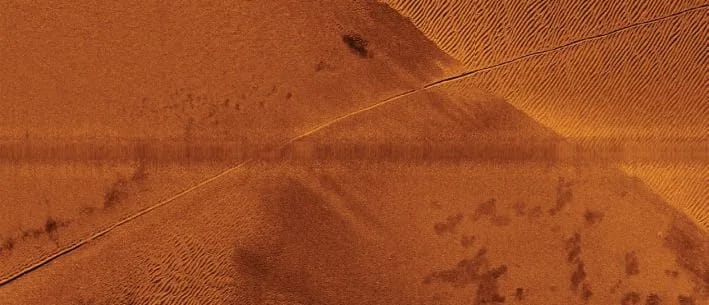
Equipped with a set of complementary sensors—both passive (flux-gate magnetometer, camera) and active (electromagnetic sensor, forward-looking sonar)—the COMET-3000 is a compact and highly portable AUV designed for rapid deployment from a surface vessel for mapping (burial measurement) or threat monitoring (piracy) missions.
Operating an AUV of this size at a depth of 3,000 m comes with inherent operational challenges when trying to ensure its positioning and optimal data acquisition. Also, cables laid at such depths are small and lack metal reinforcement, making them more difficult to identify with conventional sensors. The embedded algorithms, therefore, must be able to efficiently combine and process data from the various onboard sensors.
In addition to the engineering of the AUV and synchronizing select onboard technologies, the project scope includes the development of a LARS (Launch And Recovery System) that can be easily installed on cable-laying vessels to deploy and retrieve the subsea drone.
PROSPECTING MARINE MINERALS
Assessing the resources of the deep seabed relies on the deployment of appropriate measurement methods and protocols for accurate mapping. The CARMA project, jointly developed by RTSYS, Exail, and ABYSSA, and co-funded by Bpifrance under France 2030, is another initiative designed to leverage AUV technology, with the objective of efficiently mapping and prospecting seabed minerals.
The mineral resources targeted by CARMA are primarily sulfide deposits, which are rich in metals. The potential exploitation of sulfide deposits presents several environmental challenges. To be fully assessed, new knowledge acquisition is required, which includes the discovery of geologically “inactive” sites that appear to be less environmentally sensitive.
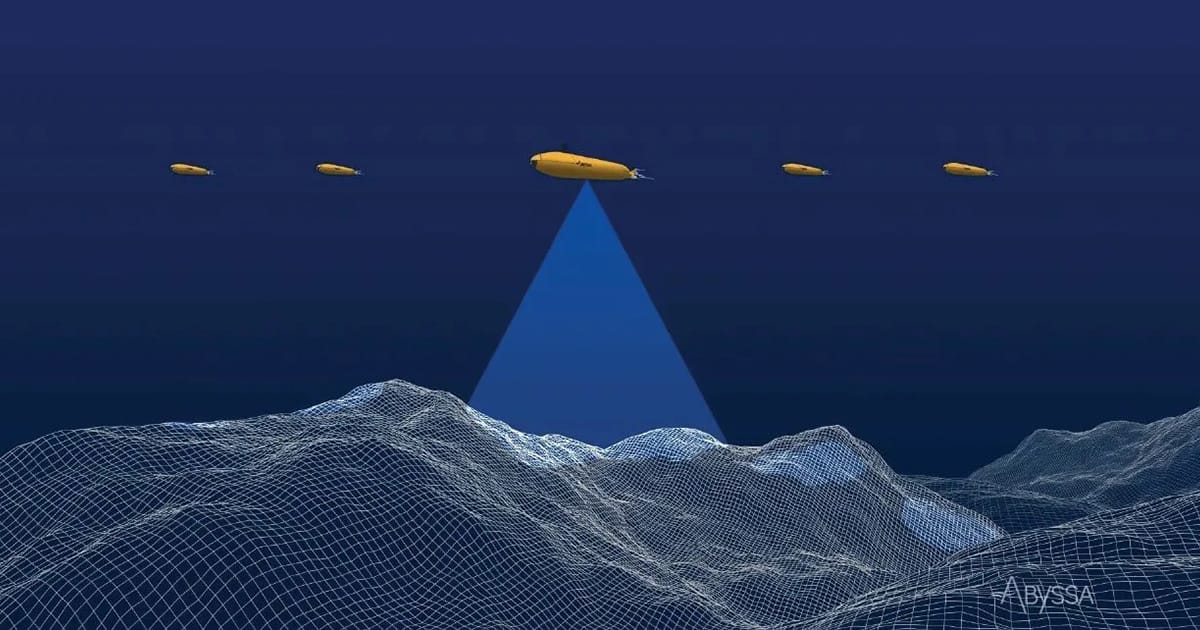
The AUVs proposed by CARMA, to be deployed in swarm format, meet this objective by proposing extensive magnetic prospecting. The swarm comprises a master AUV carrying a series of scientific sensors and equipped with advanced navigation and positioning equipment.
The smaller, lightweight tracking AUVs are, again, RTSYS’ COMET-3000s and support several compact sensors, including a magnetometer. Their positioning relative to the master AUV is controlled by a state-of-the-art networked acoustic system (RACAM®). The complete fleet of vehicles has been dubbed the “So-MAGICAL” fleet (Seafloor Ore, Magnetics and Geosciences Investigation using Coordination by Acoustic Link), and will deliver map the seabed for sulfide deposits at 3,000 m down under the seven AIFM permits (three in the Atlantic Ocean, four in the Indian Ocean) and on other target EEZs with favorable geological characteristics.
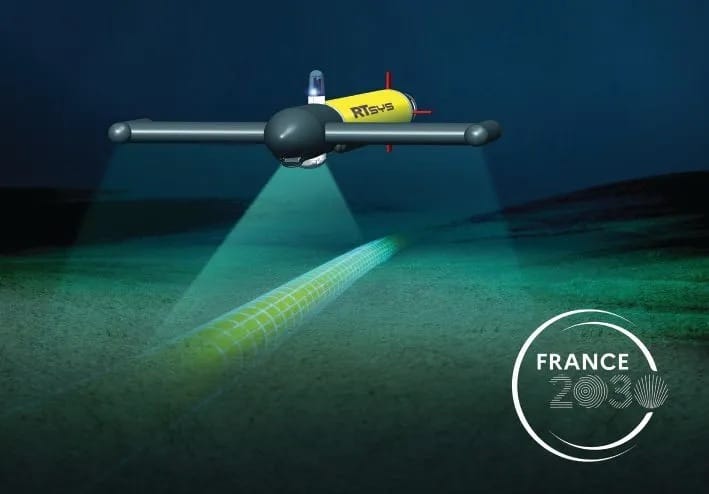
The deployment of the So-MAGICAL fleet, with COMET-3000s effectively serving as force multipliers, will deliver immediate and scalable operational efficiencies, achieving broader underwater coverage in drastically reduced timeframes when compared to traditional single-vehicle deployments. This coordinated approach also enhances data reliability, as cross-verification between platforms ensures the reduction of uncertainties and the detection of any data anomalies that could be missed by passes made by individual vehicles.
This ultimately translates into a higher standard of accuracy of seabed characterization and environmental inspection, resulting in a more in-depth understanding of target deep-sea environments.
These two innovative approaches, both of which hinge on the ongoing integration of AUV technology in deeper, unexplored waters, epitomize France 2030’s vision— to harness technology, in this case highly autonomous subsea assets, to accelerate shared sector-wide learning.
Closing the knowledge gaps in deep-sea exploration, in French waters and beyond, will take more than federal pledges and funding. It will take the expertise of the ocean tech industry to turn policy pledges into enduring progress.
This feature appeared in ON&T Magazine’s 2025 June Edition, Deep-Sea Exploration, to read more access the magazine here.