
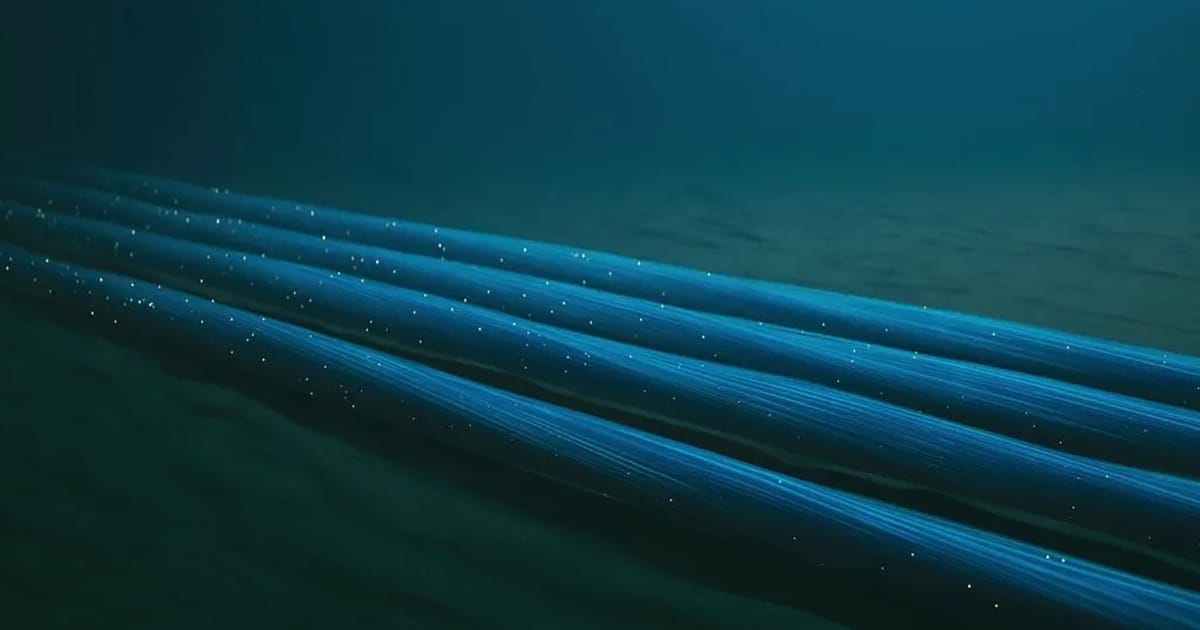
Disrupting an adversary’s energy and communications is not a new tactic—it’s as old as warfare itself. What is new, however, is the increasing likelihood that bad actors, whether state-sponsored or otherwise, could cause disruptive damage to seabed assets. The encouraging news is that deterrence, detection, identification and prevention solutions already exist. The challenge lies in scaling up surveillance and ensuring we use the right tools for each scenario.
THE RIGHT TOOLS FOR EACH SCENARIO
Threats to underwater infrastructure can take many forms. A dragged anchor staged as an innocent mishap could be deliberate sabotage, or a covertly deployed underwater vehicle or diver could carry out hostile action. And while some incidents may be localized, the bigger challenge is how to protect entire pipelines or cable routes that stretch for hundreds of miles. Clearly, there is no one-size-fits-all solution—multiple technologies must work together.
For subsea pipelines and cables, the expanded use of mechanical defense solutions like burial or over-trawl protection are worth considering. Another promising option is distributed acoustic sensing (DAS), which uses backscattered light along fiber optics to monitor activity from one end of a cable to the other. Many existing routes already include fibers that can be adapted for this purpose. On a more immediate level, increasing the frequency of surveys—whether by crewed vessels or autonomous underwater vehicles (AUVs)— can help detect anomalies or suspicious activity early.
For critical locations, such as offshore platforms, storage and offloading stations, electrical distribution hubs or choke points leading to harbors, more robust and sensitive technologies are required. Piezo-electric hydrophones, for example, can identify threats sooner and at greater range, giving operators valuable time to activate the necessary countermeasures before any potential danger escalates.
FROM IDEAS TO ACTION
Participation in recent security exercises has given Teledyne the chance to demonstrate these technologies in action. During NATO’s Taskforce X, maritime autonomous systems were rapidly deployed at scale to monitor surface and airborne threats—with long-range EO/IR cameras delivering particularly strong results.
At SeaSEC’s new center for seabed security in the Netherlands, Teledyne also showcased how a combination of passive and active acoustics can effectively detect, track and image incoming threats. Furthermore, it was reassuring to see just how many remote and autonomous solutions are already available. Outfitted with the advanced sonars and cameras, these systems can quickly search and locate suspicious objects in the vicinity of vulnerable underwater assets.
In short, whether protecting a pipeline, a subsea cable, or a critical offshore hub, the tools already exist to match the threat. What matters now is vigilance: deploying these solutions at the right scale, in the right places, and with the urgency the challenge demands.
This spotlight appeared in ON&T Magazine’s 2025 October Edition, Subsea Infrastructure: Integrity & Security, to read more access the magazine here.
