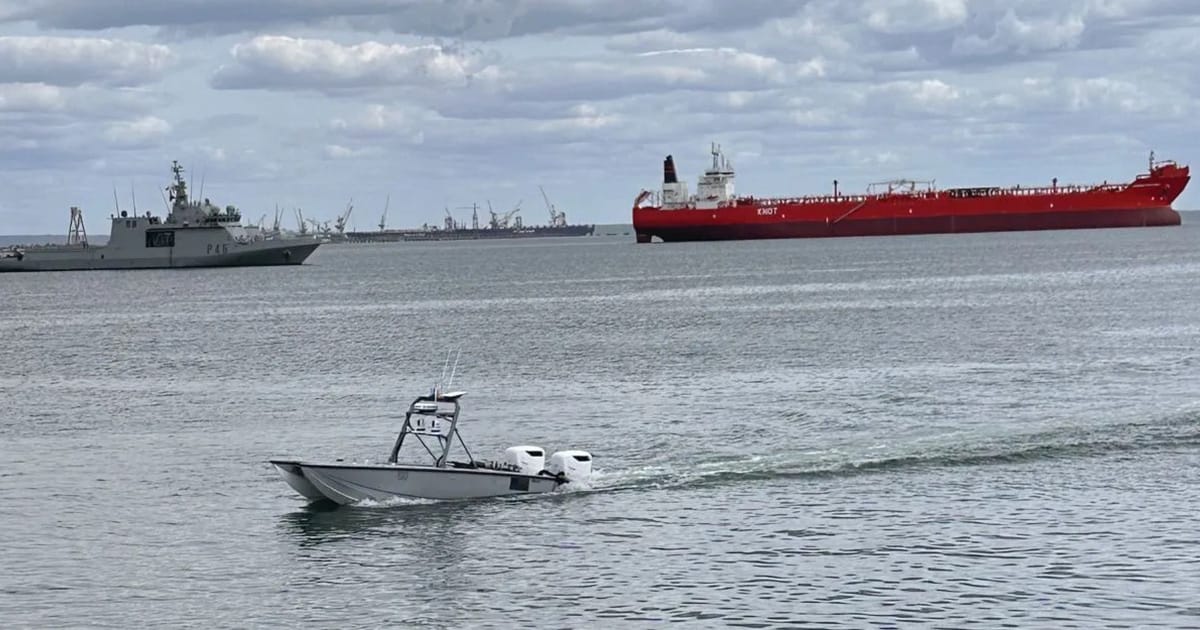
“Drone warfare” has exploded, especially in conflicts in Europe and the Middle East. Whether used by the militaries of numerous nations or by non-state entities, these unmanned systems are changing the character of warfare.
The US Navy’s Science and Technology Board’s report, The Path Forward on Unmanned Systems, lays out a strategy of focusing on experimentation, prototyping, and learning; working on building the infrastructure to support uncrewed systems; and thereby leading to the procurement of uncrewed systems in numbers.
More recently, the US Secretary of Defense announced sweeping changes to the way the Pentagon buys and fields unmanned systems with a goal of establishing “domain dominance” by 2027. The new initiative is designed to ensure that potential adversaries don’t outpace the United States in developing and fielding unmanned systems.
CURRENT USV CAPABILITIES
These three streams come against the backdrop of a resurgence of the development and fielding of unmanned surface vessels (USVs). After two decades developing and fielding air
and ground unmanned systems to meet urgent operational needs in Iraq and
Afghanistan, the Navy is now keenly focused on unmanned surface vessels. The reason for this is clear. These platforms will be valuable in a fight against a peer adversary.
For the past several years, the Navy and Marine Corps have conducted a wide array of exercises, experiments and demonstrations where industry has brought prototype USVs and put them in the hands of Sailors and Marines. This has led to feedback that has resulted in industry developing even more capable unmanned surface vessels, especially small- (sUSVs) and medium-sized USVs (MUSVs). Now the Navy has an “embarrassment of riches” of USVs to consider performing a wide range of missions.
There are a large number of sUSVs and MUSVs offered by the maritime industry based on those that have been featured most frequently in exercises, experiments, and demonstrations. Industry partners— such as MARTAC, L3HARRIS, Ocean Infinity, Textron, Leidos, and Saildrone, among others—have now produced enough highly capable small and medium USVs to offer the Navy many reliable and scalable options.
While supporting “one-off” evaluations where a USV from one firm performs one mission, at some point the Navy must “down select” to one of two small and medium USVs by conducting head-to-head experiments to determine the most suitable platforms of each type. These events should feature only USVs at a sufficiently high technical readiness level.
TIME TO DOWN SELECT FOR DUTY: USV DESIGN & PERFORMANCE CONSIDERATIONS
There are many factors that can be used to determine best-of-breed platforms, the results of numerous Navy and Marine Corps evaluations suggest that a down select should focus on the following factors:
Technology Readiness level: Based on the Navy’s plans to field a “hybrid fleet” with large numbers of USVs complementing crewed ships in the near future, it would be well-served to focus only on those at sufficiently high technical readiness level today.
Size: To be useful, a USV must be able to perform missions, and likely multiple missions. This requires fitting out the USV with systems and sensors of all types. USVs that are unable to support a versatile payload are not useful in complex military operations.
Speed: Many military missions for USVs require the vessel to travel at high speed, often while conducting missions against crewed ships, which typically can travel at more than thirty knots. “Speed is life” in this military realm.
Seakeeping: Where prototype USVs have failed to meet expectations in military experiments, it has been their inability to operate in rough seas. This is due primarily to the fact that the majority of these are single hull craft which struggle in high seas. Catamaran hull USVs have performed much better.
C2: Increasingly, the coin of the realm for military unmanned systems is the ability of these platforms to operate in autonomous swarms. This requires a robust command and control system embedded in these assets so each platform can communicate with others in the swarm.
Cost: The cost of military system is ultimately a deciding factor in the decision to develop and field that asset. A capable USV that costs half as much as one that is just a bit better is likely the better choice.
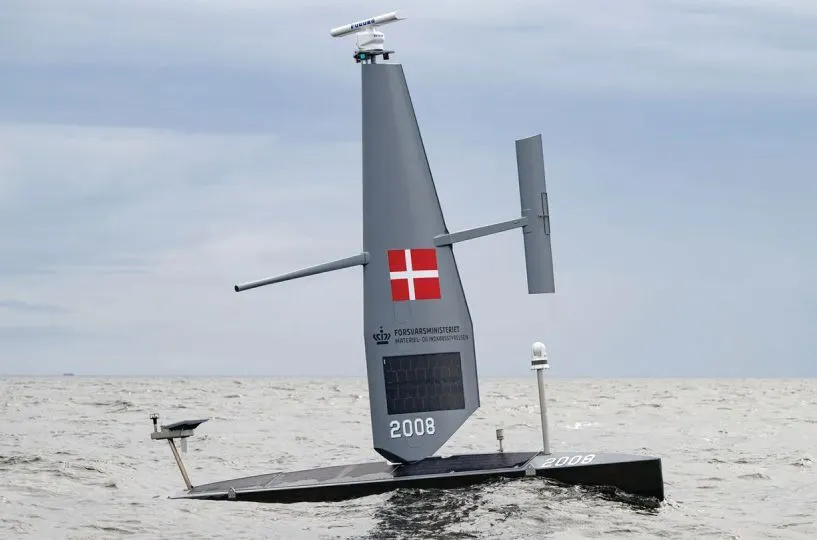
While the Navy has not made an “official” down select decision for USVs, it has likely focused on the six states attributes in the award of a Production Other Transaction Authority (P-OTA), pursuant to 10 U.S.C 4022, to Maritime Tactical Systems, Inc. (MARTAC) for the sale or Contractor- Owned-Contractor-Operated (COCO) lease of the Devil Ray T38 and T24 vessels to any end-user with sole source justification.
GOOD NEWS FOR INDUSTRY?
Thus far, the maritime industry has produced only limited numbers of small and medium USVs and fielded them in Navy and Marine Corps exercises, experiments, and demonstrations. With only a few exceptions, there are no USVs currently being produced “at scale” as industry waits for stronger signals from the Navy and Congress that funding for unmanned maritime vessels (UMVs) will reach higher levels.
That said, there is reason for optimism that the demand function for UMVs of all sizes will materialize in the near future. The extensive use of unmanned systems in current conflicts in Europe and the Middle East, as well as the commitment interest of nations around the world to have UMVs complement their military capabilities, has sent a strong signal to industry that the use of UMVs in military operations worldwide will continue to accelerate.
Focusing on the United States, as UMVs begin to be produced at scale to meet Navy and Marine Corps operational requirements and instantiate the hybrid fleet, industry will be a serendipitous beneficiary. As the sea services purchase more UMVs this will drive down the unit cost of these vessels which will, in turn, make them more affordable for civilian uses such as remote ocean monitoring, oceanographic surveys and sensing, protecting offshore infrastructure, and a host of other missions currently conducted by crewed vessels.
This feature appeared in ON&T Magazine’s 2025 August Edition, Lights, Camera, Action!, to read more access the magazine here.