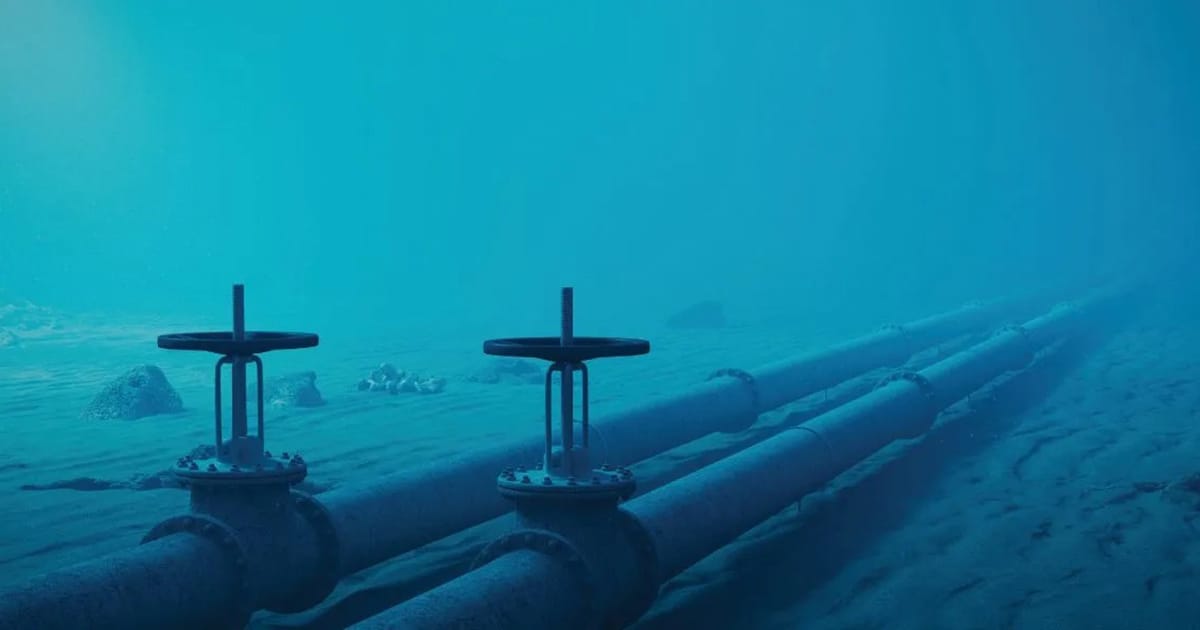
Traditional inspection techniques—often involving divers or cumbersome equipment— can be costly, slow, and hazardous. In response to growing infrastructure demands, there was a pressing need for safe, efficient, and data-rich alternatives.
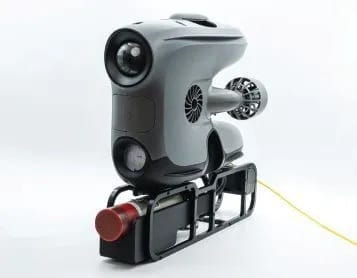
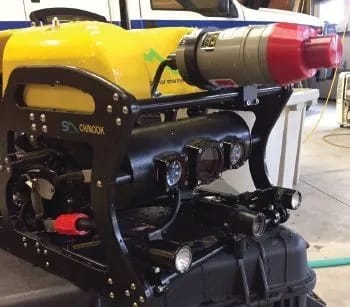
Two sonar-ROV integrations emerged as powerful solutions: the Imagenex 831L sonar with the Blueye X3 ROV and the Imagenex 831A sonar mounted on the SEAMOR Chinook ROV. Each pairing addresses specific operational needs, offering flexibility across industries like municipal utilities, hydropower, and offshore energy.
IN-FIELD DEPLOYMENT
In a recent inspection of a stormwater outfall tunnel, operators selected the lightweight Blueye X3 for its rapid deployment and maneuverability. They mounted the Imagenex 831L sonar, a 2.25 MHz unit capable of producing a full 360-degree scan in 1.3 seconds.
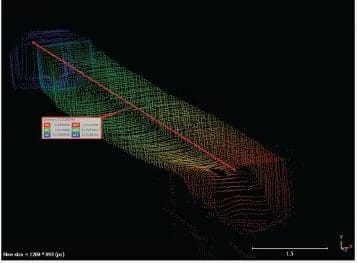
The ROV navigated tight pipe structures, collecting real-time 2D profiles with millimeter accuracy via PipeSonarL software. When paired with a Doppler Velocity Log (DVL), the system can also track the ROV’s movement through the pipe, enabling the creation of detailed 3D point clouds. This solution offered a compact, low-power alternative to larger systems, all without requiring diver intervention.
For longer and more complex pipeline stretches, inspection crews turned to the SEAMOR ROV. This ROV was equipped with the Imagenex 831A—a sonar operating at the same 2.25 MHz frequency but with a faster 1-second scan cycle and a 1.4° conical beam. Depthrated to 1,000 meters, the 831A captured clear pipe profiles even in turbid water. Its rugged aluminum-polyurethane design, RS-485 interface, and versatility across pipe diameters up to 6 meters made it an ideal fit for multi-hour offshore inspections. The sonar’s compatibility with PipeSonar software ensured consistent data formatting and export for engineering review.
EFFICIENT OUTCOMES
In both use cases, inspection time was reduced by up to 60%, while data quality increased significantly. Operators praised the ease of setup, low power demands, and portability of the systems. With minimal crew, reliable results, and actionable insight, each deployment proved safer and more cost-effective than conventional methods.
The combined use of Imagenex sonar and ROV technology represents a smarter future for underwater infrastructure inspection. Whether tackling narrow outfalls or deep subsea lines, the 831L and 831A Sonars are reinventing how industries approach underwater diagnostics.
This spotlight appeared in ON&T Magazine’s 2025 July Special Edition, Uncrewed Vehicles Buyers’ Guide, to read more access the magazine here.