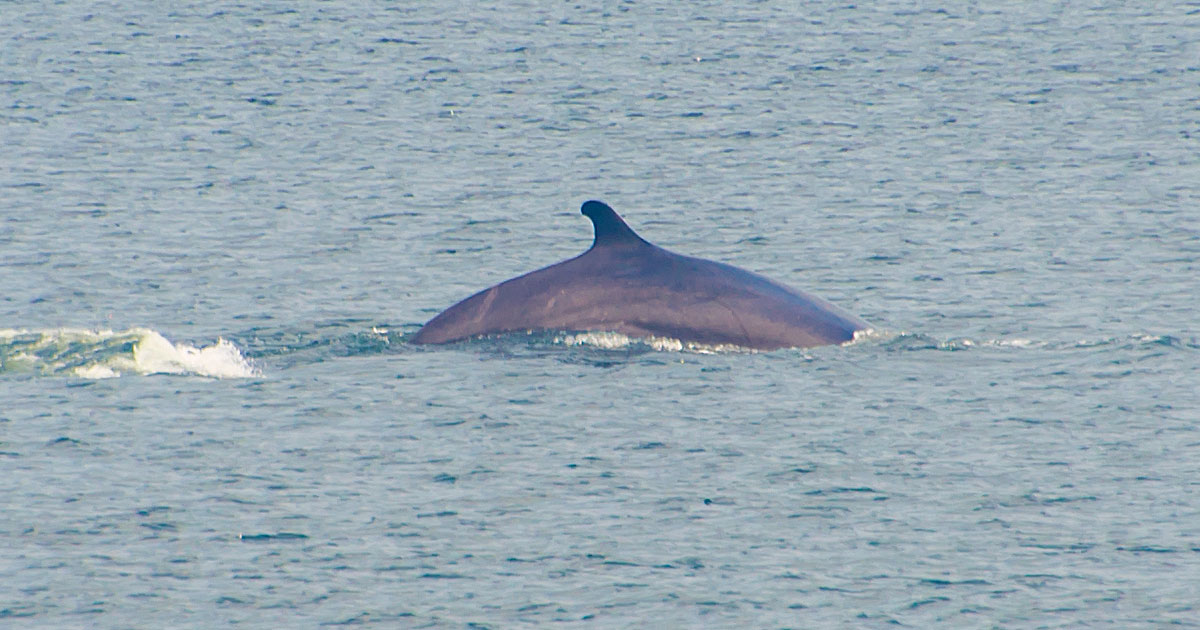
In spring 2025, Marine Observer® deployed six infrared camera systems to deliver the first-ever 360-degree, continuous infrared monitoring capability for marine mammal protection during offshore construction activities. The deployment took place in the North Atlantic in support of a wind energy operation.
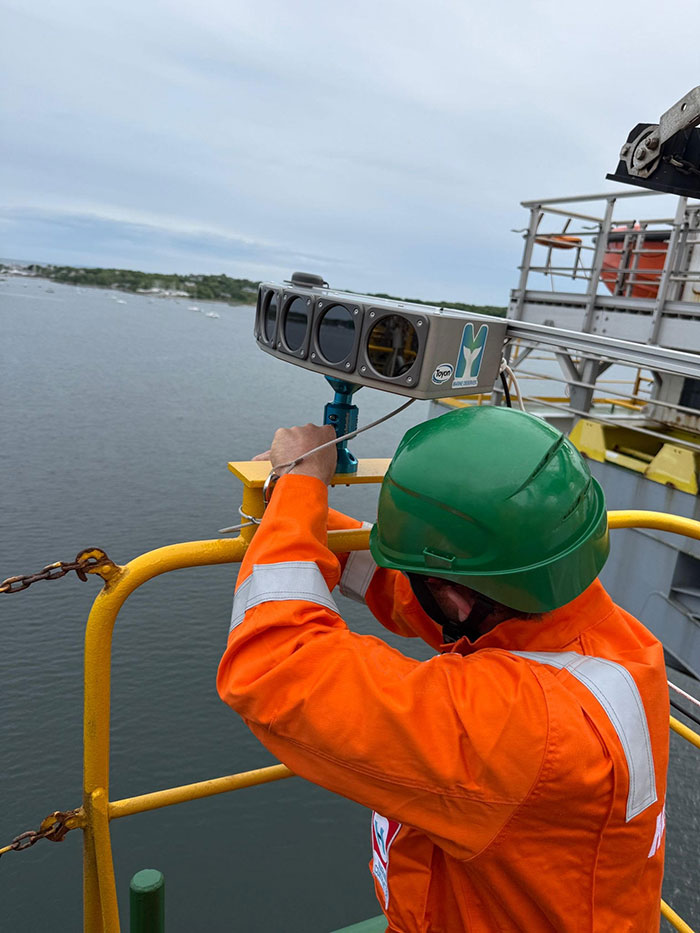
Positioned to provide a full 360-degree view around a large construction vessel, six camera systems enabled uninterrupted monitoring for whales and other protected species throughout active operations. Equipped with AI-enhanced detection algorithms and advanced longwave infrared technology, Marine Observer supports true 24/7 detection—including at night and in impaired visibility conditions when traditional visual observation is limited by darkness, glare, or changing weather.
Comprehensive Camera Coverage
This deployment represents a significant milestone: the first fixed-focus, unobstructed, continuous 360-degree infrared monitoring system purpose-built for protected species detection in offshore industrial environments. Video feeds from all six cameras were routed to a single onboard operator station, where a trained infrared camera operator was able to monitor real-time detections generated by AI-powered classification algorithms. The system continuously recorded and processed the full panoramic field-ofview, automatically flagging potential whale blows and other marine objects for rapid review and response.
Addressing Detection Gaps
Offshore industrial activities present known risks to marine mammals. Exposure to highintensity acoustic sources and increased vessel traffic can contribute to behavioral disruption or vessel strikes. Detecting whales is challenging—particularly at night—leaving operators with limited situational awareness.
Current mitigation standards such as passive acoustic monitoring (PAM) or human visual observers have inherent limitations. Acoustic systems may not detect non-vocalizing animals, and human observers are constrained by illumination conditions and eventually fatigue. Gaps in detection can reduce the effectiveness of mitigation protocols.
Fusing Infrared Sensing with AI
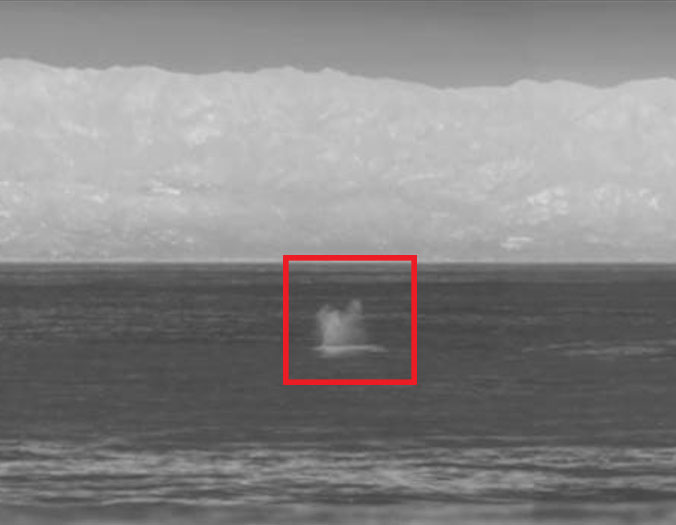
Marine Observer, developed by Toyon Research Corporation, integrates infrared sensing with artificial intelligence to provide a complementary automated capability. Each ruggedized unit houses multiple longwave infrared camera cores and an inertial navigation system. This integrated system simplifies installation of a system with wide coverage and delivers a seamless, electronically stabilized, wide field-ofview capable of continuous monitoring in dynamic offshore environments.
The included software analyzes the live video stream in real time, using AI detection algorithms to automatically identify whale blows or dolphins and alerts operators instantly. By combining continuous infrared coverage with automated detection, Marine Observer enhances response time and strengthens compliance with environmental mitigation requirements.
Wide Applications
Marine Observer technology has supported scientific and industrial missions led by the National Oceanic and Atmospheric Administration (NOAA), as well as oil and gas operators, offshore wind developers, and environmental consulting firms. Applications include marine mammal population surveys, vessel strike avoidance, and mitigation of acoustic impacts during offshore construction.
As offshore wind development expands globally, continuous infrared monitoring paired with AI-driven detection represents a meaningful advancement in protecting marine life while enabling critical energy infrastructure projects to move forward responsibly. marineobserver.com