One year into my tenure as Secretary-General, the lessons are clear: the world is waking up to the strategic, scientific and ethical significance of the deep seabed, and with that awakening comes heightened responsibility. Our collective task is to ensure that this vast global common—half the surface of the world’s seabed—remains governed with fairness, foresight and integrity.
The deep seabed, known legally as the “Area,” is one of Earth’s last great frontiers. It covers about 260 million square kilometers, making its jurisdiction larger than the entire surface area of all continents combined. Home to ecosystems millions of years in the making and geological formations found nowhere else, it is also the site of mineral resources that could support global priorities. But as technology accelerates and access expands, the question before us becomes sharper: How do we govern what none owns but all have a stake in?
The answer lies in rules; and in multilateralism. This year, our Members reaffirmed a foundational truth embedded in the UN Convention on the Law of the Sea: that the mineral resources of the Area are the common heritage of humankind. That principle is not sentimental aspiration—it is a binding legal and moral architecture that protects the weakest from being dominated by the strongest, and ensures that activity in the deep sea proceeds only under collective authorization and oversight. In a global landscape where unilateral action is increasingly tempting, defending this principle has never been more urgent.
ESTABLISHING CONSENSUS-BASED GUIDELINES
At ISA, developing and adopting the Mining Code is therefore our most pressing priority. Some have questioned the time required to finalize this complex regulatory framework. But experience has proven that consensus is not delay; it is diligence. It is the hard work of integrating science, environmental protection, equity, and global participation into a regime designed to endure for generations. Crucially, technology is pivotal in allowing us to meet this moment. If timing is everything, we have never been in a better position to navigate a reality in which innovation and technological advancement—in an AI world that we are in the infancy of seeing take shape—hold the keys to avoiding mistakes of the past through honed selectivity, precision and monitoring.
In the past year, ISA Members have taken significant steps toward achieving their priorities—advancing standards and guidelines, strengthening environmental baseline requirements, expanding access to scientific data, initiating steps to operationalize an Economic and Planning Commission, building a benefit sharing mechanism—Common Heritage Fund—and reaffirming the precautionary approach as a cornerstone of decision-making. These efforts matter because rules are not simply procedural tools. They are safeguards: against ecological harm, against inequity, against fragmentation of international law.
A TIME FOR COOPERATION & VIGILANCE
Deep-sea governance requires more than regulation alone. It depends on literacy, transparency, innovation, and cooperation. It requires us to continue investing in research and technology; to empower developing States; and to ensure that decisions are guided by the best available science. It also requires vigilance against narratives (and actions) that seek to bypass globally agreed frameworks or undermine multilateral authority.
Looking ahead, my agenda for the coming year is clear. We will accelerate progress on the Mining Code. We will strengthen the Authority’s scientific, technical, and technological capacity. We will broaden partnerships for innovation and marine scientific research. And we will continue to uphold the principle that no actor—public or private—may operate in the Area outside rules that are established collectively.
The future of deep-sea governance depends on choices made today. Our responsibility is to ensure those choices reflect stewardship, not short-termism; equity, not exclusion; and science, not speculation. The deep seabed is a shared inheritance. Governing it wisely will be one of the defining tests of global cooperation in the 21st century—and one we must meet together.
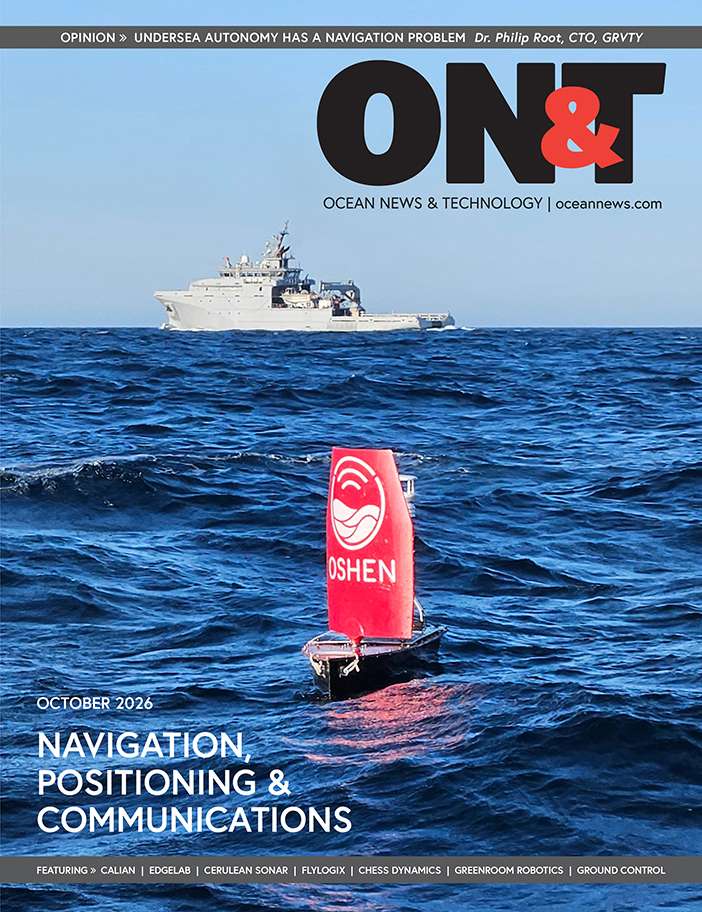
This spotlight appeared in ON&T Magazine’s 2026 January Special Edition, The Future of Ocean Technology Vol. 6, to read more access the magazine here.