This article explores the fundamental methods of underwater navigation and high-lights how Deep Trekker ROVs, equipped with advanced technologies like Dead Reckoning, ROV GPS, USBL, and IMU systems, are overcoming traditional challenges in subsea navigation.
Underwater position tracking refers to the techniques used to determine the precise location of an object, vehicle, or asset beneath the water’s surface during underwater operations.
Since GPS signals can’t penetrate water, alternative methods such as acoustic positioning, inertial navigation, and dead reckoning are employed.
Primary underwater positioning methods include:
Acoustic Positioning: Systems like USBL triangulate a vehicle’s position relative to surface transceivers or seabed stations. Doppler Velocity Log (DVL) systems measure velocity relative to the seabed and integrate that data for position updates.
Dead Reckoning: This estimates current position by calculating movement from a known starting point. While not absolute, it provides continuous updates in the absence of other technologies.
Inertial Navigation: IMUs track motion and orientation using accelerometers and gyroscopes, providing continuous position estimates when combined with dead reckoning.
Surface GPS: While ineffective underwater, GPS can track surface vessels or floating buoys, enhancing accuracy when integrated with other methods upon ROV resurfacing.
Each method has its own strengths and limitations. In most cases, a blend of technologies ensures reliable positioning during subsea operations, a combination that Deep Trekker ROVs leverage effectively.
UNDERWATER POSITIONING PROGRESS
Historically, underwater navigation relied on basic tools like mechanical compasses and manual tether management, which offered limited accuracy. With the development of acoustic methods such as USBL and DVL, navigation accuracy improved significantly, especially for deepwater environments. Advancements in IMUs, such as MEMS (MicroElectromechanical Systems) and fiber-optic gyroscopes (FOG), have further enhanced real-time ROV tracking, making subsea data collection more precise.
Today, Deep Trekker ROVs integrate acoustic positioning systems with Dead Reckoning and ROV GPS for surface accuracy, offering a robust combination of technologies for various applications like marine research and asset maintenance.
Deep Trekker ROVs incorporate multiple navigational systems to meet the demands of underwater operations.
ROV GPS
Although ineffective underwater, ROV GPS helps operators monitor surface positions and correlate them with underwater coordinates, enhancing operational control during subsea tasks.
Deep Trekker’s ROV GPS delivers accurate surface-based navigation, providing realtime positional tracking for ROVs during mission execution. Seamlessly integrated with REVOLUTION and PIVOT models, it offers continuous recalibration, improving tracking accuracy when surfaced. Supporting RTK and SBAS corrections, the system achieves positioning accuracy of up to 2.5 centimeters, essential for underwater surveys and inspections. It also logs GPS waypoints and movement history, allowing for post-mission analysis to enhance navigation planning.
Unlike traditional GPS systems, ROV GPS eliminates the need for USBL in challenging environments, making it ideal for long-duration missions or operations in USBL-denied areas and noisy waters. The system’s quickmount design and compatibility with major satellite constellations ensure fast deployment and reliable performance globally.
With millimeter-level accuracy, ROV GPS enhances mission precision and supports post-mission analysis, making it a valuable tool for asset maintenance, complex surveys, and underwater inspections.
DEAD RECKONING
Dead Reckoning is a fundamental navigation method used in the absence of GPS signals. It calculates position by tracking the direction and distance traveled from a known starting point. Deep Trekker ROVs employ this method, combined with sensor data, to maintain positioning accuracy even in complex underwater environments.
Utilizing a combination of inertial sensors, gyroscopes, accelerometers, and advanced algorithms, combined with acoustic navigation (DVL) , Deep Trekker’s implementation of dead reckoning allows operators to achieve accurate spatial awareness and confidently navigate without GPS.
This method is especially useful for extended missions, where continuous positional updates are critical. With dead reckoning, inspectors can track the ROV’s position relative to predefined waypoints or planned paths, ensuring the inspection stays on course and covers all target areas thoroughly.
MISSION PLANNER
Deep Trekker’s Mission Planner employs advanced algorithms for intelligent pathfinding, enabling operators to pre-program routes using integrated data from various navigational systems. After calibration, the ROV is ready to begin routing in seconds.
Waypoints can be easily added by dragging and dropping or uploading preset coordinates via CSV. Once the path is established, the ROV autonomously navigates between waypoints, capturing data while adjusting speed and depth as needed. Operators can monitor progress in real time, make adjustments, or review data after the mission, ensuring comprehensive coverage during surveys and inspections.
PRECISE UNDERWATER SURVEY
Precise positioning is essential for effective underwater tasks such as structural inspections and resource extraction, particularly in deepwater environments where human access is limited. Technologies like ROV GPS and acoustic systems, including USBL, enable operators to retrace inspection paths, while dead reckoning and Doppler Velocity Logs (DVL) ensure accurate positioning even in GPS-denied environments.
Improving data quality and operational efficiency in underwater inspections is critical. Reliable tracking minimizes the risk of missed evaluations and allows for comprehensive data collection, reducing the need for follow-up inspections.
IMPROVING ROV OPERATIONS
Deep Trekker ROVs offer reliable navigation solutions through a combination of advanced technologies like ROV GPS, Dead Reckoning, USBL, and Mission Planner. These systems provide the accuracy and control necessary for a wide range of underwater operations, from scientific research to industrial inspections, ensuring thorough and precise data collection in challenging subsea environments.

NAVIGATION METHODS
The choice of navigation method depends on the operational environment. Below is a breakdown of the most suitable methods for different underwater tasks:
Ship Hull Inspections: Dead Reckoning combined with ROV GPS provides precise positioning along the hull, avoiding issues like magnetic interference and ensuring accurate readings.
Search and Recovery: Dead Reckoning helps maintain tracking in low-visibility waters, while Mission Planner manages search paths to avoid redundant coverage.
Port Security: IMUs combined with Dead Reckoning track ROVs even in confined spaces, ensuring consistent navigation despite interference from port infrastructure.
Marine Science: USBL is favored for deep-sea exploration, while ROV GPS provides surface tracking near the waterline.
Offshore Inspections: USBL combined with IMU-based Dead Reckoning ensures consistent positioning around complex offshore structures, providing accurate data for inspections.
Nuclear Plant Inspections: Dead Reckoning is preferred in confined environments like nuclear cooling ponds, where GPS and acoustic signals are often obstructed by metal structures.
Aquaculture Pen Inspections: Operations in coastal waters benefit from a combination of Dead Reckoning and ROV GPS for effective monitoring and surface-level recalibration.
Pipeline or Cable Inspections: Dead Reckoning allows for continuous navigation in confined areas, while USBL with Differential GPS is used for external inspections on the seafloor.
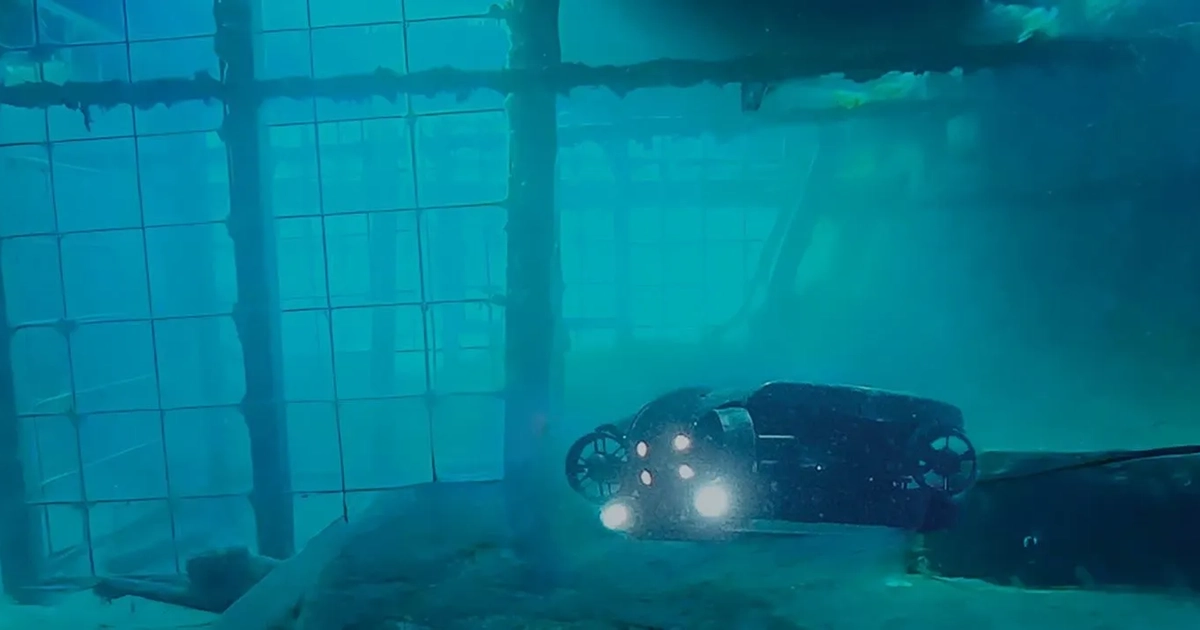
Water Tank Inspections: Dead Reckoning is the most effective method for continuous tracking in confined tank environments, where acoustic positioning may fail.
Other Underwater Operations: USBL or ROV GPS with Dead Reckoning is ideal for offshore inspections, where accurate navigation is critical.
This feature appeared in ON&T Magazine’s 2025 Special Edition, The Future of Ocean Technology, Vol. 5, to read more access the magazine here.