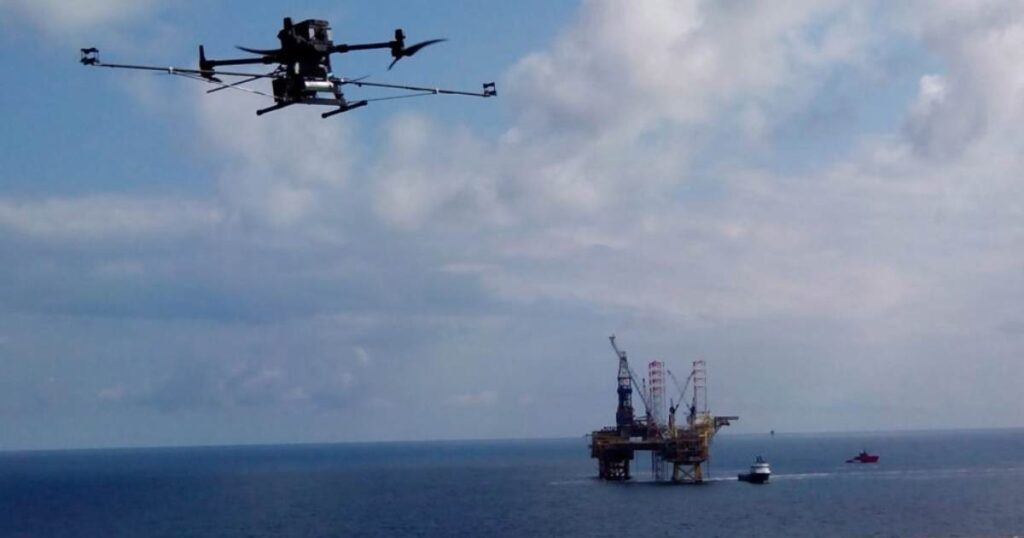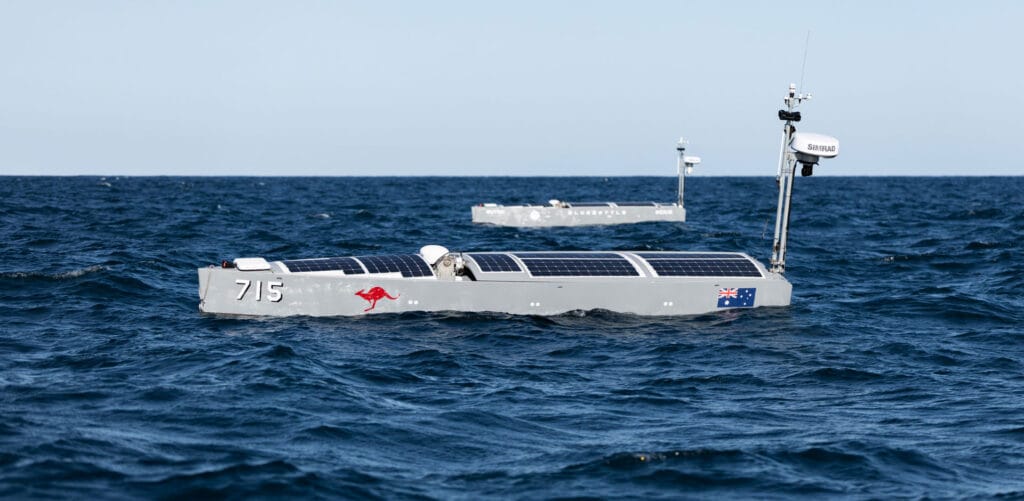

WHOI and its partners are advancing this work every day through a suite of technologies that allow us to explore regions where humans cannot safely or efficiently go. Even the simplest marine robots must perform reliably under crushing pressure, extreme cold, limited communications, and total darkness, conditions that demand engineering solutions. The ocean’s technical realities make clear that a transitional phase is needed: hybrid networks of crewed and uncrewed systems that cooperate at sea and help humans execute with confidence through the opaqueness.
NEW OPERATIONAL POSSIBILITIES
One recent example of this evolution is the US Navy-sponsored, WHOI-developed Yellow Moray, an advanced AUV designed for deployment directly from a submarine’s torpedo tube. Building on the proven REMUS 600 platform, known for long-range navigation and robust data-collection capabilities, Yellow Moray demonstrates how robotic systems can undertake missions that are too repetitive, hazardous, or time-intensive for human crews. AUVs like this introduce new operational possibilities, from surveying hard-to-reach seafloor features to conducting persistent monitoring that would otherwise require multiple vessels or long, risky crewed operations.
Science is already benefiting from similar hybrid approaches. In a recent WHOI survey in the Barents Sea, a deep-diving REMUS 6000 operated “over the horizon,” conducting a sequence of missions far from the host ship while the science party met independent and unrelated objectives. The AUV’s ability to explore alternate target areas that would have been inaccessible within the ship’s schedule allowed researchers to gather critical data that would otherwise have been missed or required a doubling of scarce and expensive ship time to collect.
These case-by-case combinations of human-directed and autonomous systems offer clear advantages. They extend the range and endurance of traditional platforms, multiply the scientific value of each expedition, and reduce risk while increasing access to remote environments.
INTERCONNECTED NETWORKS
As robotic networks become more capable and more interconnected, a full shift toward distributed, multi-node ocean systems will eventually come. But that future depends on today’s hybrid fleet, each new pairing of vehicles, sensors, and platforms creating the technical foundation that policymakers will ultimately rely on to understand climate tipping points, manage shared marine resources, and ensure ocean security.
These examples make clear that hybrid fleets are not a theoretical future; they are an emerging operational necessity. Investment in advanced ocean technologies and prioritizing ocean observing infrastructure must continue to understand and protect the ocean in the decades ahead. The ocean shapes our future, but we cannot manage what we cannot observe and measure.
This spotlight appeared in ON&T Magazine’s 2026 January Special Edition, The Future of Ocean Technology Vol. 6, to read more access the magazine here.