Biofouling has plagued seafarers for centuries, but its modern consequences are staggering. It’s estimated that the global shipping industry burns an additional $20 billion in fuel annually due to increased drag from biofouling. This inefficiency results in over 100 million tons of CO2 emissions.
Beyond fuel consumption, biofouling contributes to ecological disruption. Vessel hulls act as vectors for invasive species, transporting organisms across oceans and introducing them into fragile ecosystems. To combat this, ships are coated with antifouling paints—often laden with toxic substances and microplastics—that leach into the water, harming marine life. What seems like a minor maintenance issue is, in reality, a complex environmental and economic challenge.
RETHINKING HULL CLEANING
ECOsubsea was founded by brothers Tor (CEO) and Klaus (CTO) Østervold, driven by a deep connection to their ocean-dependent island home in Norway. Witnessing firsthand the threats posed by pollution, climate change, and invasive species, they set out to address the problem at its source. Their goal: to develop a hull cleaning solution that protects both vessel performance and the marine environment.
Seventeen years later, ECOsubsea has become a global leader in sustainable robotic hull cleaning, with operations in Northern Europe and Singapore, with further ambition to expand worldwide. Their technology is proving that environmental responsibility and operational efficiency can go hand in hand.
Traditional in-water hull cleaning methods rely on divers using abrasive tools like brushcarts. These methods are not only hazardous—posing serious risks to diver safety—but also environmentally damaging. The cleaning process often strips away antifouling coatings along with the biofouling, releasing a toxic mix of paint particles, plastics, and invasive species directly into the ocean. Moreover, due to safety constraints, divers can only operate under certain conditions, leading to delays of up to two or three days for vessel cleaning.
MOBILE & SCALABLE ROV SOLUTIONS
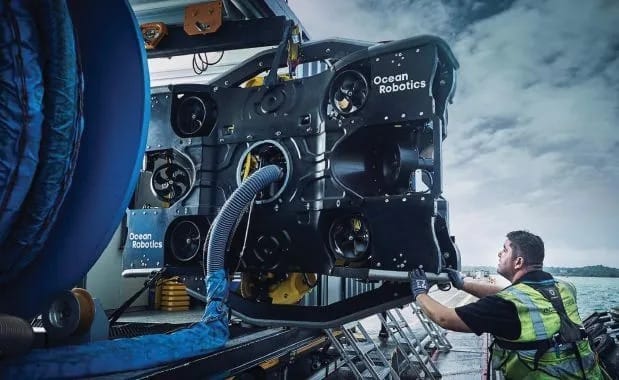
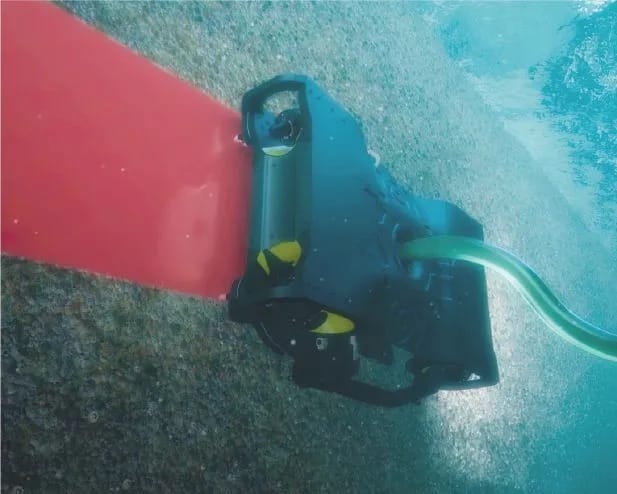
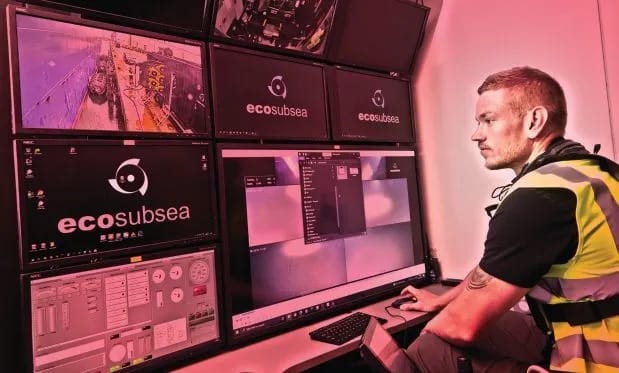
ECOsubsea’s breakthrough was to develop remotely operated vehicles (ROVs) that clean hulls without compromising safety or the environment. Our patented technology uses soft jet to gently remove biofouling while preserving the integrity of antifouling coatings. The waste is securely captured and filtered, preventing pollution and enabling data collection.
ECOsubsea’s first ROVs, known as black panthers, measure 2 x 3 meters and are housed in mobile ECOstations. These stations can be transported by truck to ports, allowing crews to meet vessels wherever they dock. A three-person team can quickly deploy the ROV, streamlining operations and minimizing downtime.
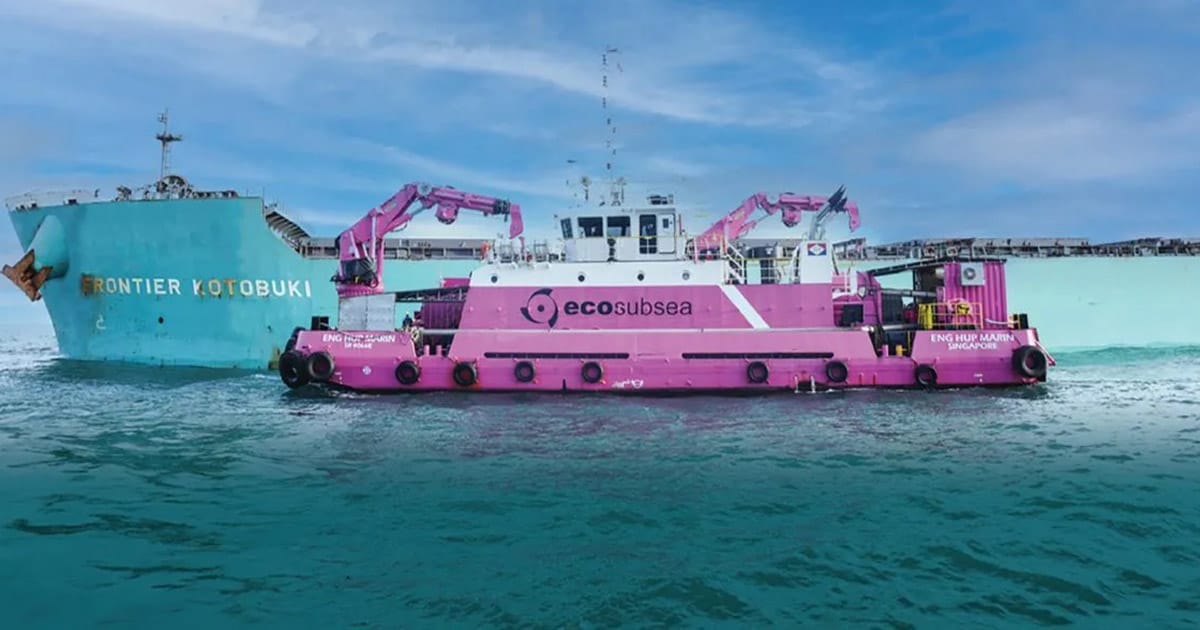
In 2024, ECOsubsea launched its most advanced model yet—the pink panther (pictured left). Operated from a barge, this 7-meter-wide ROV is the largest and fastest hull cleaning robot in the world. It can clean a vessel in just 6 hours, compared to the two days typically required by divers. The pink panther represents a leap forward in efficiency, safety, and environmental protection, setting a new benchmark for the industry.
REAL-WORLD DATA INSIGHTS
One of ECOsubsea’s most powerful innovations lies in its ability to collect and analyze biofouling data. Every cleaning operation involves capturing and weighing the removed biofouling, providing concrete metrics that were previously unavailable. This data enables shipping companies to track trends, optimize cleaning schedules, and make informed decisions that reduce fuel consumption and emissions.
Working with a forward-thinking customer, ECOsubsea developed a predictive model that estimates fuel savings based on the volume of biofouling removed. In 2024, the data revealed that 60% of customer vessels were operating with over 5% fuel overconsumption, and 30% even exceeded 8%. For a standard roll-on-roll-off (RORO) vessel, 8% overconsumption translates to an additional $45,000 in monthly fuel costs and 220 tons of CO2 emissions.
Traditionally, the industry has relied on reactive cleaning—waiting until fouling is visibly confirmed before taking action. However, ECOsubsea’s data shows that even light slime can increase fuel consumption by 2–3% and it shows up earlier than you’d think. By adopting a proactive cleaning model, operators can lower their climate and fuel bill.
With a lack of high-quality sustainable hull cleaning solutions being available, a truly proactive and sustainable cleaning model has been previously unattainable. However, with the efficiency of the pink panther due to spread across major global ports, cleaning for ships can become as accessible as a car pulling into a car wash at the petrol station.
MAKING CLEAN SHIPPING SUSTAINABLE
ECOsubsea’s approach is more than just a technological upgrade— it’s a paradigm shift. By combining cutting-edge robotics with environmental stewardship and data-driven insights, the company is helping the shipping industry become more sustainable, efficient, and resilient.
Current progress highlights the importance of addressing hidden emissions and operational inefficiencies that often go unnoticed. With growing pressure on industries to reduce carbon footprints and protect biodiversity, ECOsubsea offers a compelling futureproof solution that aligns economic and ecological goals.
As the company continues to expand and innovate, the underlying mission remains clear: to clean up shipping, protect marine ecosystems, and lead the way toward sustainable maritime operations and a prosperous Blue Economy.
This feature appeared in ON&T Magazine’s 2025 September Edition, Decarbonizing the Blue Economy, to read more access the magazine here.