
President Donald Trump’s on-again-off-again tariff proposals to be levied on friends and foes have politicians, economists, and business people uncertain about the near-term economic outlook. How quickly they forgot about Trump’s agenda, which was laid out in his extended campaign speeches. Now that he is exercising the power of the presidency to put those campaign promises into place, the shocks have made people expecting a continuation of government operations skittish about the future.
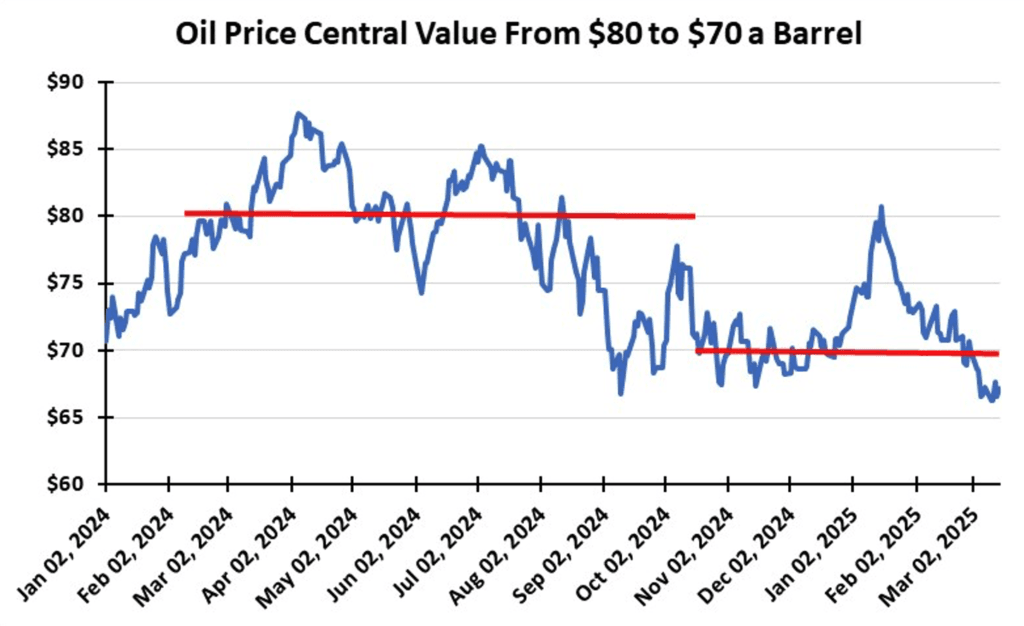
After a long period of holding surplus oil production off the market, OPEC members decided to begin executing their plan to restore this supply over the next year. That supply discipline was cited for the oil price rally in late 2023 and early 2024. Slowing global economic growth has driven oil prices down, and now concerns are that a trade war is breaking out, which will cause higher inflation and sap economies. It is not good for oil consumption or oil prices.
Trump has proclaimed that “Drill, Baby, Drill” will enhance US energy sufficiency. However, producers, especially those operating in the nation’s key shale basins, warn that low oil prices—which Trump wants—limit the attractiveness of increased drilling. Financial discipline is being embraced. There is also a fear that producers are running out of Tier 1 shale acreage, the most productive and least costly properties to drill and produce. Higher costs are on the horizon. Can technology offset higher costs?
The bigger question is whether the nation’s energy sufficiency will rest more on “Dig, Baby, Dig” to spur the mining industry to find and produce the minerals needed to build more renewable energy output. While this question is posed frequently, oil producers forecast that their product will be in greater demand and for longer than previously believed. Renewable energies have a role to play in an “all of the above” energy mix, but they are not displacing fossil fuels, as environmentalists proclaim.
Other issues buffeting oil prices involve the possible ending of the Russia/Ukraine war and what it means for the energy sanctions on Russian oil output. Additionally, questions abound about the future of the ongoing sanctions on Iran’s oil and the ghost fleet of tankers hauling it to customers. More or less, the international oil supply will impact oil prices. Which way is unclear.
Until resolutions of these issues surrounding oil demand and supply emerge, expect continued price volatility. Ultimately, long-term fundamentals will take over from the current chaos, suggesting a tighter supply/demand dynamic. The world will consume substantial volumes of oil for a very long time, challenging global oil producers’ resources. Lower for longer oil price forecasts will be wrong.
NATURAL GAS
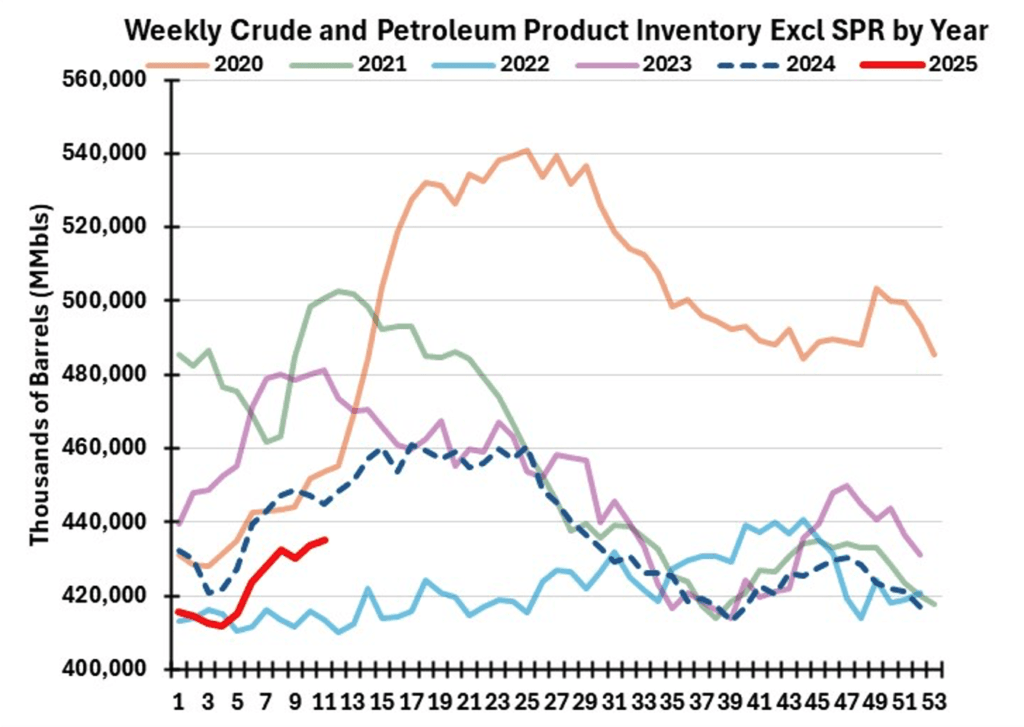
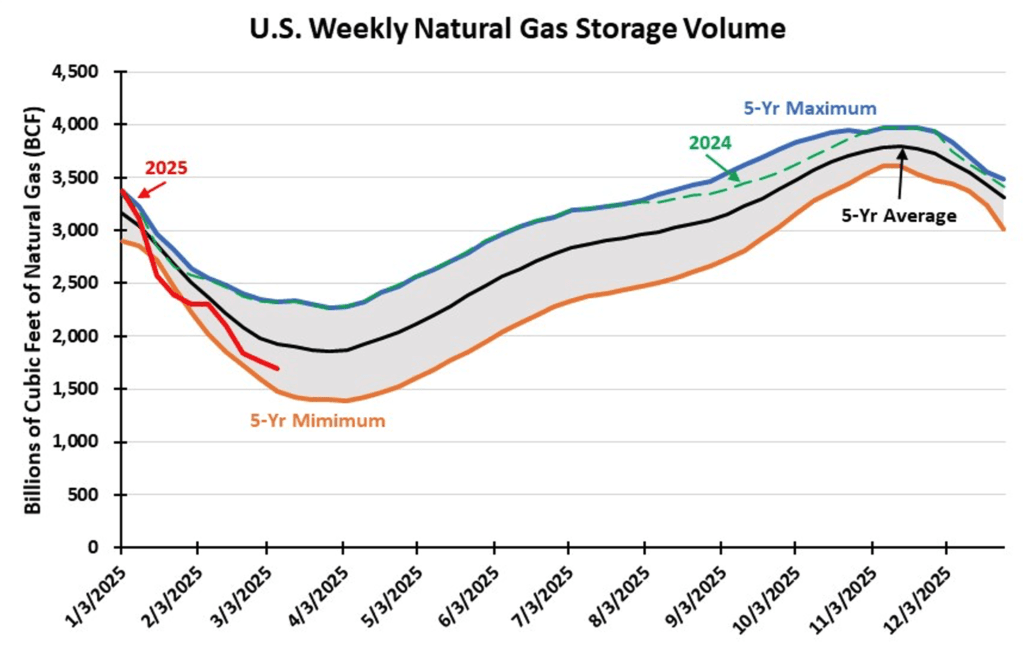
The natural gas business has suddenly come to life due to the recent wave of cold weather that swept across the nation and drove up consumption and prices. Fortunately, producers continue to meet the challenge of supplying sufficient gas volumes to heat homes, generate electricity, and feed LNG export terminals. As our chart shows, however, the industry continues to struggle to rebuild storage for next winter. Currently, gas storage is 12 percent below the 5-year average for this time of year. That suggests natural gas prices will remain firm.
Our natural gas price chart shows that the industry spent the past two years with prices between $1.50 and $3 per thousand cubic feet, but now, they fluctuate around the $4 level. The current gas price level hasn’t been experienced, except in early January 2024, since the spring of 2021. The most recent gas prices may be reflecting a pattern similar to 2021. Then, the cold weather that depleted gas storage required higher prices to entice producers to add more volumes while meeting ongoing demand.
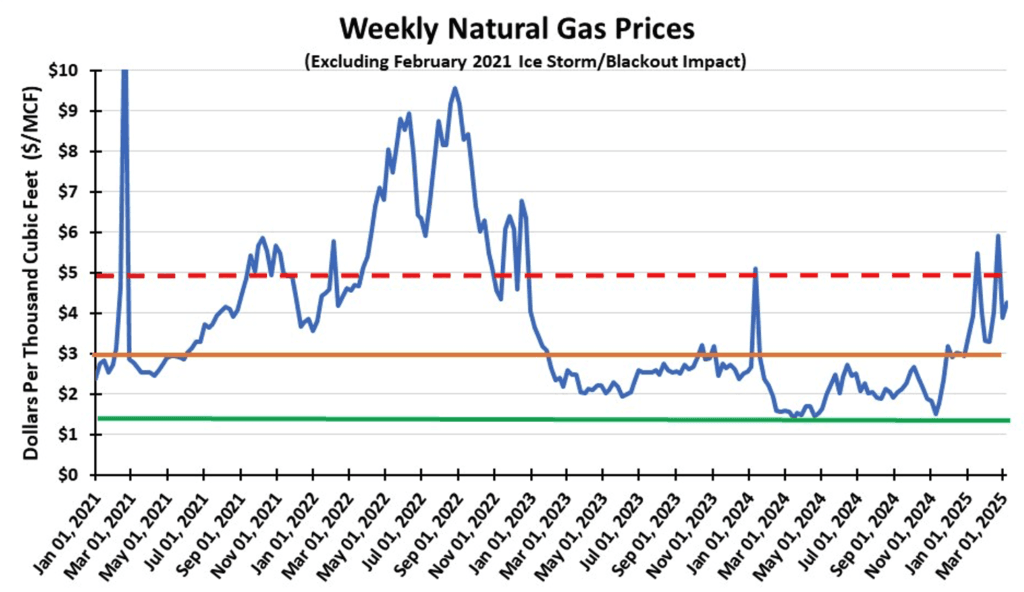
The pattern of gas prices for 2021 and 2022 may be something to watch for going forward. In that past period, after the spike in prices from the polar vortex storm, increased gas demand challenged the recovering petroleum industry to boost supply. A warm winter sapped demand pressures, but supply continued to be challenged, resulting in high gas prices. Could that scenario happen again? Yes. If crude oil production is limited by low prices, associated natural gas output could shrink, putting upward pressure on prices. We are not forecasting such an outcome; we are only warning that it is a possibility.
A key gas market development is the health and future of the global LNG market. Recent forecasts suggest the demand for LNG will grow by 60 percent by 2040. The growth is driven by Asian demand, reduced heavy industry and transport emissions, and increased electricity generation due to AI and data centers. Last year saw the lowest increase in LNG trade (2 million tons) in a decade.
The good news is that 170 million tons of new LNG supply are set to come to market by 2030, but the timing of new export terminal startups may create periods of supply surpluses and shortages. That makes planning a challenge. The Trump administration reversed the LNG pause of the previous administration, and new Gulf Coast LNG export terminals are resuming construction. Two terminals are starting shipments this year. This new export capacity will be another driver of natural gas demand and will continue to add to long-term upward pressure on prices.
By Allen Brooks Senior Fellow of the National Center for Energy Analytics & ON&T Columnist
A FULL VERSION OF THIS COMMENTARY WILL RUN IN THE UPCOMING EDITION OF ON&T, AVAILABLE APRIL 11, 2025. FOR YOUR COMPLEMENTARY COPY, VISIT oceannews.com/subscribe.
FOR FREE AND UNLIMITED ACCESS TO OUR ARCHIVE OF MONTH-BY-MONTH OIL AND GAS COMMENTARY, VISIT oceannews.com/frontline