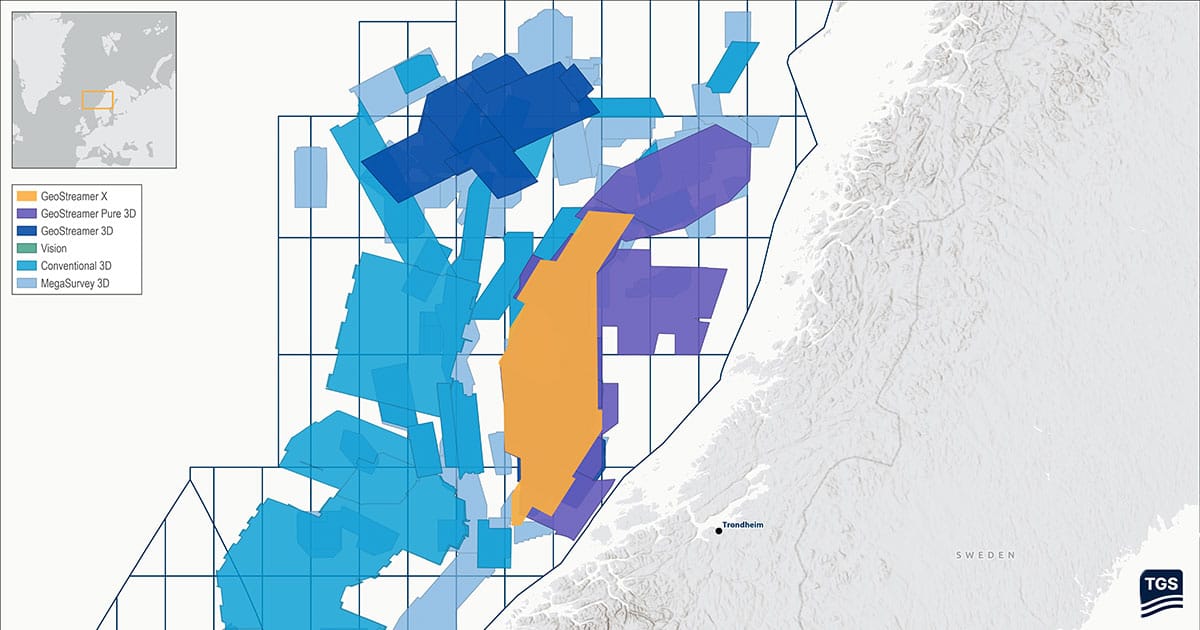
With this milestone, TGS now offers more than 21,500 square kilometers of high-quality GSX multi-client seismic data available for licensing. The dataset provides a modern, high-resolution foundation for development, ILX, and TLX exploration activities across one of Norway’s most prospective offshore regions.
The GSX program delivers an advanced, high-density Dual Azimuth solution that complements existing GeoStreamer coverage. Designed to resolve long-standing imaging challenges on the Halten Terrace, the dataset enables clearer interpretation of complex structures and identification of remaining prospectivity.
The Halten Terrace features high-quality hydrocarbon reservoirs within a structurally intricate setting shaped by Late Jurassic rifting. Resulting horsts, tilted fault blocks, and Cretaceous basin floor fans represent diverse play types that benefit from enhanced illumination and broadband fidelity.
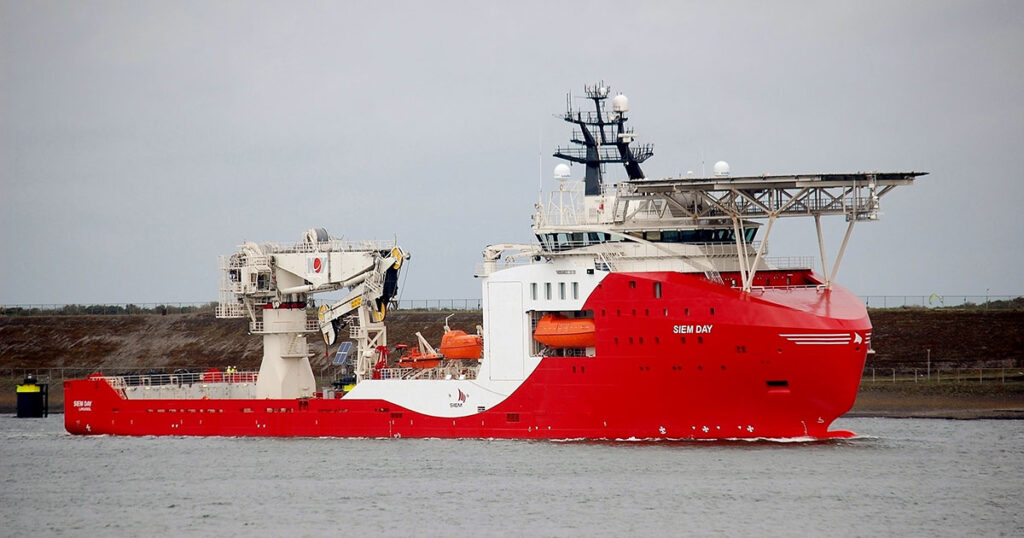
To achieve this uplift, the GSX campaign applied state-of-the-art acquisition innovations, including multisensor broadband technology, dual azimuth illumination, wide tow sources, dense streamer spacing, and long streamers for robust velocity model building. The result is a dataset that significantly improves fault definition, structural imaging, and reservoir characterization.
“Completing the GSX campaign marks an important milestone for our Norwegian Sea portfolio,” said David Hajovsky, Executive Vice President, Multi-Client at TGS. “This high-quality Dual Azimuth data will support our clients’ near-field exploration and development decisions for years to come.”