Today, the most meaningful opportunity in subsea is not about going deeper or building larger vessels. It is about fundamentally changing how work gets done and designing operating models that can scale safely, sustainably, and predictably over the long term. At Oceaneering, our subsea strategy is centered on three interconnected capabilities: remote operations, autonomy, and long‑duration subsea residency.
Designed for Surface Integration
Deploying DVLs on surface vessels introduces its own set of engineering and operational challenges. Conventional DVLs typically feature protruding transducer heads that are not flush with a vessel’s hull. This is particularly challenging on smaller or high-speed vessels, where hull shape and turbulence can interfere with acoustic performance.
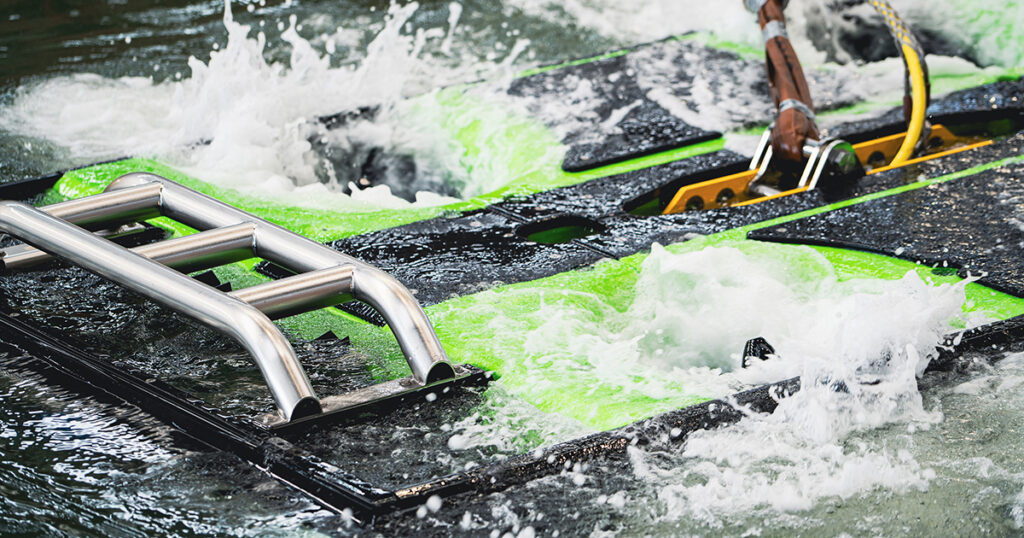
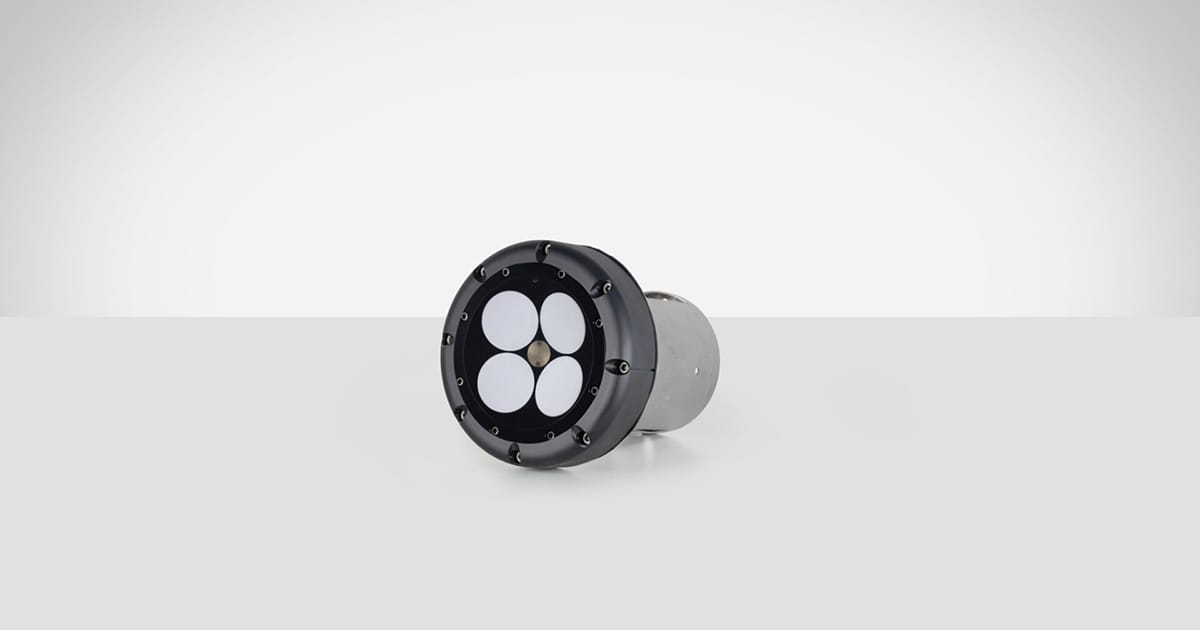
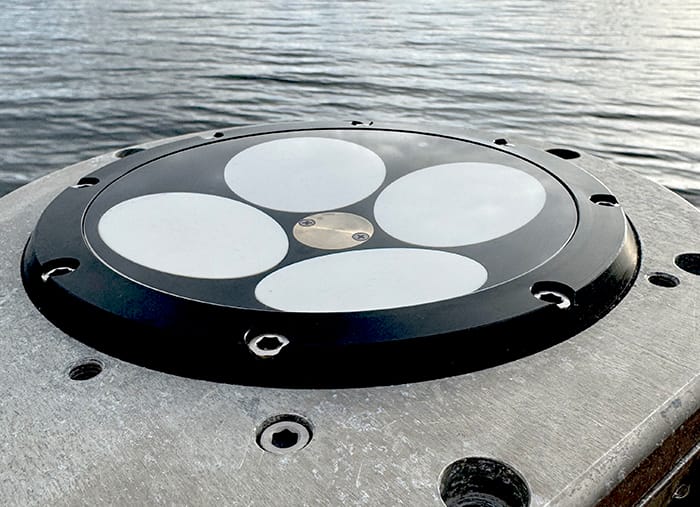
The Nortek DVL 333 Surface is engineered specifically to address these constraints: a compact DVL designed for flush-hull installation, minimizing drag and protrusion below the hull. The unique design of this product features a concave, fluid-filled transducer cavity sealed with an acoustic window. This allows for full control of sound velocity which eliminates the need for a hull-mounted speed of sound sensor.
Reliable Navigation Without GNSS
When paired with the DVL 333 Surface, a high-grade INS provides accurate position updates during GNSS outages or interference. By delivering continuous velocity data, the system significantly reduces drift, enabling USVs to maintain reliable navigation over extended periods. With a bottom-track range of up to 300 meters, the system supports autonomous operation in coastal environments. A water-track mode extends functionality when the seabed is out of range, ensuring continuous navigation capability across a wider range of operating conditions.
Built for Operational & USV Integration
For improved situational awareness, the DVL 333 Surface can also be upgraded to Nortek’s VM Operations’ vessel-mounted ADCP system. For ease of maintenance, an optional type-certified sea valve allows in-water servicing without dry-docking.
As USVs move into more complex and contested environments, navigation resilience is becoming increasingly critical. By combining a hull-optimized mechanical design with accurate velocity measurements, the Nortek DVL 333 Surface delivers reliable, GNSS-independent navigation for the next generation of USVs—enabling more advanced autonomous maritime operations.