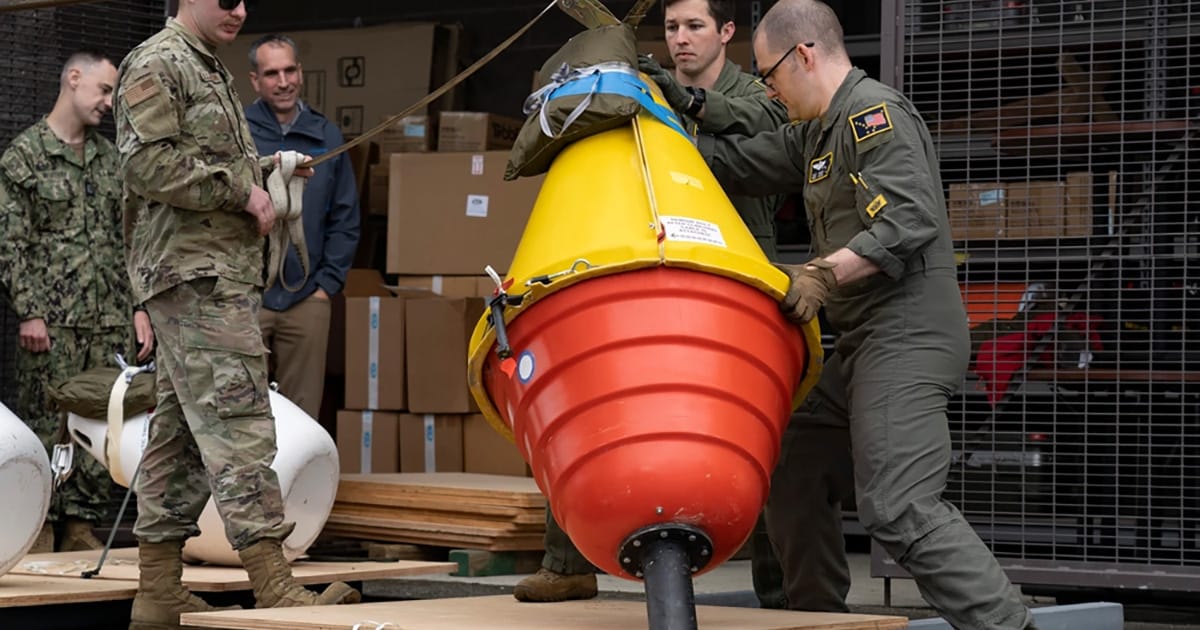
The mission marked the eighth successful buoy-drop collaboration by the partners since 2023, with approximately 126 buoys deployed so far. Such deployments are critical for maintaining the Arctic Observing Network (AON), which provides critical observations for weather and ice forecasting and related research.
USIABP’s objective is to establish and maintain a network of data buoys across the entire Arctic Ocean to provide meteorological, sea ice, and oceanographic data for real-time operational requirements and research purposes. Such data is especially valuable for informing US naval operations and enhancing warfighting readiness in the Arctic—a region that is becoming more accessible to both allies and competitors, thanks to diminishing sea ice in the summer months.
ONR is an executive member of ICE-PPR and a major supporter of USIABP, contributing significantly to the acquisition and deployment of buoys in the Arctic.
“Understanding ocean and weather conditions in the Arctic region is crucial to ensuring safe, effective naval operations in this arduous part of the world,” said Chief of Naval Research Rear Adm. Kurt Rothenhaus. “Exercises like this buoy drop demonstrate the value of strong partnerships between military, government, and academia, enabling the exchange of knowledge, resources, and insights benefiting the Sailors and Marines we have the privilege of serving.”
During the January 2025 deployment, two flights dropped approximately 35 buoys along a flight path from Barrow, Alaska, over the Arctic Ocean and its peripheral East Siberian, Laptev, Chukchi, and Beaufort seas. The buoys track air pressure, temperature, ice drift, and ocean currents.
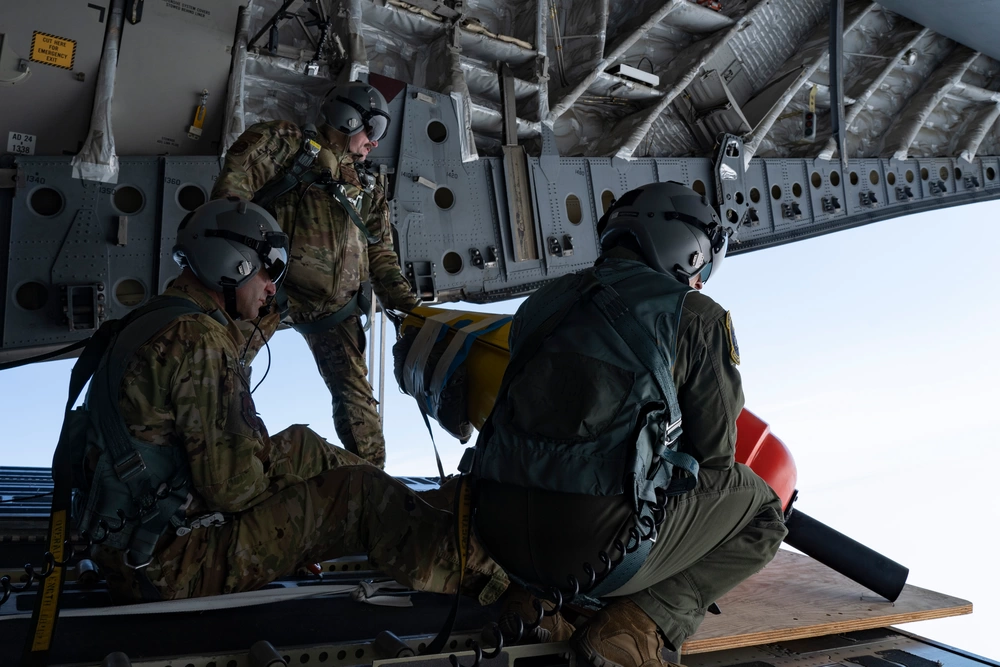
The 144th Airlift Squadron (known as the “Arctic Wolves”) conducted the buoy drops, each of which lasted 10-14 hours, on a C-17 Globemaster III aircraft. In addition to squadron personnel, participants included professors and scientists from several universities and ONR reservists.
Flying over such a large area provided a great opportunity for visual surveys and documentation of the ice. Five types of buoys—Ice Trackers, Ice Balls, ICEXAIR, Air Expendable Ice Beacons (AXIBs), and experimental buoys—were deployed from the C-17. The Ice Trackers, Ice Balls, ICEXAIRs, and experimental buoys were deployed directly onto the ice, while the AXIBs landed in cracks between the sea ice. The buoys have unique design features to help them survive the harsh environment.
Both air drops provided a worthwhile training objective for the 144th Airlift Squadron and served as an excellent method for deploying buoys across the austere, remote region. The squadron also used the mission to train for Arctic rescue air drops.
Data collected from the buoys will enhance weather and ice forecasting and environmental models by organizations such as the National Weather Service, Naval Ice Center, and National Oceanic and Atmospheric Administration—reducing the risk to naval assets operating in the Arctic.
In addition, as the annual cycles of freezing and thawing occur, buoys may be crushed by the sea ice, drift out of the Arctic Ocean or reach the end of their service lives. The AON, and the buoys comprising it, must be replenished periodically to provide continuous environmental data.
The buoy air drop effort emphasizes the great scientific and operational capabilities achieved through collaboration between US Department of Defense research professionals, academic professors, and researchers, Navy Reserve and Air National Guard units, and contractors.
Such partnerships have many benefits, such as standardization, equipment sharing and eliminating unnecessary duplication of work. The cooperation also facilitates efficient and cost-effective polar research, development, test and evaluation projects.