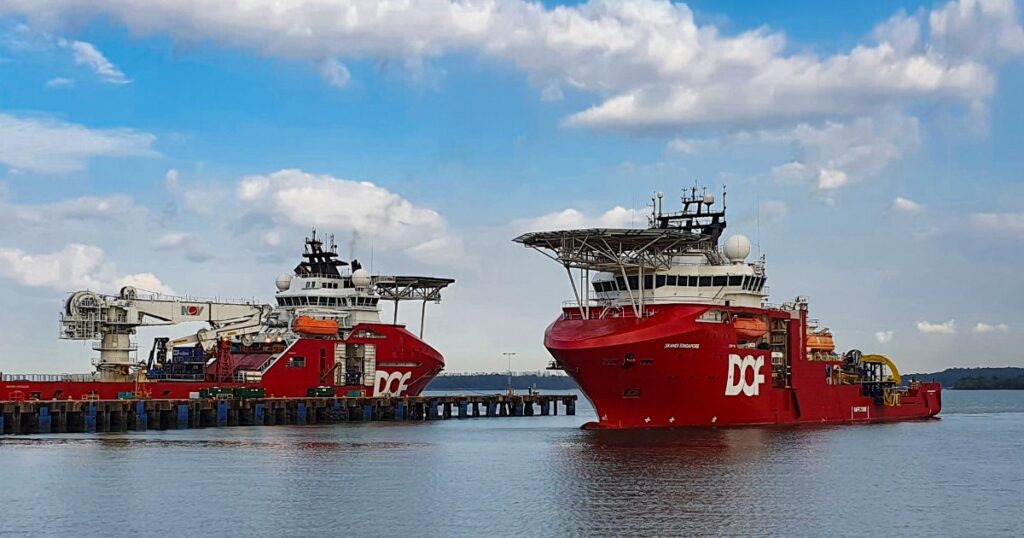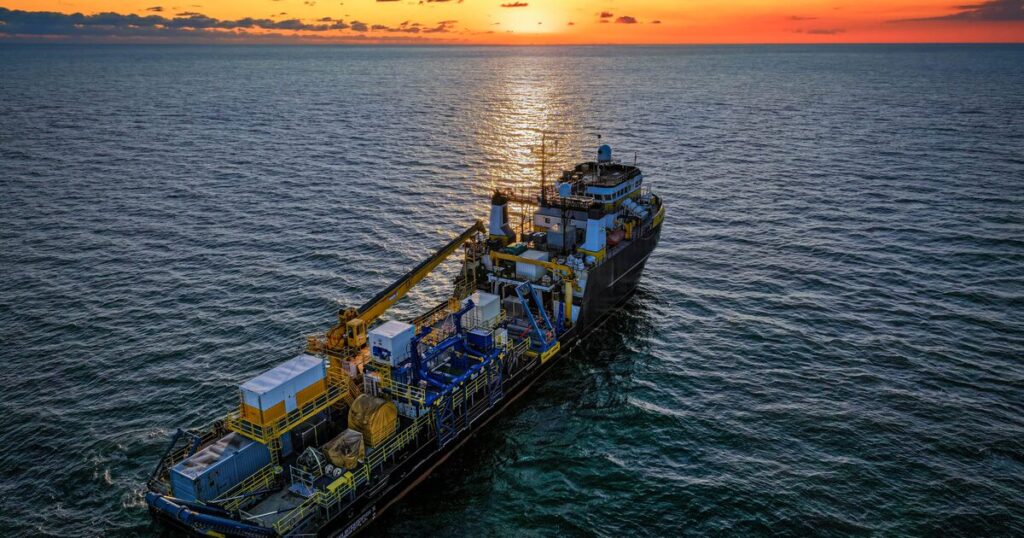

Subsea Rock Installation, pioneered by Van Oord since the 1970s, is vital for protecting and stabilizing offshore energy assets. With a track record in efficient and innovative flexible fallpipe vessels, Van Oord is a market leader in seabed intervention.
Maximum Capacity, Minimal Impact
The new vessels will be equipped with a substantial loading capacity of 35,000 tonnes, will be capable of handling large rock sizes, and feature a DP-2 dynamic positioning system. This advanced system will enable the vessels to maintain precise positioning despite challenging conditions such as waves, wind, and currents. These features will make the vessels ideal for long-distance projects, as they will minimize round trips, reducing emissions and costs per installed rock volume.
“Van Oord is at the forefront of the energy transition. Through innovative technologies and long-term investments, we actively contribute to greater energy security and energy independence for countries. Particularly in times when securing critical underwater infrastructure is a priority, this investment is important. These new vessels embody our commitment to innovation, safety, sustainability, and efficiency, while supporting the growing demands of our clients and our own net-zero ambitions,” said Maurits den Broeder, Managing Director Offshore Energy at Van Oord.
Sustainable Technology
The sustainable design of the vessels features multi-fuel engines (capable of utilizing biofuel and methanol), a DC grid with a large battery storage capacity, and an energy-efficient hull design and rock handling system. These technologies enable a reduction in CO2 emissions, supporting Van Oord’s net-zero strategy.
Building on a Legacy
Van Oord currently operates three Subsea Rock Installation vessels: Stornes, Nordnes, and Bravenes. The new vessels will build on this proven platform, offering key upgrades to meet future offshore challenges. The vessels will be constructed by Yantai CIMC Raffles Offshore in China.