
With Halloween on the horizon, a standout discovery is a new predatory sponge (Chondrocladia sp. nov.). Its spherical form is covered in tiny hooks that trap prey, a clear contrast to the gentle, passive, filter-feeding undertaken by most sponges. ‘Zombie worms’ (Osedax sp.) were also observed. Although not thought to be new to science, these worms have no mouth or gut and rely on symbiotic bacteria to break down fats inside the bones of whales and other large vertebrates.
“Accelerating species discovery is not a scientific luxury, it is essential for public good,” said Mr. Mitsuyuki Unno, Executive Director of The Nippon Foundation, who leads Ocean Census with the Nekton Foundation. “Ocean Census is a program with the goal to reveal the unknowns of our world. Through its expeditions, we have seen another groundbreaking species discovery that benefits the world’s scientists, policymakers and communities.”
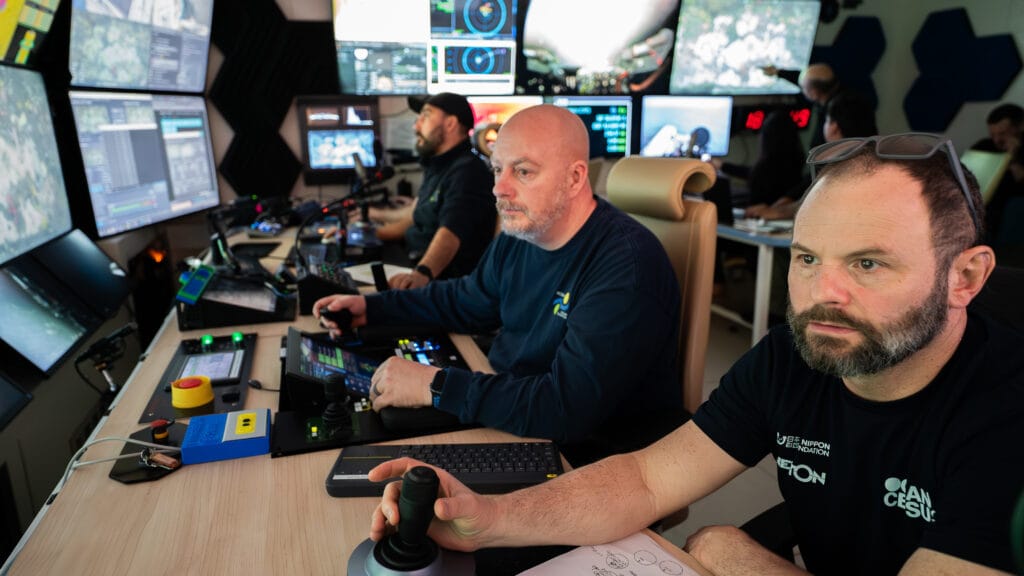
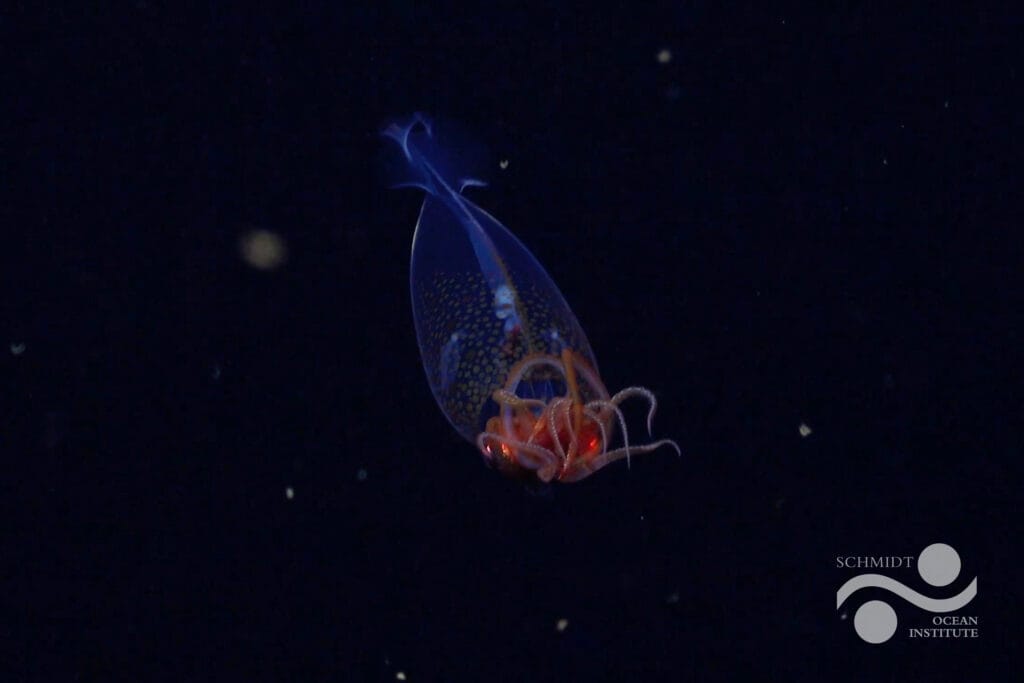
Searching for New Species in the South Sandwich Islands was an Ocean Census Flagship expedition onboard Schmidt Ocean Institute’s R/V Falkor (too) using ROV SuBastian to survey volcanic calderas, the South Sandwich Trench, and seafloor habitats around Montagu and Saunders Islands. The team collected nearly 2,000 specimens across 14 animal groups (phyla), alongside thousands of high-definition images and hours of video. Highlights include new hydrothermal vents at ~700 m with chemosynthetic communities, vibrant coral gardens, evidence of explosive undersea volcanism, and the first confirmed footage of a juvenile colossal squid.
In addition, three researchers from the Ocean Census Science Network supported an expedition onboard R/V Falkor (too) in the Bellingshausen Sea. When iceberg A-84 (≈510 km²) calved from the George VI Ice Shelf in January 2025, the ship pivoted to the newly exposed seabed, becoming the first to investigate an area previously sealed beneath ~150 meters of ice.
“The Southern Ocean remains profoundly under-sampled. To date, we have only assessed under 30% of the samples collected from this expedition, so confirming 30 new species already shows how much biodiversity is still undocumented,” said Dr Michelle Taylor, Head of Science at The Nippon Foundation-Nekton Ocean Census, “By coupling expeditions with species discovery workshops, we compress what often takes more than a decade into a faster pathway while maintaining scientific rigor by having world experts involved.”
The Southern Ocean expeditions also revealed new armored and iridescent scale worms (Eulagisca sp. nov.), previously unknown species of sea stars (Brisingidae, Benthopectinidae and Paxillosidae); new crustaceans, including isopods and amphipods, with material under review that may represent a new amphipod family; and rare gastropods and bivalves adapted to volcanic and hydrothermal-influenced habitats. Additional possible new species, among them black corals and a potential sea-pen genus, are undergoing expert assessment.
“Advanced tools—from precise seafloor mapping to high-definition ROV imagery—allow us to explore and gather data from places never seen before by humans,” said Dr Jyotika Virmani, Executive Director, Schmidt Ocean Institute. “The goal we share with Ocean Census to accelerate discoveries has resulted in the first confirmed sighting of a juvenile colossal squid and new species, and exemplifies what becomes possible when technology, ship time, and a global science network work as one.”
At the Southern Ocean Species Discovery Workshop, an international team of taxonomists fast-tracked species verification by triaging, imaging and comparing specimens on site, using targeted DNA barcoding where needed. This ocean-to-lab model is a newer, faster, and more collaborative approach to species discovery for the global community, addressing a common reality in taxonomy—limited funding and capacity mean samples can sit unprocessed for years.
“This is exactly why the Ocean Census exists—accelerating the discovery of ocean life and making it openly available,” added Dr Taylor, who is also a world-leading expert in deep-sea corals and senior lecturer at University of Essex. “Each confirmed species is a building block for conservation, biodiversity studies, and untold future scientific endeavors.”
Polar deep-sea ecosystems remain profoundly under-sampled yet are central to understanding evolution, biogeography and resilience in our rapidly changing climate. The Ocean Census’ accelerated species discovery model generates open, high-quality biodiversity evidence to support taxonomy, conservation planning, and future research. All confirmed records meeting the Ocean Census ‘Discovered’ criteria will be curated in the open access Ocean Census Biodiversity Data Platform.