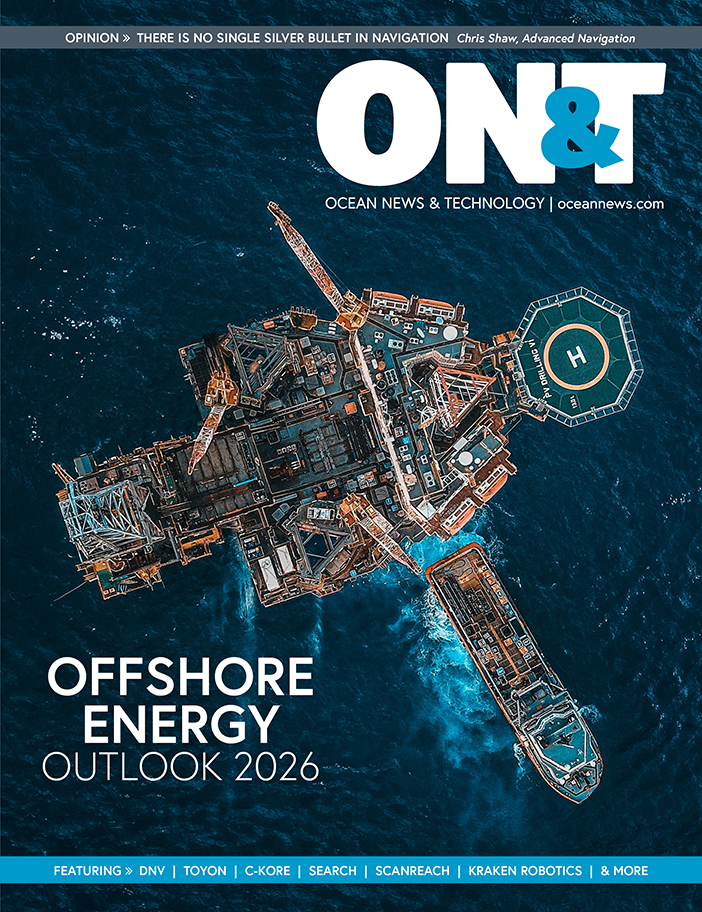

Now a bigger transformation is underway: the move toward fully autonomous offshore operations. And the unmanned horizon is closer than many think.
ENABLED BY CONNECTIVITY
Autonomous platforms, whether in oil and gas or offshore wind, are not science fiction. They are being designed and piloted today. But none of this is possible without ultrareliable, low-latency connectivity. From private 5G to subsea fiber networks, connectivity is the nervous system that allows machines, sensors and AI-driven decision tools to replace manual intervention offshore.
At Tampnet, we see this future every day across more than 450 installations connected to our 5,400 km subsea fiber and expansive 4G/5G coverage in the North Sea and the Gulf of Mexico/America. Whether enabling remote inspections at a platform or crew welfare on a rig, the principle is the same: connectivity makes autonomy viable.
SAFETY, TALENT & SUSTAINABILITY
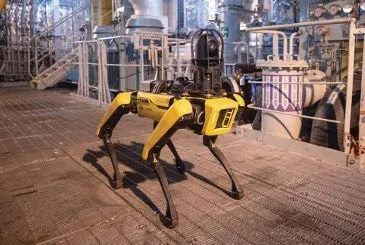
The case for unmanned operations is compelling: First, safety—fewer people offshore mean fewer helicopter trips and lower exposure to high-risk environments; Second, talent—with engineering graduates choosing tech over oil, autonomy in the offshore space helps bridge the talent gap by introducing more technology and shifting specialist work onshore; and Third, sustainability—smaller crews and more remote operations translate directly into lower emissions and energy use.
For the sector, autonomy addresses some of the most pressing ESG and workforce challenges.
THE RETROFIT CHALLENGE
Next-generation platforms are being designed with minimal personnel on board (POB) from day one. Some are targeting fewer than 70 offshore staff, and a few envision close to zero.
But brownfield retrofits remain the harder challenge. Here, private 5G networks and mobile edge compute are game-changers, allowing robust, steel-penetrating coverage without extensive cabling, and processing data at the asset itself to minimize latency.
SECURING THE FUTURE
Autonomy raises new questions about security. An unmanned platform or vessel is only as strong as its weakest link. That means cyber resilience, redundant subsea fiber routes and real-time monitoring are non-negotiable.
Connectivity providers must work hand-in-hand with operators and governments to ensure offshore autonomy is safe, secure, and trusted.
The move to autonomous offshore platforms is not a distant dream, it is a near-term reality. But it will only succeed if the industry recognizes that digital infrastructure is as critical as steel and concrete.
Subsea fiber, private 5G, and edge computing are the building blocks of the unmanned horizon.
At Tampnet, we believe that the future of offshore is not just connected—it’s autonomous.
This spotlight appeared in ON&T Magazine’s 2025 November Edition, Remote Operations & Force Multiplication, to read more access the magazine here.