“The only possible way to solve the climate crisis is to both cut emissions and pursue the widest possible range of science-based carbon dioxide removal strategies,” said lead author Ken Buesseler, Executive Director of the ExOIS program and Emeritus Research Scholar at the Woods Hole Oceanographic Institution (WHOI).
In their peer-reviewed article, the authors note that past OIF field studies found that relatively tiny additions of iron in some parts of the ocean can stimulate the growth of small, plant-like organisms known as phytoplankton that live in the surface ocean. These organisms use sunlight and carbon dioxide dissolved in seawater to grow and multiply, which in turn pulls more carbon dioxide out of the atmosphere into the surface ocean in the process. However, those early experiments were not designed to assess the efficacy, durability, and feasibility of OIF, nor did they specifically evaluate the broader ecological and biogeochemical impacts of large-scale additions of iron.
The next generation of trials would need to be substantially larger and longer than prior studies to capture not only phytoplankton bloom development, but also the process of bloom decay, the fate of newly produced carbon, and any potential ecosystem impacts. The authors propose experiments lasting more than three to six months and spanning an area of about 1,000 square kilometers, with an explicit requirement to document a return to natural conditions after iron additions end as a core “go/no-go” criterion.
A key objective they identify is to quantify the amount of additional carbon exported to depths beyond what would occur without intervention, largely through natural ocean processes. This “additionality,” as well as the durability, or length of time that carbon would be removed from the surface ocean, are key quantities that they argue need to be the focus of monitoring, reporting, and verification (MRV) systems. In addition, they point to the need for environmental MRV, or eMRV systems, tracking ecological and biogeochemical responses to OIF.
For an initial site, the authors point to the Gulf of Alaska in the Northeast Pacific as a promising location based on the region’s low-iron conditions, the availability of decades of research in the area at Ocean Station Papa, evidence of natural iron-driven blooms in the past, and physical characteristics that may help keep the iron-fertilized patch from dispersing too rapidly.
“While the Southern Ocean has the largest carbon removal potential, international governance and logistical hurdles make working there far riskier for a first large-scale experiment, as well as more expensive. Demonstrating MRV/eMRV at scale and with credible controls would be more promising in the NE Pacific,” said Margaret Leinen, professor and oceanographer at Scripps Institution of Oceanography of the University of California – San Diego.
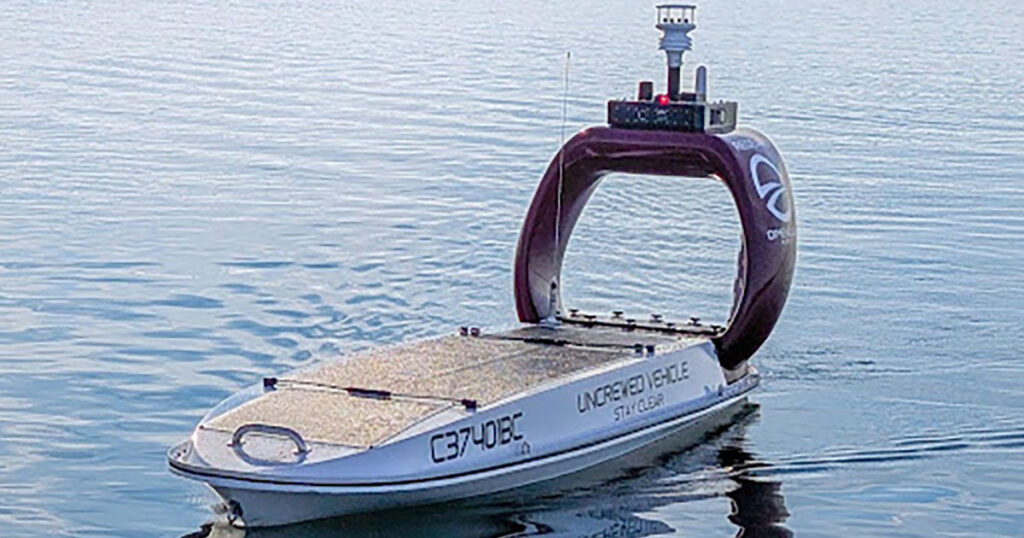
The field trial concept includes creating and tracking a large patch (on the order of 30–50 kilometers per side) of iron-fertilized surface ocean using established iron delivery methods, paired with modern ocean observation tools, surface drifters, autonomous vehicles, satellite-based sensors, and ship-based measurements of key oceanographic variables. The authors also outline predefined “off-ramps” designed to halt iron release or further experimentation if key environmental thresholds are approached or crossed. Although they were not seen in prior studies, potential concerns include deoxygenation, production of other greenhouse gases, or the onset of a harmful algal bloom. In addition, they emphasize the critical importance of engaging key coastal communities and rightsholder groups near the region of iron fertilization and consider concerns and input as part of the experimental design.
“In addition to a rigorous science plan, it is important to see that community outreach and engagement are considered early in the process, with impact assessment plans laid out in an open and transparent manner following international protocols for OIF research on the high seas,” said Brad Warren, CEO of Global Ocean Health.