Looking ahead to 2026, how do you see Video-Ray’s ROV portfolio evolving to meet customer needs?
Our ROV portfolio will continue to build on our modular Mission Specialist technology, which ultimately delivers operational flexibility to support a wide range of missions. Our architecture allows us to integrate advanced sensors and tooling, allowing customers to configure Mission Specialist systems for specific mission profiles, whether for naval defense or commercial subsea operations.
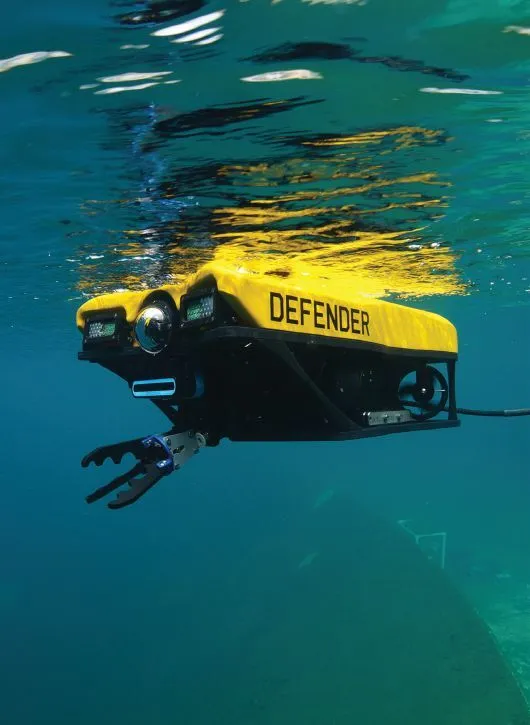
One aspect of demand driving R&D efforts is the capacity to deploy portable ROVs to greater depths. In 2024, we delivered our first 1,000-m rated Defender system, followed this year by our first 4,000-m rated Defender. In 2027, we are planning to deliver a 6,000m Mission Specialist Wraith configuration.
Wraith represents a new tier of vehicle for Video-Ray… tell us more…
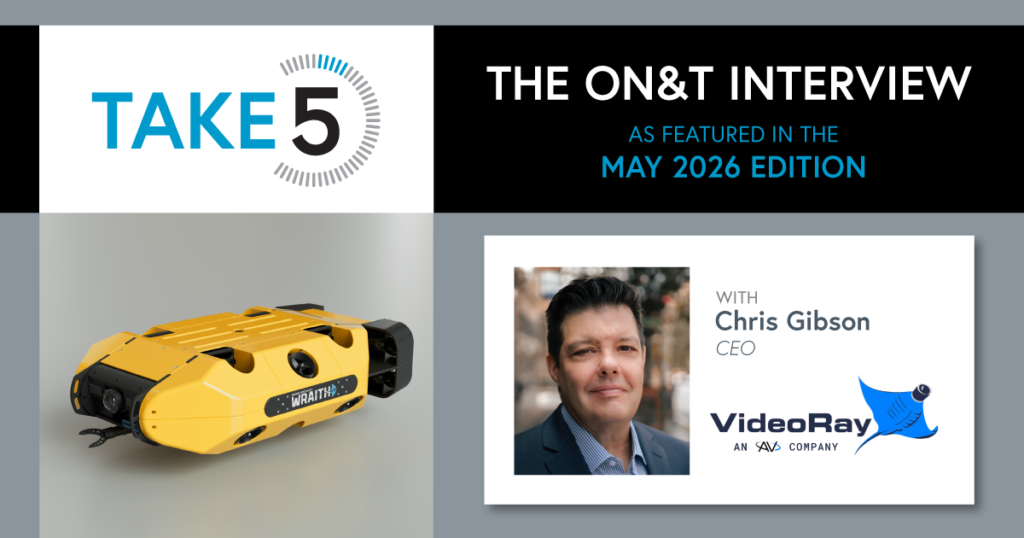
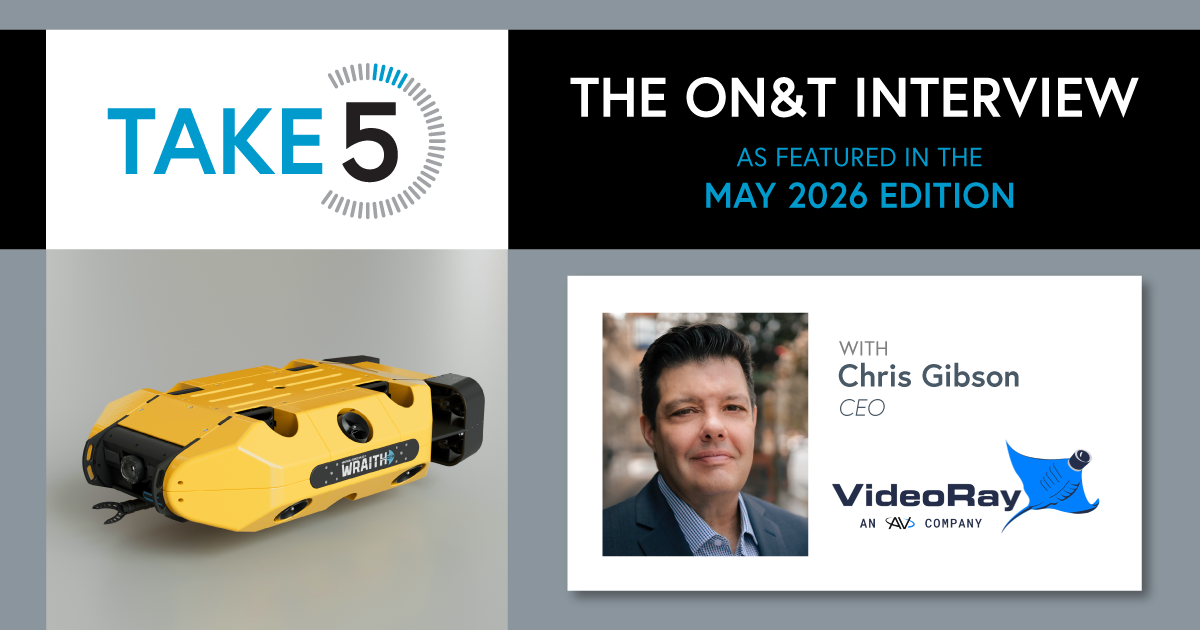
Wraith ( pictured on the front cover of this edition ) is a new ROV designed to complement our traditional Mission Specialist platforms. One of the key differentiators with Wraith is its specialized payload capacity; the Defender can lift approximately 9.5 kg (20 lbs) compared to the Wraith’s 36 kg (80 lbs) capability. Wraith’s payload bay is designed around the vehicle architecture rather than beneath it, which gives operators greater flexibility in how sensors and tools are mounted and integrated. This allows systems to be configured around specific mission workflows rather than forcing payloads to adapt to the vehicle.
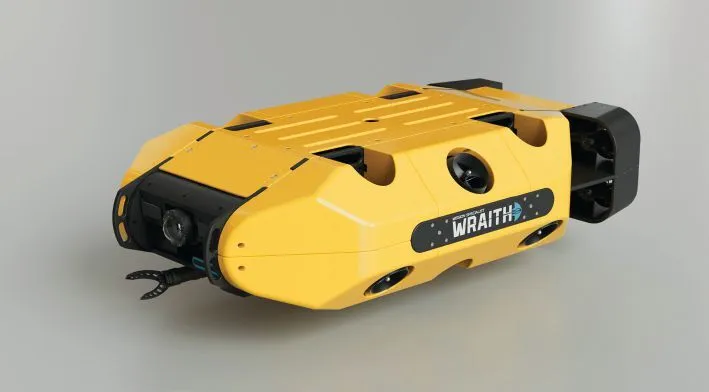
Wraith also introduces true sixdegree-offreedom (6-DoF) flight, enabled by ten powerful thrusters that allow the vehicle to maneuver and hold position at virtually any attitude. This significantly improves stability and precision during operations, while also making the ROV behavior more predictable across the operational envelope. It also enables the system to reach a target location significantly faster than traditional ROV approaches. The vehicle’s Dive Mode allows it to descend up to three times faster than systems relying on drop weights, while Surface Mode enables ascents up to ten times faster than traditional thrust-up methods. With 80 pounds of forward thrust, along with strong reverse, lateral, and vertical thrust capabilities, the vehicle can perform direct-to-target transits regardless of orientation.
The propulsion system consists of four horizontal thrusters and six vertical/lateral thrusters with quick-change propellers, delivering a top speed of approximately 4.3 knots, lateral speed of 0.9 knots, and vertical speeds exceeding 1.5 m/s. This performance allows operators to work more efficiently while maintaining precise control in demanding environments.
For commercial operators, Wraith solves a critical challenge: performing complex missions with larger sensor and tooling packages while maintaining precise maneuver-ability and efficient operations. Wraith and Defender systems share the same modular philosophy, common components, familiar interfaces, and ecosystem of sensors and tooling, so incorporating Wraith into an existing fleet is straightforward. We want our ROVs to be as safe, intuitive, and as easy-to-pilot as possible across all user profiles, and much of this relies on software as it does hardware.
With Video-Ray bringing software development in-house, how does this vertical technology stack improve the experience for commercial operators?
By owning the software architecture internally, we are able to respond more quickly to customer feedback, integrate new capabilities faster, and ensure that our software evolves alongside the hardware platforms it supports.
A common software environment creates a consistent user experience regardless of which system an operator is using. For commercial operators, this means reduced training time, easier transitions between platforms, and greater familiarity with system controls and workflows. It also allows us to easily introduce new features such as advanced sensor integration, semi-autonomous behaviors, and improved data management across the entire product line rather than developing them separately for each vehicle.
Ultimately, this vertical integration makes the systems easier to operate, faster to update, and better aligned with the evolving needs of our customers.
How does this translate into specific in-field operating advantages were previously not possible?
In short, a unified software platform across all vehicles means we can introduce advanced functionality that enhances both vehicle performance and operator effectiveness.
One important capability is true sixdegree-offreedom (6-DoF) flight control, which allows the vehicle to maneuver and hold position at any attitude while maintaining precise control. This improves stability during inspection and intervention tasks and reduces the workload on operators.
The platform also enables multi-camera integration, allowing operators to view different perspectives simultaneously and improving situational awareness during complex missions. In addition, new predictive maintenance capabilities will help monitor system health and alert operators to potential issues before they impact operations.
Another key area of advancement is autonomy. The new software architecture supports semi-autonomous functions that assist operators during missions, as well as the future development of full autonomous capabilities using artificial intelligence (AI) and machine learning (ML). Technologies such as SLAM (Simultaneous Localization and Mapping) will allow vehicles to better understand and navigate complex underwater environments.
The platform also opens the door to over-the-horizon control, multi-system control, and eventually tetherless operations, significantly expanding the operational flexibility of Video-Ray systems. Together, these capabilities represent an important step toward more intelligent, efficient, and scalable underwater robotic operations.
Since joining Aero-Vironment (AV), what capabilities or resources does AV bring that help accelerate Video-Ray’s commercial roadmap?
At first glance, the legacy product portfolios of Aero-Vironment and Video-Ray appear quite different. Aero-Vironment has historically focused on aerial and ground robotics, while Blue-Halo’s technology portfolio has included areas such as space systems, directed energy, and electronic warfare. However, when we looked deeper into the engineering and operational challenges across these systems, we discovered meaningful areas of commonality.
Many of Aero-Vironment’s UAV platforms face the same design constraints that we encounter in underwater robotics—tight space envelopes, strict weight limitations, and the need for highly reliable components in demanding environments. As a result, there are several key technologies in play, including motors, cameras, power systems, and battery technologies. Leveraging Aero-Vironment’s experience has already proven instrumental to informing our commercial roadmap.
There is also strong operational alignment with Aero-Vironment’s Unmanned Ground Vehicle business, which serves many of the same EOD and defense customers that Video-Ray supports underwater. This creates opportunities to share lessons learned around mission requirements, system design, and operational workflows across domains.
By combining Video-Ray’s expertise in underwater robotics with AV’s broader experience across unmanned systems, manufacturing processes, and advanced engineering disciplines, we are able to move faster in developing new platforms, incorporate proven technologies from other domains, and scale production more effectively.
This feature appeared in ON&T Magazine’s 2026 May Edition, Subsea Robotics, to read more access the magazine here.