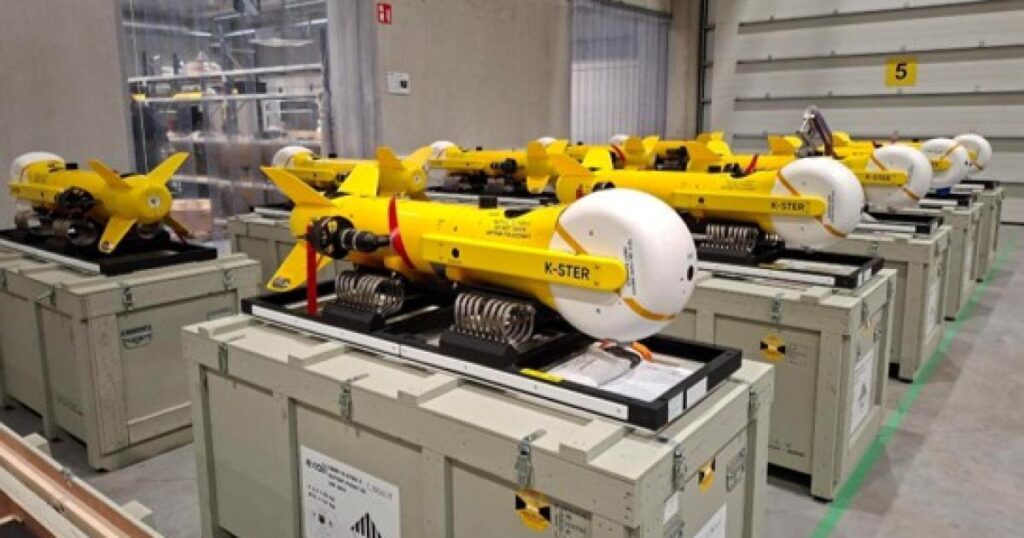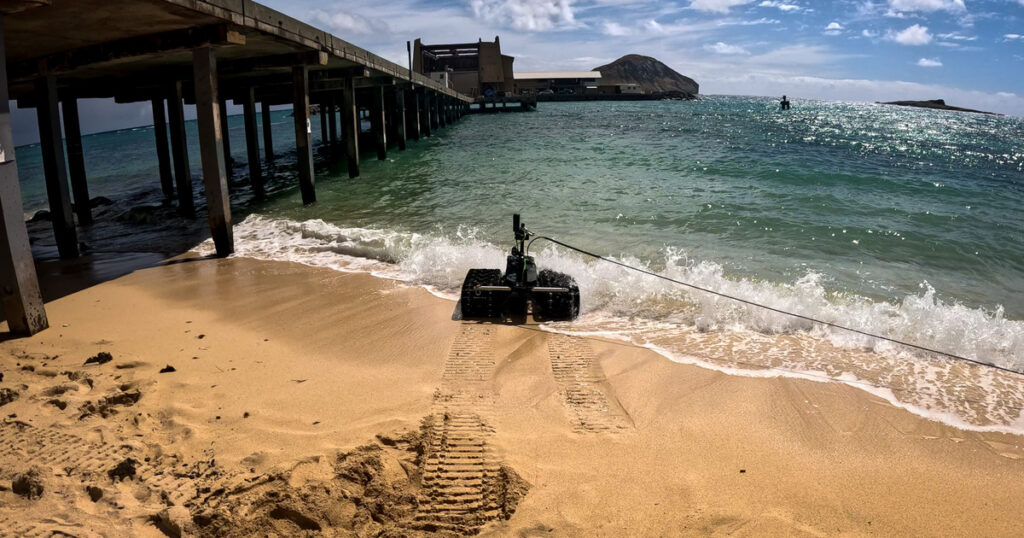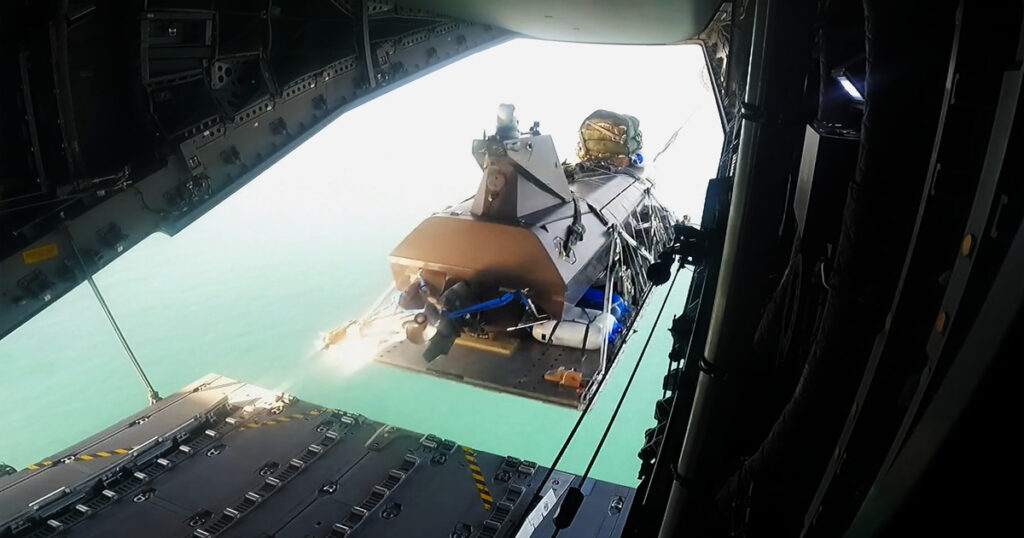
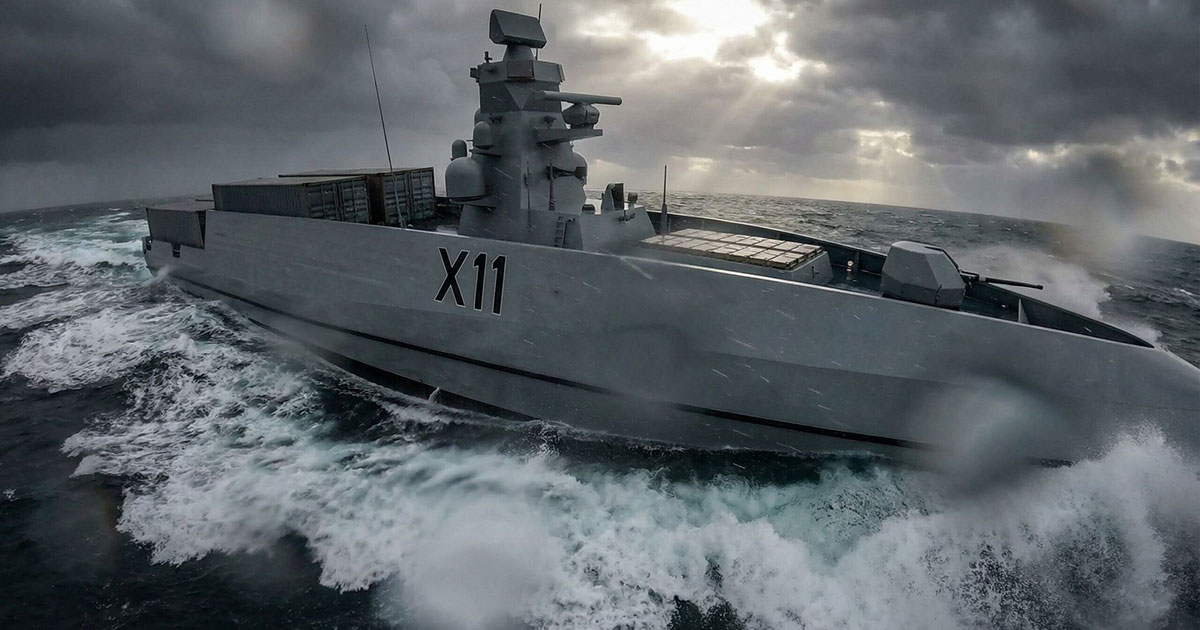
Designed in the UK, Navantia proposes its Large Autonomous Surface Vessel, LASV75, as a key component of the hybrid navy—which combines traditional crewed warships with crewless escorts and autonomous technologies such as drones.
Navantia UK’s design will provide persistent capability due to its size, range, and speed characteristics, with adaptability for different missions provided by smart modularity. The vessel is designed from the keel up to be uncrewed, providing high levels of availability.
The LASV75 can be constructed at pace and scale with a cost significantly lower than crewed vessels. Its modular hull allows for different configurations—sensing, operational mode, or a combination of both.
The concept, on display at the Combined Naval Event in Farnborough today, demonstrates Navantia UK’s intent to be a key supplier in strengthening the UK’s sovereign naval capabilities following last year’s purchase of Harland & Wolff’s assets.
Navantia UK is investing £157 million in its four yards—Appledore, Arnish, Belfast, and Methil—to turn them into some of Europe’s most advanced facilities.
Among the improvements is the installation of an automated panel line in Belfast, enabling the yard to manufacture large steel panels for ships quickly, safely, and precisely, with a high degree of mechanization.
Navantia UK is adopting digital design tools across its four yards to accelerate and automate naval projects. Taken collectively, these improvements will advance the yards towards Navantia’s Shipyard 5.0 concept—similar to the platform and processes used at Navantia’s facilities in Spain.
Ultimately, Navantia UK expects its technology to bring down the standard time for designing and building a large naval vessel by up to 30%. This supports the Ministry of Defence’s ambition, as given in SDR 2025, to deliver major modular platforms faster, seeking 2 years to contract and ideally 5 years to delivery.
Work is continuing at pace on the £1.6 billion Fleet Solid Support program. Navantia UK cut steel at Appledore in December for the first of the three ships, and the 85-meter Seahorse purpose-built barge was launched from Methil earlier this month to transport blocks and components between Appledore and Belfast.
Derek Jones, Chief Commercial and Business Development Officer at Navantia UK, said: “Autonomous vessels are fundamental to the future of sovereign defense capabilities. Naval capabilities of the future will comprise a hybrid mixture of crewed warships with uncrewed escorts and ancillary ships.
“At Navantia UK, we’re investing heavily in our four shipyards to turn them into ideal partners to deliver this vision of the future. With digital design capabilities and cutting-edge automated technology, our sites are being transformed into some of the most advanced shipyards in Europe.
“Meanwhile, we’re working at pace to deliver the Fleet Solid Support program which involves building some of the largest ships in the armed forces.”