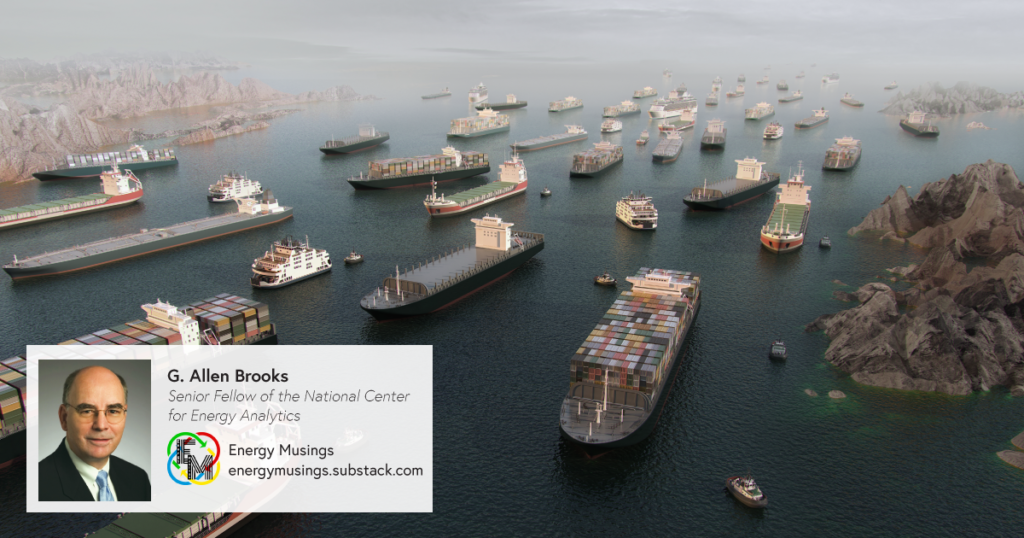

The Yemen Houthis, an Iranian proxy, have escalated attacks on Saudi Arabian oil exports from the Red Sea. The oil moves across Saudi Arabia via its East-West pipeline, and it ships either via the Suez Canal or through Bab al-Mandeb. Like Persian Gulf tankers, many Saudi tankers leaving the Red Sea have their transponders off.
Because we do not know exactly how much Middle East oil is reaching the market, we infer it from oil price movements. They suggest the overall shortage is less than many fear. However, oil prices are being impacted by a growing shortage of refined products due to war damage to refineries. Middle East refineries have been damaged and are also limited by Hormuz’s closure.
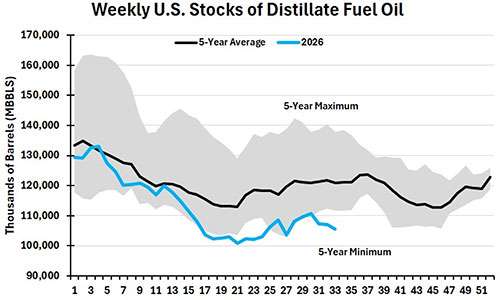
Ukraine has stepped up its attacks against Russia’s refineries throughout the country. Russia’s top ten refineries have all been damaged, forcing them to shut down or significantly reduce their output. Petroleum is being rationed throughout Russia, and the government is resorting to extraordinary steps to ease the problem. It is importing tanker-loads of gasoline and diesel refined from Russian crude oil previously exported to a Russian-owned refinery in India. Russia’s diesel shortage is particularly significant for the global market, as the country has been a major exporter of the fuel. As a result, the margin earned on a barrel of diesel has recently exceeded the price of a barrel of crude oil.
The major supply surprise has been how China has become the global oil market regulator. With a strategic stockpile of crude oil, China reduced its oil imports, easing the pressure for higher oil prices. Over the past two decades, China, the world’s largest oil importer, built its strategic reserve to 1.2 billion barrels, enough to last for one year. With Hormuz closed, China reduced oil imports, throttled back its refineries to meet only domestic demand, ceased product exports, and worked to reduce domestic consumption. It has also benefited from its large and growing EV population, which has reduced gasoline consumption.
Refinery economics are impacting oil prices. War damage, combined with refinery closures in Western countries, has reduced global refining capacity by approximately 10 percent. This has elevated pump prices. Pump prices will remain elevated, even if the wars are settled and the global oil market returns to its pre-Iranian war status. Until refining capacity currently offline returns to operation, oil prices will be impacted by daily news about the industry’s capacity shortage.
The wars and their impact on the global refining industry will keep prices elevated. Oil price volatility will continue, driven by daily war news.
NATURAL GAS
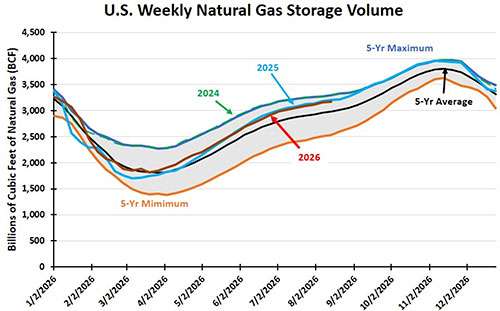
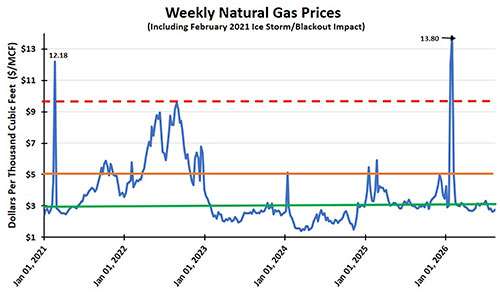
As the US natural gas market heads into the dog days of summer, winter storage volumes are tracking 2025 closely, while LNG exports remain high. Despite the strong demand, gas prices remain contained at or below $3 per thousand cubic feet.
Domestic gas producers have benefited from a lack of hurricane activity disrupting output, as the season is historically quiet due to the super-strong El Niño. Heat domes affecting specific regions have boosted air conditioning use, which is often powered by natural gas. However, this demand has eased as summer begins to wind down.
Heat domes have been a challenge for the UK and Western European nations. Record-high temperatures, without universal air conditioning, have challenged residents and increased heat-related deaths. However, weather data shows that outside of these regions, global temperatures have been cooler than normal.
European Union utility officials haven’t boosted winter gas storage purchases. Natural gas in EU storage as of August 20 is slightly below the 5-year minimum. If injections remain on this track, the EU will enter winter with less than 77 percent of its storage capacity, putting residents at risk of an early and extended cold period. At the start of winter, the average storage level is mandated to be 90 percent of capacity. The low storage level has prompted the EU to ease that mandate, and it is hoping nations will boost injections to reach 80 percent.
The problem for EU gas customers is that gas prices are 66.5 EUR/ MWh, a multi-year high. Expensive natural gas is a challenge for European gas buyers competing for less LNG supply due to substantial volumes lost from Qatar because of the Iranian war. Qatar accounted for roughly 20 percent of global LNG shipments before the war. With damage to its terminals and processing facilities, Qatar has lost about 17 percent of its output for likely five years. Getting gas carriers out of the Persian Gulf has been challenging because Iran has targeted them in retaliation for Qatar’s support of the US and Israeli forces.
European gas buyers are competing against Asian LNG customers who have been more willing to pay high prices for cargoes. Unless buyers have contracted LNG supply, they compete in an auction market, with cargoes going to the highest bidder. The LNG market will remain tight for the balance of the European and Asian winter gas injection seasons, and prices will remain elevated.
Surprisingly, the heightened global LNG market has not raised US domestic gas prices, suggesting production remains strong. The new natural gas market fear is that the boom in data center construction will require so much supply that gas prices will be forced to rise by 2029 to levels consumers can’t tolerate. Will rising natural gas prices become the driver of a new wave of inflation that will slow economic growth and prosperity, or will new technology boost domestic gas output?
CRUDE OIL PRICES REMAIN TAME WHILE PRODUCT SHORTAGES LOOM

NATURAL GAS STORAGE TRACKS 2026 AND PRICE TRACKS BELOW $3/MCF