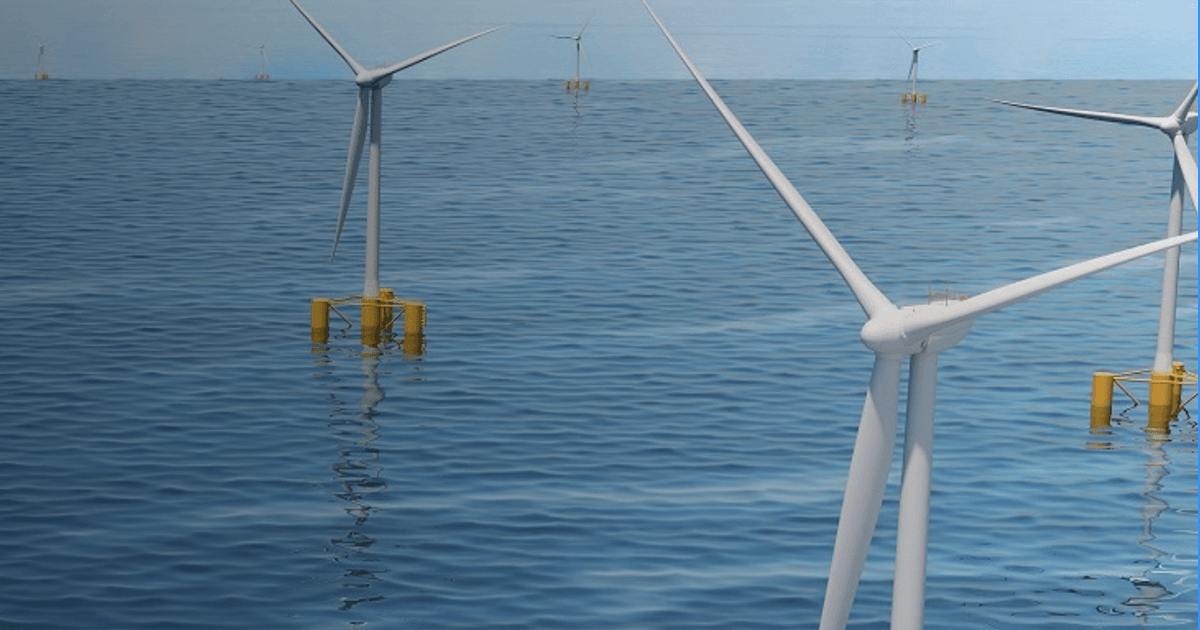
The trade and development body, which represents the country’s £9.2 billion underwater industry, wants to make sure the UK is well-placed to develop the new generation of floating offshore technology, creating thousands of jobs and positioning the UK as a global center of excellence.
Undersea cables, moorings, and anchor systems are key components of the critical infrastructure required to deliver floating offshore wind. The UK’s underwater industry excels in the manufacture and assembly of the myriads of components for these complex systems and in overcoming the challenges of installation, operation, and maintenance in hostile conditions and deep water.
Neil Gordon, Chief Executive of GUH, said: “We’ve made a clear and compelling case to the government as to why the underwater industry is of national strategic importance and why investment in this industrial sub-sector should be prioritized.
“Unlike fixed offshore wind in shallow waters, where large parts of the manufacture and fabrication have gone overseas, floating offshore wind is a nascent technology in more hostile and challenging conditions. But it’s one in which the UK has a very real competitive advantage—a subsea industry with over fifty years of offshore experience, whose technology and expertise are sought-after globally and which leads the way in dynamic undersea cables, moorings, and anchoring systems, not to mention their installation, operation, and maintenance. It is indeed a sector where we are world-beaters—and that’s not political hype!”

The sheer scale of what is proposed in offshore wind makes it one of the biggest industrial opportunities in a generation, said Mr. Gordon.
“But if the UK underwater industry is unable to meet the demand for subsea technology and services due to a lack of investment, we will become a caretaker of other nations’ technology and expertise rather than an innovator and major supplier.
“We have a unique opportunity to create thousands of new green jobs, transfer oil and gas jobs into renewables, build vital domestic infrastructure, and win export orders. Prioritizing and investing in the UK’s underwater industry will help accelerate the transition of our oil and gas supply chain and cement the UK as an international center of excellence. Not only will it secure our energy supply, but it will also protect critical underwater energy and communications infrastructure. Given the heightened threat from rogue nations, the underwater battlespace has become an area of high priority for the UK and wider NATO allies.”
In its response to Invest 2035, the government’s industrial strategy consultation, GUH set out what the underwater industry will need to take advantage of the “unprecedented” opportunity presented by floating offshore wind and maximize economic value for the UK.
Project certainty, speedier and less complicated consenting, investment in research and development, port infrastructure, and grid capacity are among the requests of the government.
Mr. Gordon added: “We have the capability, but we don’t currently have the capacity to meet the demand that will arise from the scale of offshore wind projects in the pipeline. Equally, we don’t have the confidence to know when and where to invest because we don’t have clear visibility and timelines for these projects. A clear pipeline of projects, with streamlined and better-resourced consenting, is needed to encourage the investment that will allow the supply chain to adapt and scale up. The underwater industry stands ready to help the UK meet its clean energy ambitions and maximize value for the UK by doing so. However, recognition of its strategic importance and prioritized investment from government is crucial.”
The key requests set out by GUH in its response include:
- The scale of floating offshore wind is huge, and there is an urgent need to invest in research, development, and innovation that is commensurate with the opportunity. More support and investment are required to increase academic research to commercialize new science and technology and enable early-stage technology companies to scale up.
- Specific innovation funding is required to develop cables and electrical systems, foundations, and anchoring systems, along with next-generation installation, operation, and maintenance methods using AI and machine learning-based predictive maintenance. Investment in digital technology should be focused on the development and adoption of unmanned and remote solutions, data collection for consenting, remote operation and maintenance surveys and protection against cyber and physical attack.
- Investment in port infrastructure is crucial for floating offshore wind, which requires large, deep-water ports. The UK currently has very few ports that can support the manufacturing of cables, construction assembly, and integration of floating offshore wind. Delivering the necessary upgrades to those that can will require significant investment and time to deliver ahead of project construction.
- Significant upgrades and reinforcements are needed for the grid to accept the dramatic increase in energy from offshore renewable wind and generate revenues for investors. The UK Government must provide a timeline and demand signals in order to attract grid investment.