The Rewilding Dogger Bank program will run for three years and will adopt a multi-pronged approach, from taking legal action to protect the area from destructive activities to restoring horse mussel reefs and improving representation and rights of Dogger Bank marine life in decision-making processes.
The Heart of the North Sea
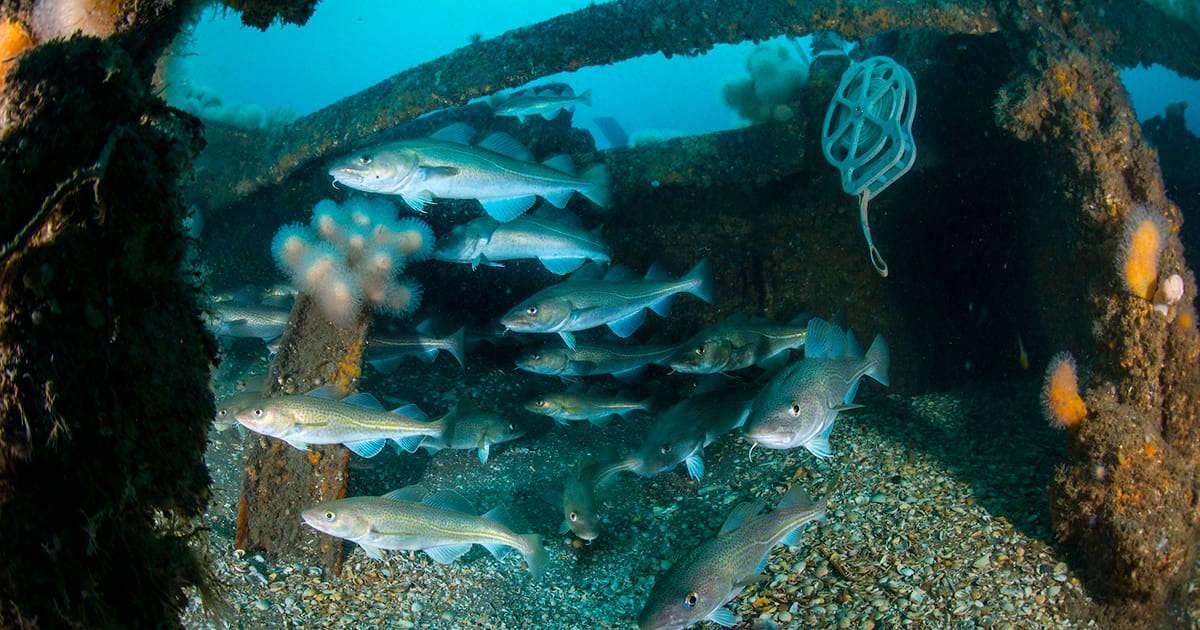
A vital marine ecosystem, the Dogger Bank is a large, submerged North Sea sandbank covering approximately 2.5 million ha across the UK, Dutch, German, and Danish waters. It functions as a nursery for sharks, rays, herring, and cod and forms a rich feeding ground for whales, seals, and seabirds. Despite its legally protected status in the British, Dutch, and German parts, the area faces severe ecological threats from, amongst others, industrial fishing, energy extraction, and heavy shipping.
Emilie Reuchlin, Co-Founder and Director of Doggerland Foundation: “All too often, offshore ecosystems are ignored—what’s out of sight is out of mind. We have been working in the Dogger Bank for over one and a half decades, and the challenges in restoring this ecosystem are immense. It has been degraded over centuries, and it is not easy to get to—it takes almost a day to travel to the site by boat. However, it is a vital breeding ground and nursery in the North Sea that needs protection and restoration. With the funding provided by the Endangered Landscapes & Seascapes Program, we will finally have the opportunity to scale up our efforts to bring back the species and habitats that the Dogger Bank has lost.”
Seven organizations are involved in the partnership, including the ATU (Atlantic Technological University) in Ireland, Blue Marine Foundation in the UK, BUND in Germany, WWF in Denmark, ARK Rewilding Netherlands, the Embassy of the North Sea, and the Doggerland Foundation in the Netherlands.
Clare Brook, CEO of Blue Marine Foundation, highlighted: “Doggerland was once a land bridge between Britain and Europe, a fertile cradle for humanity, which was inundated by rising sea levels 7,000 years ago. Once beneath the waves, the Dogger Bank became the heart of the North Sea marine ecosystem, with massive oyster beds supporting huge shoals of herring and cod. Industrial-scale over-exploitation of these rich resources followed, along with fierce sea battles from Tudor times to the First World War. So, after 500 years of conflict and plunder of marine life, it is fitting that a joint international team is seeking to restore the Dogger Bank to its former abundance. We are so grateful to ELSP’s visionary support for this ambitious project to rewild such a historically and biologically significant place.”