Within this context, drilling waste management is an area where innovation can deliver both environmental and operational benefits. Often treated as secondary to fuel use or power generation, waste handling is a considerable source of emissions. Transporting drilling waste to shore requires vessel journeys, fuel consumption, and heavy lifting operations, all of which carry environmental costs and safety risks. By rethinking how waste is managed throughout the lifecycle of a well, operators can reduce emissions while creating safer, more resilient operations.
RETHINKING WASTE MANAGEMENT
Traditional methods include solids control, slop treatment, and ship-to-shore transfers. Increasingly, however, operators are adopting technologies that process waste directly at the rig or wellsite. One leading example is thermal desorption, which separates drill cuttings into oil, water, and solids, enabling reuse or safe disposal without the need for transport.
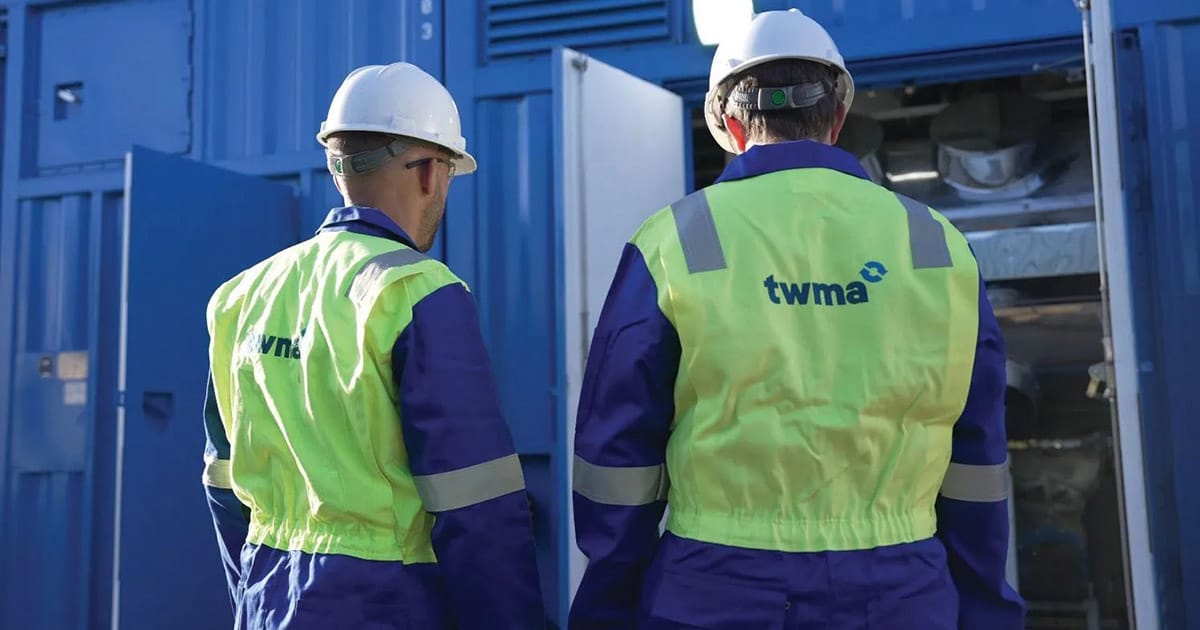
Drilling waste management specialist TWMA, has advanced this approach with its RotoMill technology, capable of processing and recycling up to 50% of drilling waste at the wellsite. By significantly reducing vessel shipments, the system can reduce logistics-related emissions by as much as 90%.
Safety is also improved through fewer lifting operations and reduced offshore staffing requirements, thanks to automation. In practice, TWMA treats more than 70,000 metric tons of drill cuttings annually this way, avoiding roughly 14,000 metric tons of CO2 emissions, equivalent to removing about 3,000 cars from the road for a year. Thermal technologies also support circular economy practices by reintegrating recovered base oil into drilling operations.
INNOVATION & THE PATH AHEAD
Waste management is evolving through automation, digitalization, and electrification. New systems feature higher-capacity units, optional electric drives to cut diesel reliance, and cloud-based platforms for real-time monitoring. TWMA’s RotoMill 2.0 reflects this progress. The system combines increased efficiency with TWMA’s XLink™, a hardware and software platform that enables remote oversight, realtime data insights, and enhanced operational control. These capabilities improve performance and provide regulators and stakeholders with greater transparency, ensuring that environmental benefits are measurable and verifiable. Looking ahead, TWMA is investing in the next generation of waste management technologies, with a breakthrough solution on the horizon that is expected to deliver its most significant environmental impact yet.
A BROADER INDUSTRY IMPERATIVE
The push toward net-zero demands scalable solutions that extend beyond pilot projects to become industry standards. Low-emission waste management demonstrates how rethinking long-established practices can unlock both operational efficiency and environmental value. For the offshore sector, embedding such innovations into everyday operations will be essential to meeting climate targets while safeguarding safety, compliance, and competitiveness.
This spotlight appeared in ON&T Magazine’s 2025 September Edition, Decarbonizing the Blue Economy, to read more access the magazine here.