AI-DRIVEN MONITORING
One of the key challenges of offshore energy technology development is ensuring environmental sustainability while expanding renewable energy infrastructure. RS Aqua, in collaboration with the University of Southampton and funded by Innovate UK, is addressing this challenge with the MARLIN project—a groundbreaking initiative designed to provide real-time underwater monitoring using artificial intelligence.
The MARLIN system utilizes machine learning to distinguish between ambient and unusual environmental noise, such as marine mammals or unauthorized human activity. This technology will allow stakeholders to remotely monitor offshore energy sites and marine protected areas in real time. By transmitting critical data to a web application, decision-makers can respond instantly to environmental risks, such as the presence of marine mammals during offshore wind farm construction or illegal fishing in protected areas.
Dr. Ryan Mowat, Research Director at RS Aqua, highlights the significance of this advancement: “This technology will revolutionize how we scientifically monitor our ocean environment. MARLIN will help ensure that offshore construction is sensitive to marine life and enable real-time recognition of illegal fishing activity.”
With the potential to reduce the need for vessel-based monitoring by up to 75%, MARLIN not only improves conservation efforts but also contributes to a reduction in offshore carbon emissions—an essential step in the transition to sustainable energy operations. Remote real-time monitoring of marine activity represents a major leap forward in the ability to balance industrial growth with ocean conservation.
DOPPLER TECHNOLOGY
As the offshore energy sector shifts towards wind and tidal power, accurate real-time data on ocean currents and subsea navigation is more critical than ever. Nortek’s Acoustic Doppler Current Profilers (ADCPs) and Doppler Velocity Logs (DVLs) provide vital data for ensuring the safety and efficiency of offshore operations.
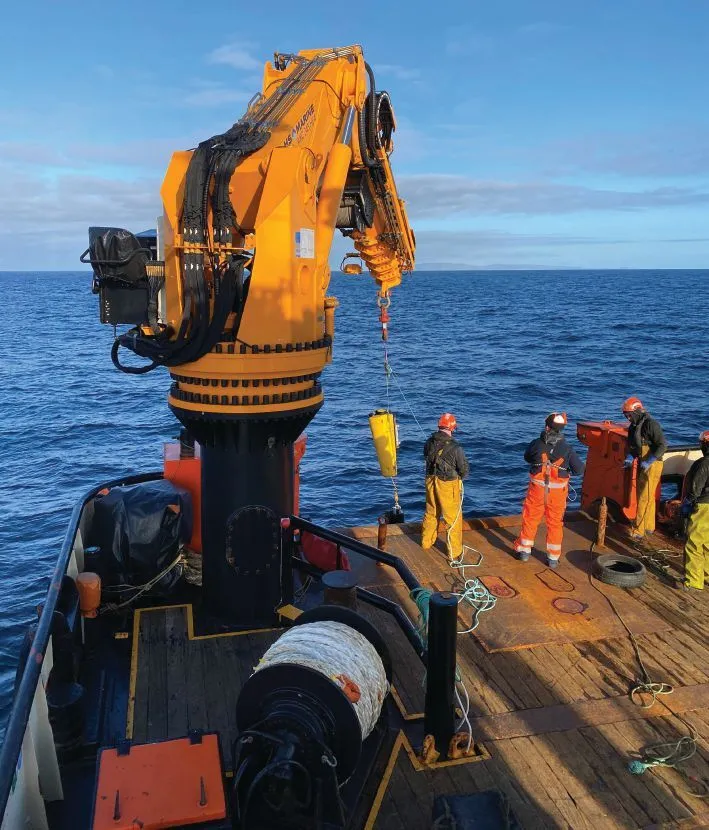
Nortek’s Signature series ADCPs gather ocean current profiles over tens to hundreds of meters, delivering real-world data for offshore wind site surveys, tidal turbine optimization, and oil and gas infrastructure deployment. In addition, their VM Operations system, a vessel-mounted ADCP solution, provides real-time current data to offshore operators, ensuring precision in cable-laying and other critical marine construction tasks.
The ability to accurately measure ocean currents is key to mitigating risk and optimizing offshore infrastructure performance. For offshore wind farms, ADCPs provide vital information about subsurface currents that affect turbine placement and foundation stability. For tidal energy projects, these measurements are essential to determining the best locations for turbines, ensuring they operate at peak efficiency while minimizing environmental impact.
For subsea vehicle navigation, Nortek’s DVL technology plays a fundamental role in enabling autonomous and piloted remotely operated vehicles (ROVs) to operate efficiently in challenging offshore environments. Their DVL 500 Compact, optimized for work-class ROVs, enhances station-keeping and intervention capabilities— critical for maintaining offshore infrastructure. As offshore energy projects increasingly rely on robotic intervention, high-accuracy navigation tools like DVLs will become even more essential.
ADVANCING SONAR IMAGING
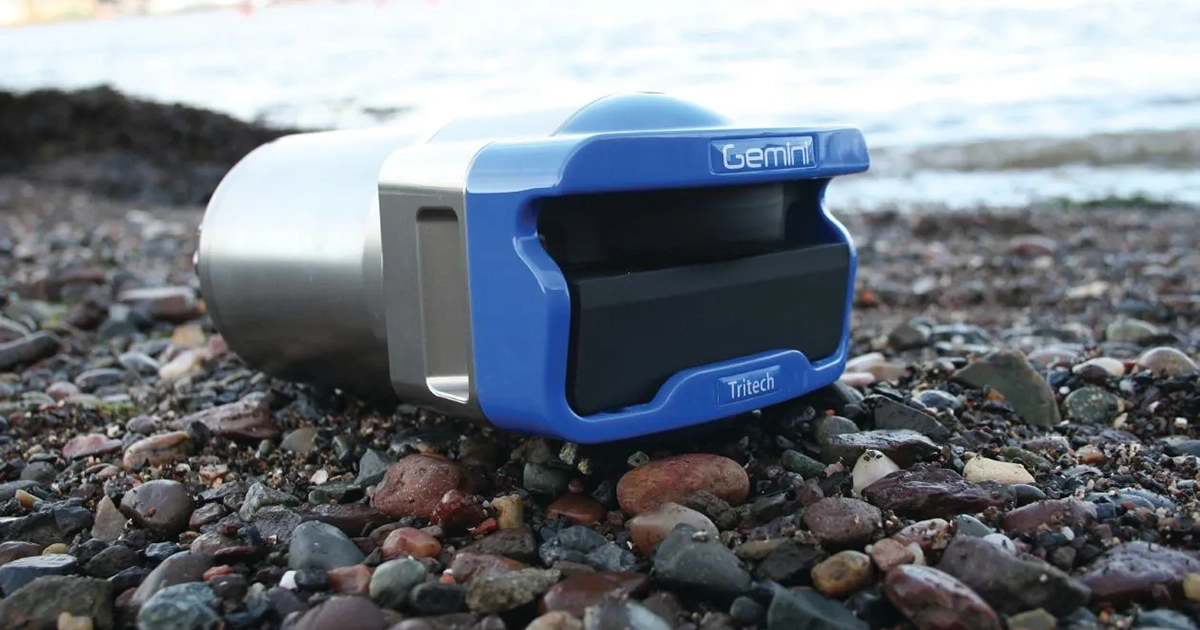
In an environment where visibility is often limited, high-performance sonar imaging is essential for the success of offshore energy projects. Tritech’s new Gemini 1200id sonar builds on the industry-standard Gemini 720is platform, offering a dual-frequency capability (720 kHz and 1200 kHz) for enhanced target resolution and image clarity.
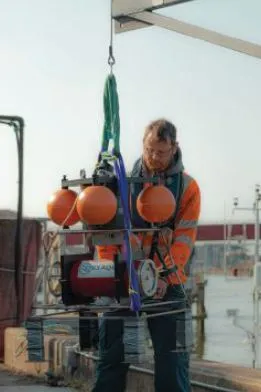
The Gemini 1200id integrates an advanced speed-of-sound sensor, improving positional accuracy, and employs CHIRP processing for superior target separation. Its innovative noise reduction technology actively filters out interference from other subsea equipment, delivering sharper, more defined images.
Bruce Hardy, Sales and Marketing Director at Tritech, emphasizes customer-driven innovation: “We listened to our customers’ requests for higher definition and enhanced target resolution. The Gemini 1200id delivers this, backed by Tritech’s reputation for quality and reliability.”
With its ability to produce clear and precise sonar imagery, the Gemini 1200id enhances the effectiveness of ROVs performing critical offshore tasks, from infrastructure inspections to subsea construction, ensuring operational efficiency in the evolving energy landscape. This is particularly important as offshore wind and tidal energy projects expand into deeper and more remote waters, where accurate imaging is essential for both construction and maintenance activities.
A COLLABORATIVE FUTURE
The energy transition demands new approaches to offshore operations —ones that prioritize environmental protection, operational efficiency, and technological innovation. AI-powered monitoring, Doppler-based ocean current measurement, and advanced sonar imaging are just a few examples of the General Oceans’ technologies that are shaping the industry’s future.
The integration of these systems will not only enhance safety but also support the efficiency goals of the offshore energy sector. By reducing vessel emissions, improving marine mammal protection, and optimizing energy infrastructure placement, these technologies contribute to global efforts to minimize the environmental footprint of offshore activities.
As offshore energy projects scale up worldwide, the companies within the General Oceans Group know that collaboration will be key to unlocking the full potential of these technologies. Partnerships between technology providers, energy companies, and research institutions will drive continued advancements, ensuring that offshore energy remains a cornerstone of the transition to a lower-carbon future.
This feature appeared in ON&T Magazine’s 2025 April Edition, Offshore Energy Transition, to read more access the magazine here.