
The UK’s offshore wind expansion faces significant hurdles, including supply chain constraints causing project delays, prolonged grid connection waits of up to 14 years, and potential government funding cuts to Energy that threaten financial viability.
SUNK COST
Specifying, fabricating, transporting and installing each offshore wind turbine’s foundations take up a significant part of the development’s budget. Multiple foundation systems exist for both fixed-bottom and floating offshore wind and the ground conditions determine which is most suitable.
Foundation strength is crucial for safety and integrity. While a robust design ensures longevity, it may be costly and over-engineered. On the other hand, prioritizing efficiency and speed risks structural failure in extreme storms. Designing a cost-effective balance requires detailed seabed analysis.
Direct sampling of the soil and rock below the seabed provides high-value data in the form of core samples, but collecting quality cores comes with multiple risks that must be considered.
MANUAL HANDLING
Geotechnical drilling surveys often involve operations hazardous to crew. For example, during drill pipe tripping—where individual drill pipe sections are manually connected—crew on the drill floor might be struck by swinging equipment.
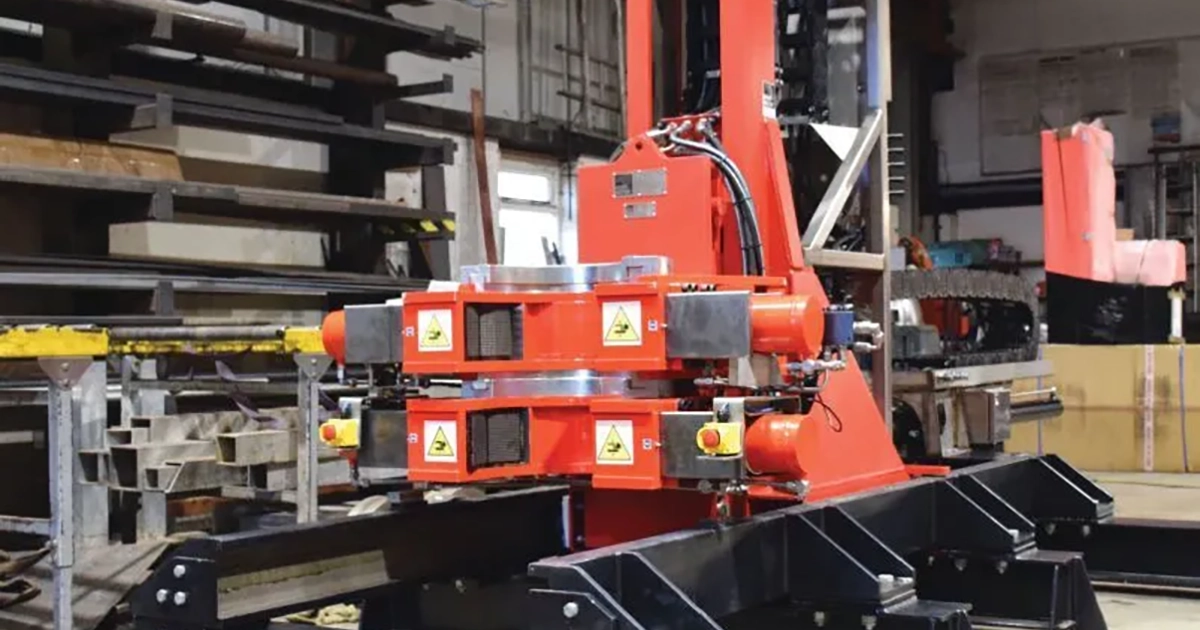
Automating the pipe tripping process with an Iron Roughneck protects the crew by reducing manual handling and removing a high risk and highly repetitive operation. Tool handling is another potentially hazardous operation. During tool changes, a worker on the rooster box often manually positions tooling above the drill string. The rooster box is under tension and moves with the swell, so could suddenly shift up or down, increasing the risk of falls.
Using an Automated Tool Handler to carry tooling from the deck to the borehole eliminates this risk. Integrating the system into the drillers’ cabin offers seamless remote operation alongside the drill while removing personnel from the harsh working conditions of the rooster box.
By standardizing repetitive manual handling operations, the severity and likelihood of hazards can be better managed and controlled. An avoided potential incident could save a life, a limb or a seven-figure sum in vessel charter costs.
METOCEAN CONDITIONS
Unlike the crew, the drill is not affected by wind and rain, but even moderate swell can reduce operability. As soon as heave is present, the drill bit will move up and down with the waves. This can lead to poor recovery of the all-important cores.
To counteract the vessel’s up and down motion, many employ a passive heave compensation (PHC) system while drilling. PHC enables relative stability in the drill string by using a large gas spring as an effective counterweight.
However, friction exists in the system. To overcome two tonnes of friction, for example, operators would tip the counterweight three tonnes in favor of the drill string. The PHC would then experience between one and five tonnes of weight on bit (WOB) to effectively compensate. When drilling, WOB is already required to enable progress through the seabed, but managing heave becomes a challenge in low WOB situations.
For example, during tooling changes the drill bit must be off-bottom, providing zero WOB. Similarly, very soft ground can’t provide enough resistance—five tonnes in the example above—to compensate for the system’s friction, so PHC will not work.
In both cases, the bottom hole assembly (BHA) will erratically move up and down with the heave. The former could damage the borehole through hydraulic action, the latter reducing core recovery and washing material away.
ADVANCED BOREHOLE LOGGING
In addition to core recovery, other tests require off-bottom stability. For instance, a recent MintMech client in the Western Pacific required heave compensation to combine advanced borehole logging with taking cores.
Traditionally, borehole logging would be managed using a seabed frame deployment which would clamp onto the drill string and prevent heave motion. However, in this case the area was littered with boulders, precluding deploying a frame.
Automating the process provided the solution. MintMech developed a new active heave assist (AHA) system which allowed near-perfect heave compensation in the absence of WOB. After taking the core, the drillers were able to pull the BHA back, exposing the drilled surface of the geology, hold the string stationary and lower an imaging device beyond the drill bit to the bottom of the borehole. Then, by slowly drawing the imaging device back, data was collected from the borehole wall.
This required a stationary drill bit for two reasons, firstly, so that the imaging device has a clear depth for its results to reference. Secondly, because vertical motion of the drill bit inside the borehole could dislodge debris and damage the sensitive imaging equipment or bury it completely, preventing retrieval.
The AHA system provided heave compensation without weight on bit, enabling detailed seabed analysis of locations otherwise impractical to study. As offshore wind development continues, locations where construction is straightforward are growing scarcer. Simultaneously, economic factors make accepting risk harder for developers.
This perfect storm appears to have made reaching our energy transition targets unlikely. However, by improving safety, reducing downtime and improving seabed data collection, automation can help developers derisk and ramp up delivery of offshore wind projects.
Furthermore, innovation could enable development of sites that were previously considered unviable, providing more opportunities to work towards UK and EU green energy goals. Automation has already created paradigm shifts in multiple industries, perhaps it can here too.
This feature appeared in ON&T Magazine’s 2025 April Edition, Offshore Energy Transition, to read more access the magazine here.
