

Expectations for a quick end to the war were shattered when the initial peace negotiations failed. The blockade of Iran’s oil exports was offset by Iranian attacks on ships attempting to exit the Strait without seeking approval and paying a toll.
Having lost its major income source with the blockade preventing oil sales, the Iranian government began looking for money, and ransom payments seemed an easy solution.
Middle East oil customers were often willing to negotiate a deal with Iran’s IRGC to free a tanker load of crude oil or refined product trapped in the Persian Gulf. Unfortunately, only a trickle of oil has exited the Gulf. Reportedly, 5.5 percent of the global oil tanker fleet remains trapped in the Persian Gulf as of late May.
Persian Gulf oil producers stepped up oil exports via the few existing pipelines that avoided Hormuz. With additional pumping capacity, about 40 percent of the lost oil supply has been offset. These pipelines and export facilities became an Iranian target in retaliation for these nations supporting the US/Israeli war efforts. This oil flow has likely helped prevent oil prices from soaring.
Additionally, higher oil and refined product prices have trimmed demand, as have the responses of various Asian nations to the supply shock. Energy consumption has been reduced by carpooling, cutting air conditioning use, and closing government offices, schools, and universities.
Oil supplies have been helped by the record drawdown of strategic oil stocks, aggressive use of commercial inventories, and increased US oil exports. However, these are temporary measures helping to delay a serious energy crisis if Hormuz is not reopened soon. How soon this crisis may emerge is unknown, and it may have disparate impacts on nations depending on their conditions before the Strait’s closure.
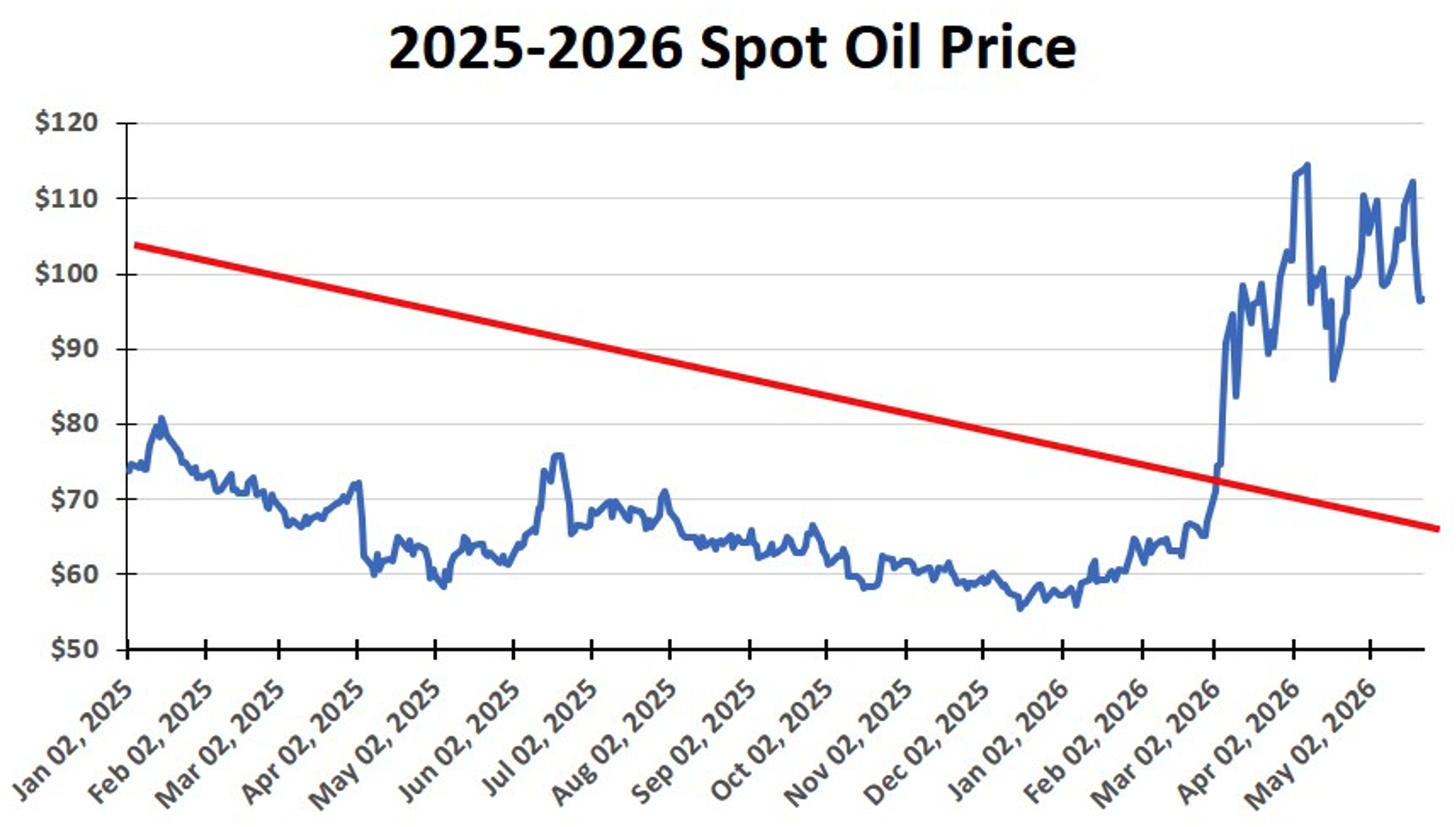
Our two oil charts show the state of the global oil market. US spot oil prices have soared and fluctuated amid the daily speculation about the nature and timing of a peace deal. The US also benefits from being an oil exporter, although it relies on substantial imports for its energy system to operate efficiently.
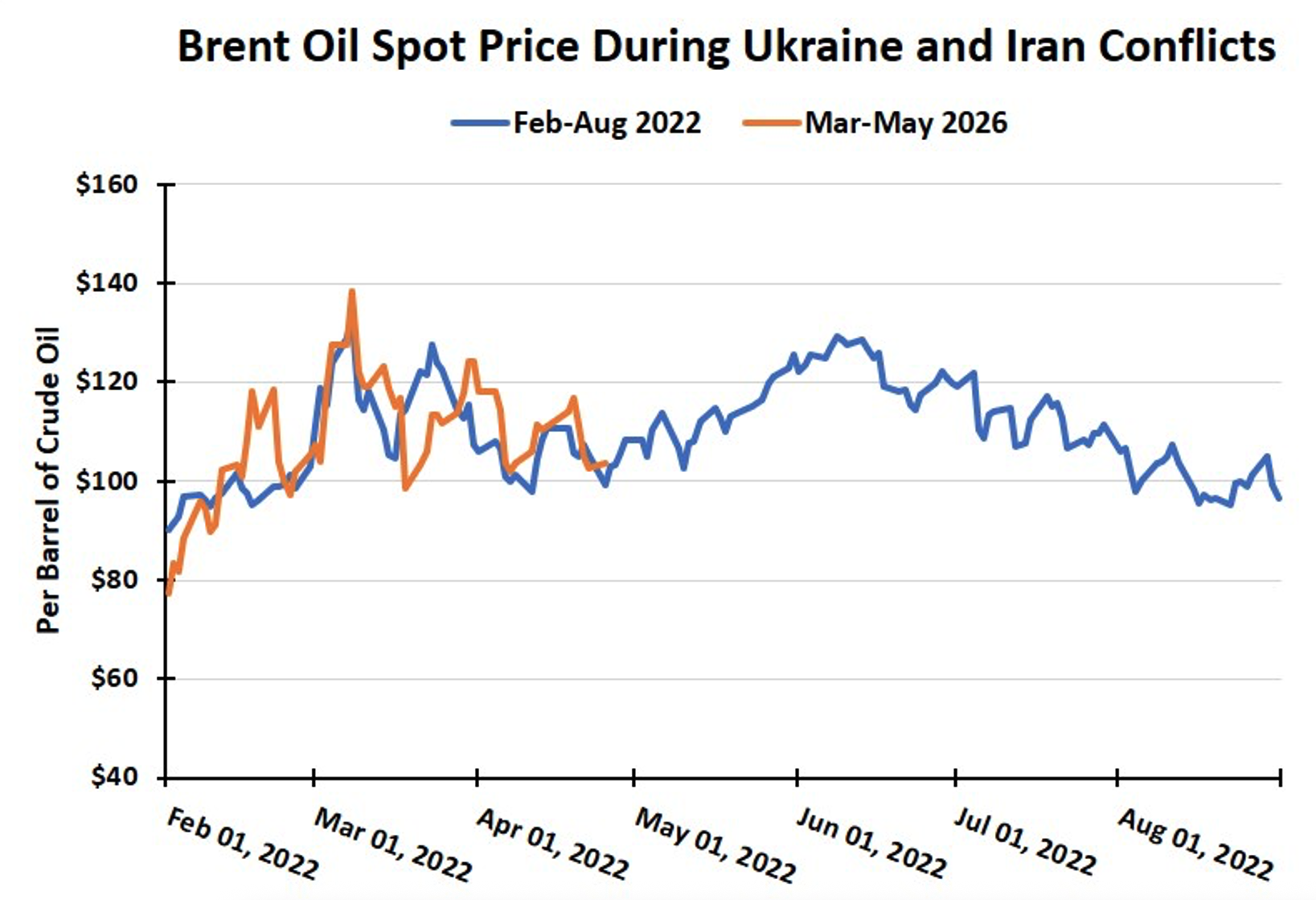
The Brent oil chart showing the current oil crisis compared to the Russia/Ukraine war crisis is uncanny in its similarities. Because it will take months to unwind the Persian Gulf tanker backlog once the Strait of Hormuz reopens, the past may foreshadow what foreign oil prices will do for much of the remainder of 2026.
NATURAL GAS
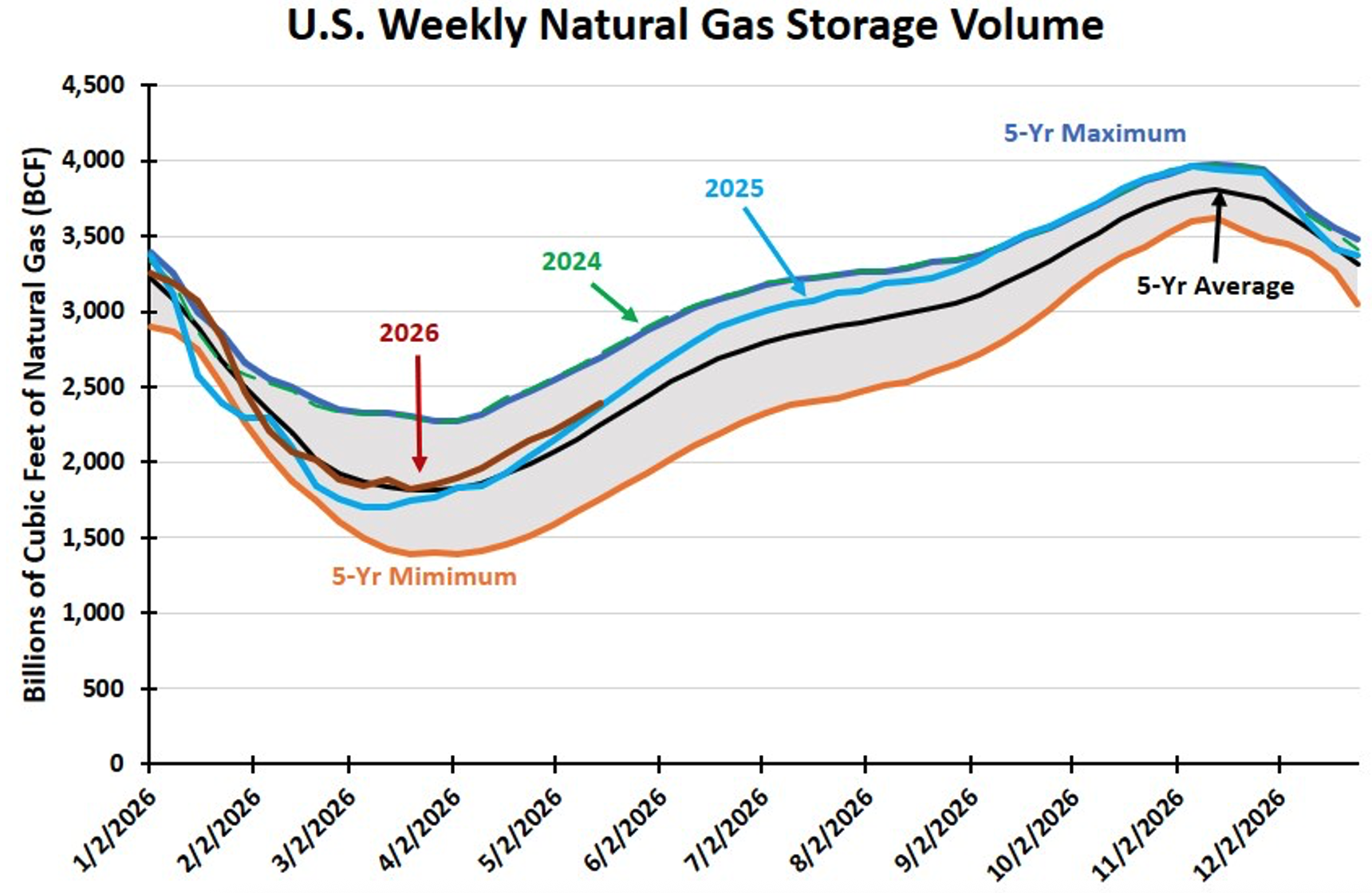
The shoulder months for natural gas demand are demonstrating how well-supplied the US market is. Weekly storage volumes are following the 2025 pattern. As of mid-May, the gas storage data shows more weeks of injections than during the same period in 2025. Moreover, the weekly volumes are greater than those injected during 2025. Although storage is only slightly above the most recent weekly comparison with last year, storage is running 6–7 percent ahead of the five-year average for weekly storage.
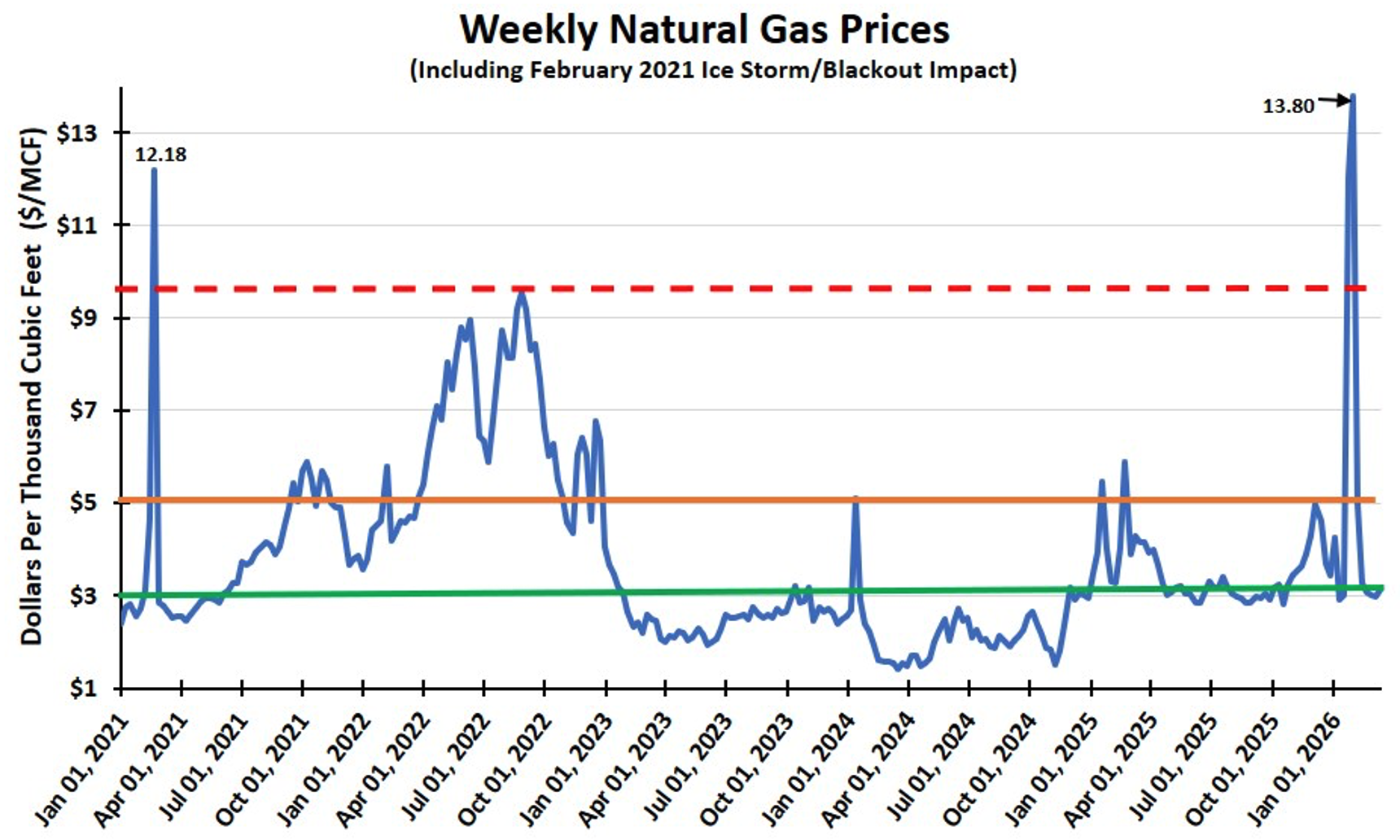
What this means is that there is little pressure on gas prices to stimulate greater injections. While our gas price chart shows a recent upturn, weekly gas prices remain below $3 per thousand cubic feet. The forward curve for natural gas suggests that a $4 price will not be seen until November. However, the forward curve points to higher prices through 2027 and 2028, then begins to retreat in 2029.
It is puzzling that gas prices aren’t higher, given that the demand for reliable power for AI data centers seems to favor this fuel. Are producers negotiating with AI data companies for fuel supplies confident that they have sufficient incremental volumes that will not disrupt the overall gas market? Quite possibly, the answer is that the projected data center demand is overstated, and the market does not believe that all the projected centers will be built.
This healthy gas storage situation reflects how well our gas production is performing, as the US is exporting record volumes of LNG in response to the loss of 20 percent of the world’s gas supply due to the closure of the Strait of Hormuz. The major question for global natural gas markets is what happens to supply and price given the projected 5-year loss of 17 percent of Qatar’s LNG exports. That is the equivalent of the US losing the entire output of Venture Global LNG plants in Calcasieu, Louisiana, one of our nine export facilities.
Projections call for US LNG exports to nearly double from today’s levels by 2030, but much of the new supply comes at the end of that period. Therefore, the world’s natural gas market may remain tight for years until more supplies from the US and other countries arrive. The wildcard in this scenario is the rebirth of coal demand for generating electricity.
While the International Energy Agency (IEA) has repeatedly projected the death of coal demand, it has been wrong every time. Asian countries are leading the rebirth efforts, but surprisingly, European countries—Italy and Germany—are also embracing more coal use, as they are challenged by expensive LNG. The most noteworthy development in the coal/gas discussion is the Italian Parliament’s passage of legislation delaying the nation’s coal plant closures from 2025 to 2038.
Keep an eye on this development, as it may signal the first crack in Europe’s climate change plans, which would offer significant global energy market adjustments.
Oil Prices Fluctuate on the Latest News About Ending the Iran War
US Gas Markets Are Well Supplied Even with Greater LNG Exports
This feature appeared in ON&T Magazine’s 2026 June Edition, Ocean Observation & Monitoring, to read more access the magazine here.