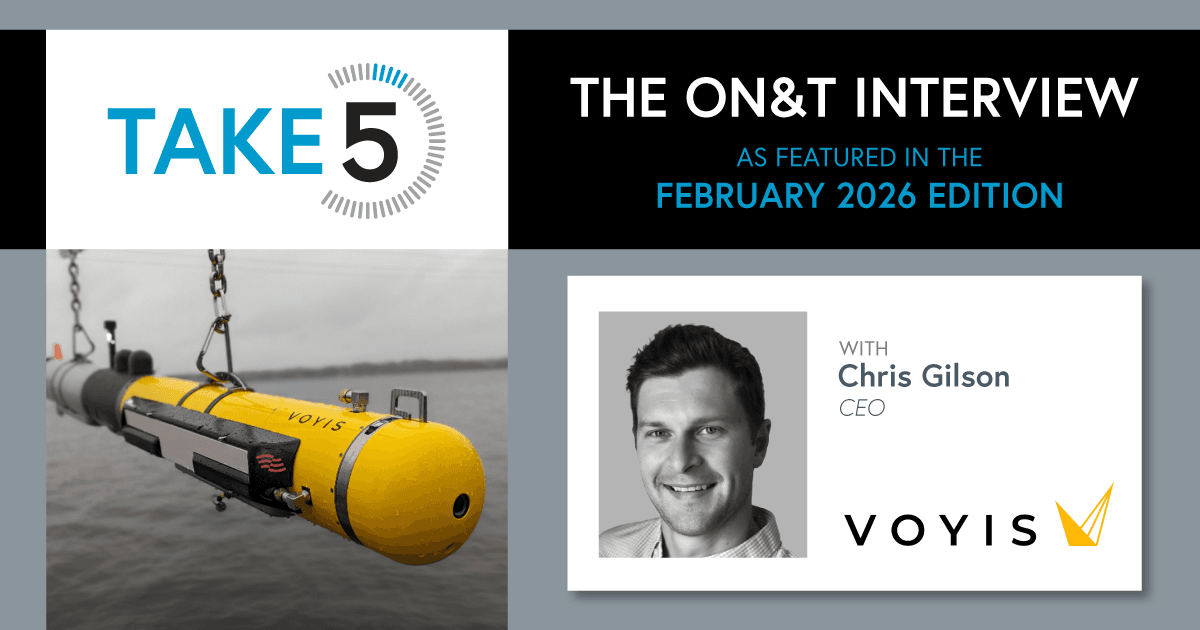
1. Tell us a little about the Voyis story…
Voyis was founded with a deep technical focus on underwater optical sensing, beginning with laser-based systems designed to bring precision and accuracy to subsea measurement. In the early days, our work centered on using lasers to overcome the limitations of traditional underwater inspection, providing operators with reliable scale and quantitative data in environments where visibility and lighting are inherently challenging.
As subsea operations grew more complex, it became clear that 3D point clouds alone were not enough, clarity and context were equally critical. Over time, we expanded our product offering to include advanced survey-grade calibrated camera systems and, ultimately, stereo camera systems that could deliver both high-resolution imagery and true-to-scale photogrammetric models. This evolution allowed Voyis to support a broader range of applications, from detailed inspections to full 3D reconstructions, while maintaining our core focus on data quality and accuracy.
This progression, from lasers to cameras to stereo vision, reflects Voyis’ consistent philosophy: to continuously push the limits of underwater optical sensing to provide the most reliable visual data possible for underwater decision-making. Rather than chasing incremental improvements, we have focused on building purpose-designed systems that perform in real-world subsea conditions.
Over the years, Voyis has evolved from a small, highly specialized team into a globally trusted provider of underwater imaging systems. In 2020, Voyis was acquired by Covelya Group, marking an important new chapter for the company. The acquisition provided the scale and complementary expertise needed to accelerate innovation and integrations with subsea vehicle platforms, while allowing Voyis to retain its vision and focus on advancing underwater vision. It reinforced our long-term commitment to building credibility as the leader in subsea imaging, setting the stage for the next evolution of Voyis technology.
2. How is Voyis working with other companies that make up with Covelya’s Group?
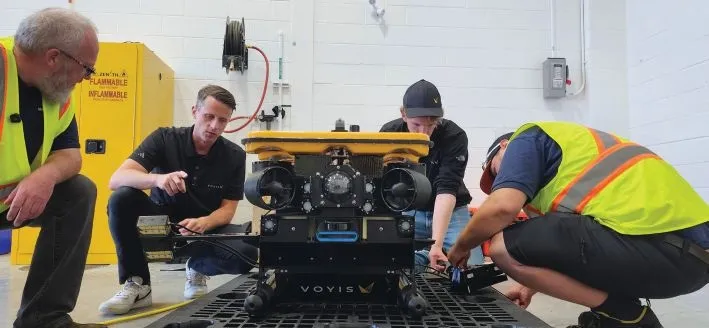
Covelya’s vision is to bring together companies with complementary underwater technologies to create solutions that are more capable and effective than any individual system. Within the group, each company brings its own expertise, covering underwater navigation, communication, optical and sonar imaging, and environmental sensing; together these technologies integrate seamlessly to support complex underwater operations.
A strong example of this collaborative approach is the Voyis VSLAM Powered by EIVA NaviSuite, a joint solution that combines our expertise in underwater optical sensing with EIVA’s proven software capabilities. This partnership allows operators to capture accurate 3D mapping and inspection data with minimal complexity, showing how synergistic technologies can work together to enable the industry’s future vision of autonomy and digital twins.
Looking ahead, we see tremendous potential in combining the strengths of the Covelya Group to push beyond traditional inspection and toward greater situational awareness, perception and subsea autonomy. By working together, we can explore new ways to capture, interpret, and act on underwater data, helping operators not just to see more, but to truly understand their environment.
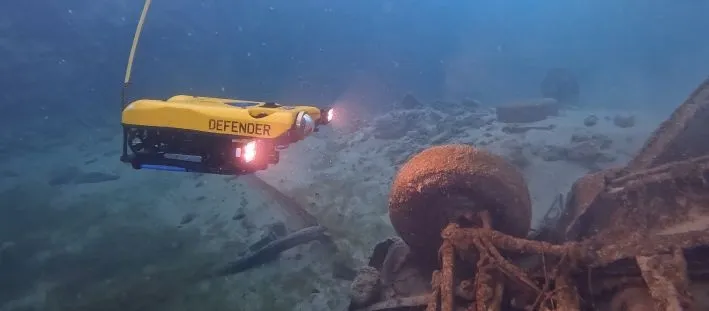
3. Voyis cameras have documented some high-profile shipwrecks in recent years—how do you see advances in ocean tech accelerating the field of naval archaeology?
Naval archaeology has entered a transformative period, driven by advances in ocean technology that allow us to gain access to and document sites with unprecedented accuracy and respect. Voyis cameras have been used on several high-profile wreck dives, like the Endurance and the Titanic, where the ability to capture true-to-scale, high-resolution imagery across a wide area is essential, not only for visualization, but for rigorous scientific analysis.
Modern photogrammetry allows researchers to revisit sites virtually, measure features precisely, and monitor changes over time without repeated physical intervention. This is particularly important for fragile cultural heritage sites, where preservation is paramount.
The ability to retrace moments in history, down to fine structural details, is no longer theoretical; it is becoming standard practice.
As interest in seabed mapping and deep-sea exploration continues to grow, these tools are expanding access to history that was once unreachable. What excites me most is how imaging technology is shifting from simple documentation to contextual understanding. The future of naval archaeology will depend not just on better images, but on systems that help researchers interpret what they are seeing within a broader spatial and historical framework.

4. Voyis recently achieved ISO 9001 certification from DNV; what does this mean for the company and future development plans?
This milestone reflects the maturity of our internal processes and our commitment to consistent quality across everything we do, from product development and manufacturing to customer support.
For our customers, this certification provides confidence that Voyis systems are built and supported under a robust quality management framework. For our team, it establishes a strong foundation for how our internal teams work together and strive to continuously improve our quality and customer satisfaction.
Importantly, ISO 9001 is not a finish line; it’s a baseline. It supports our future development plans by ensuring that innovation is paired with discipline, traceability, and continuous improvement—critical factors as our technology becomes more deeply embedded in mission-critical operations. While some think this slows a company down, we have found that process definition has enabled us to focus on finding efficiencies and enhancing internal collaboration.
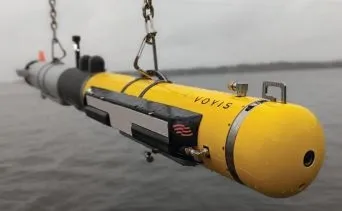
5. What is the key focus for Voyis in 2026?
In 2026, Voyis is focused on solidifying its position as The Vision Authority in underwater operations. That means continuing to lead in inspection-grade imaging while expanding into Perception. This means helping subsea systems understand their environment, not just record it, a key driver of enabling subsea autonomy.
Product innovation remains a top priority, with a strong emphasis on advancing camera performance, reliability, and leveraging AI to enhance how customers interact with our high-quality optical data. We are preparing to introduce new offering that builds on our legacy in imaging while pointing clearly toward the future of subsea perception.
At the same time, we will continue investing in strategic collaborations, research initiatives, and field deployments that validate our technology in demanding real-world applications. Equally important in 2026 is an expanded focus on customer enablement through new service and support offerings, including Voyis Academy, Voyis Support, and Voyis Care. These initiatives are designed to help customers maximize the value of their data, whether through structured training, ongoing technical support, or by filling gaps in in-house expertise.
While offshore energy, defense, ocean sciences, and civil infrastructure remain core markets, 2026 will also see increased focus on sectors such as aquaculture and nuclear energy, where both high-quality underwater imaging and well-supported operational workflows are critical. By pairing advanced technology with strong services, Voyis aims to support customers not just with tools, but with the knowledge and confidence to use them effectively.
Ultimately, our goal is simple: to ensure that when operators think about accurate underwater imaging, from inspection to perception, Voyis is the trusted authority they turn to.
This feature appeared in ON&T Magazine’s 2026 February Edition, Exploring the Deep, to read more access the magazine here.