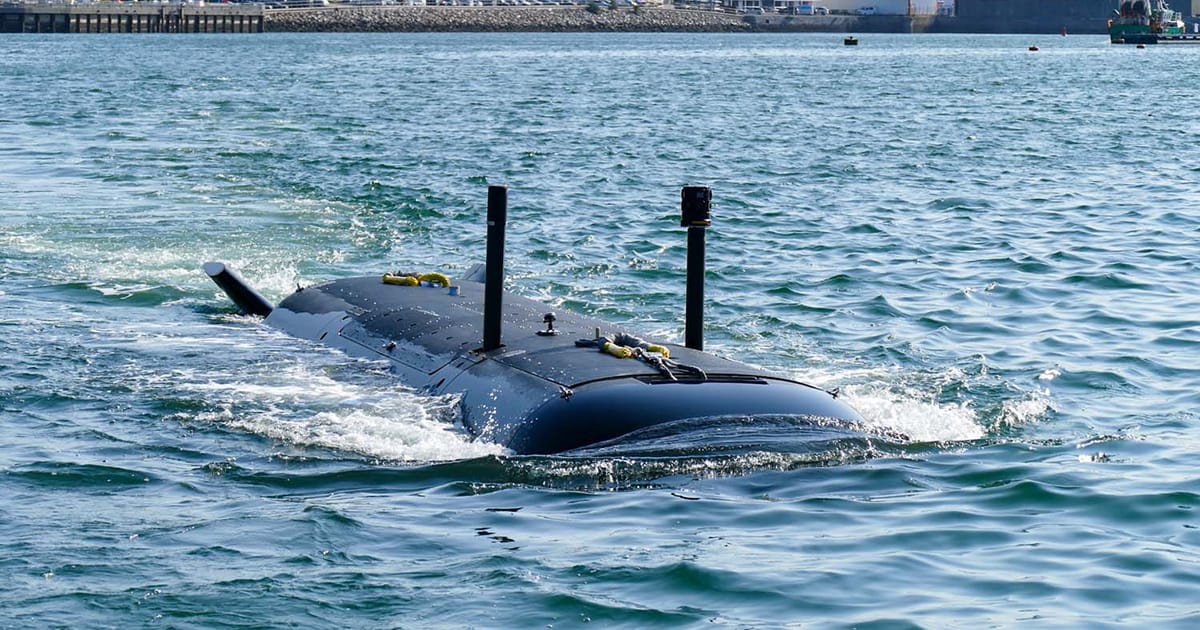
Testbed submarine XV Excalibur went to sea with Infleqtion’s quantum optical atomic clock on board—the first time such a device has been operated at sea in an underwater vessel.
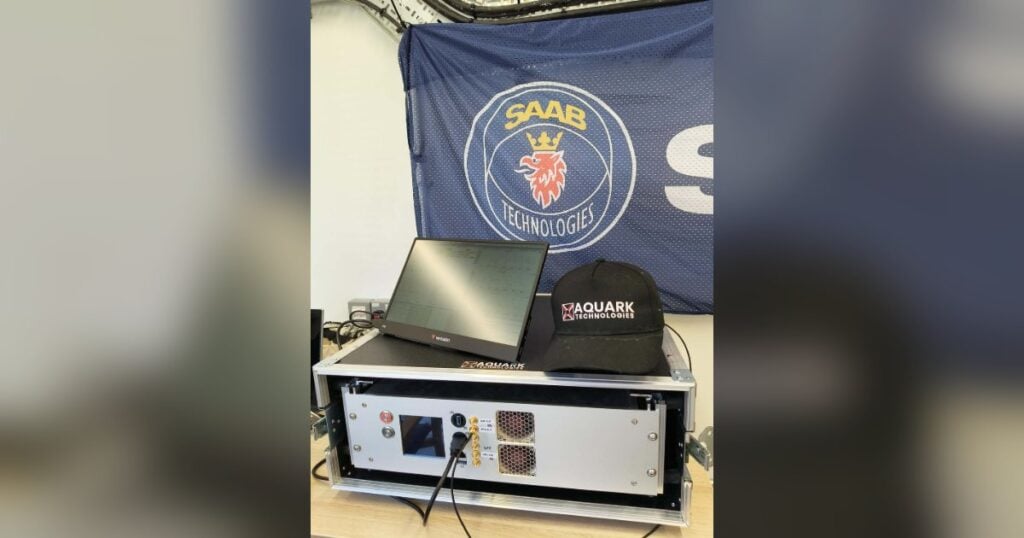
The successful trial, which saw the Royal Navy work hand-in-hand with the Submarine Delivery Agency’s Autonomy Unit team, saw Infleqtion’s Tiqker clock demonstrate precision timing onboard the extra-large uncrewed underwater vessel (manufactured by MSubs), which has been undergoing various sea trials.
Unlike other vessels, submarines cannot rely entirely on GPS for navigation, and traditional microwave-based clocks provide stability but can drift over time—making them less accurate.
The use of quantum technology in systems like Tiqker adds to a submarine’s ability to maintain accurate timing and navigation and reduce the need for external signals. These advantages allow the submarine to stay submerged and covert for longer.
Commodore Marcus Rose, Deputy Director Underwater Battlespace Capability within the Royal Navy’s Develop Directorate, said: “This trial is a significant milestone in the development of Extra Large UUV capabilities in the Royal Navy.
“It demonstrates the ability to rapidly develop and integrate payloads into uncrewed host platforms, which is essential for ensuring the Royal Navy can respond to, and get ahead of, adversary capabilities.”
Commander Matthew Steele, Head of Futures in the Royal Navy’s Disruptive Capabilities and Technologies Office, added: “I am delighted that our long-term collaborator Infleqtion was able to test its quantum atomic clock onboard Excalibur.
“This experiment was a first critical step towards understanding how quantum clocks can be deployed on underwater platforms to enable precision navigation and timing (PNT) in support of prolonged operations.
“The DCTO looks forwards to championing further trials of quantum-based navigation technologies, such as Tiqker, onboard Excalibur as we seek to deliver quantum operational advantage for the Royal Navy.”
“This experiment was a first critical step towards understanding how quantum clocks can be deployed on underwater platforms to enable precision navigation and timing (PNT) in support of prolonged operations,” said Commander Matthew Steele, Head of Futures in the Royal Navy’s Disruptive Capabilities and Technologies Office.
As part of its future programs, the Royal Navy is committed to delivering advanced capabilities to the front line, including autonomous systems and artificial intelligence to increase the warfighting capabilities of the Fleet.
By placing a compact optical clock with performance equivalent to a laboratory-grade time reference directly onboard a submarine, the trial showed how Tiqker can provide a steady “time heartbeat”, smoothing out the noise that causes navigation drift.
This enables submarines to remain submerged, accurate, and hidden for a longer duration.
Tiqker also provides a precise onboard reference for other critical submarine systems such as sonar, fire control, and secure communications, improving mission performance.
The trial confirmed Tiqker’s ability to operate reliably during multiple dives, proving its ability to work in real-world defense environments.
Ryan Hanley, General Manager UK Infleqtion, said: “By putting Tiqker directly on the Royal Navy’s Excalibur testbed submarine, a next-generation autonomous platform, we are laying the foundation for fleets to navigate, coordinate, and operate with precision in any environment.
“We are grateful to the Royal Navy for their continued partnership on cutting-edge quantum technology trials, accelerating adoption into naval operations.”
“Integrating a quantum clock onto Excalibur demonstrates how advanced timing can redefine what autonomous submarines are capable of,” added Matthew Troughton, Engineering Director of MSubs Ltd.
“This trial points the way to platforms that can operate independently for longer durations, with the precision and reliability needed for future undersea missions.”
XV Excalibur is a pioneering testbed advancing the UK’s use of autonomous technology and equipment in underwater operations.
It comes as the Royal Navy looks to bring innovative technology to the frontline of operations quicker and learns to do things differently to enable sailors to use the latest equipment.