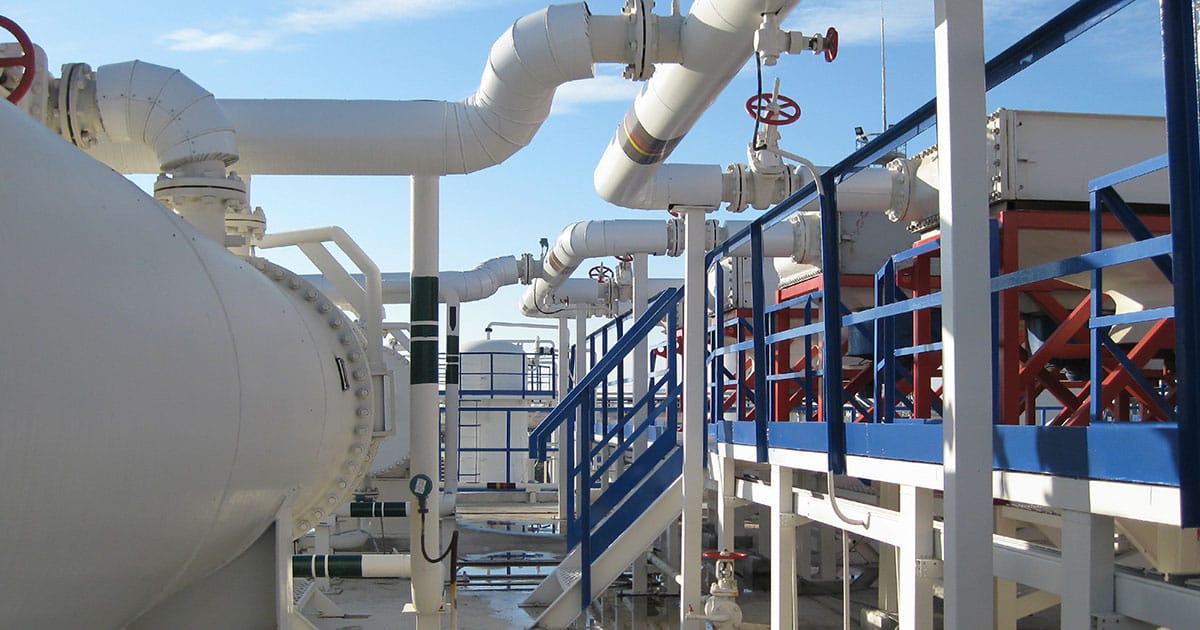
The recommended practice addresses hydrogen-specific integrity and safety considerations, including risks such as hydrogen embrittlement. It supplements DNV’s established submarine pipeline standard, DNV-ST-F101, first published in 1976 and celebrating 50 years of service for the energy industry in 2026. The new RP adds additional guidance tailored to transporting hydrogen gas and hydrogen blends in pipeline systems. It is relevant for new pipeline developments and for organizations considering requalifying existing offshore infrastructure for hydrogen transport, supporting broader efforts to scale hydrogen networks and connect energy systems.
Hydrogen is expected to play an important role in cutting emissions from hard-to-decarbonize sectors. For large-scale transport, pipelines remain one of the most cost-effective options, but projects have faced uncertainty around material behavior, design limits, and operational requirements.
DNV-RP-F123 has been developed through the H2Pipe Joint Industry Project (JIP), which ran from 2021 to 2026. The JIP consolidated research, testing, and industry experience into guidance intended to be used directly in engineering projects and qualification work.
“Hydrogen service fundamentally changes the integrity picture for pipeline systems, explained Prajeev Rasiah, Executive Vice President and Regional Director for Northern Europe, Energy Systems at DNV, it cannot be treated as a simple variant of natural gas. This recommended practice moves beyond theoretical study to provide an evidence-based framework for assessing hydrogen-specific risks in design, requalification, and operation. By closing the gaps around material suitability and safety margins, we are giving teams the technical clarity needed to move projects from the study phase into execution. This is particularly vital for requalifying existing infrastructure, where the guidance helps define exactly what must be tested or upgraded to ensure a safe reliable and sustainable transition.”
The H2Pipe JIP brought together 37 industry partners across operators, manufacturers, engineering companies and academic advisors. DNV is aiming to launch phase 3 of the JIP this spring.
“The objective of the H2Pipe JIP was to build guidance grounded in shared data and real technical experience from tests performed in the JIP,” added Philippe Darcis, Chairman of the H2Pipe JIP Steering Committee and Pipeline Technology Senior Director at Tenaris. “The real value of the H2Pipe JIP is in turning years of shared data into credible, site-ready guidance that engineers can use to scale hydrogen infrastructure. This isn’t just a document; it’s a practical tool built to reduce the ‘unknowns’ that often stall investment. Because it was developed through industry-wide collaboration, it gives operators a robust basis for making decisions, allowing us to move forward with fewer assumptions and greater confidence in our safety and performance standards.
DNV-RP-F123 can be found on DNV’s website DNV-RP-F123 Hydrogen pipeline systems.