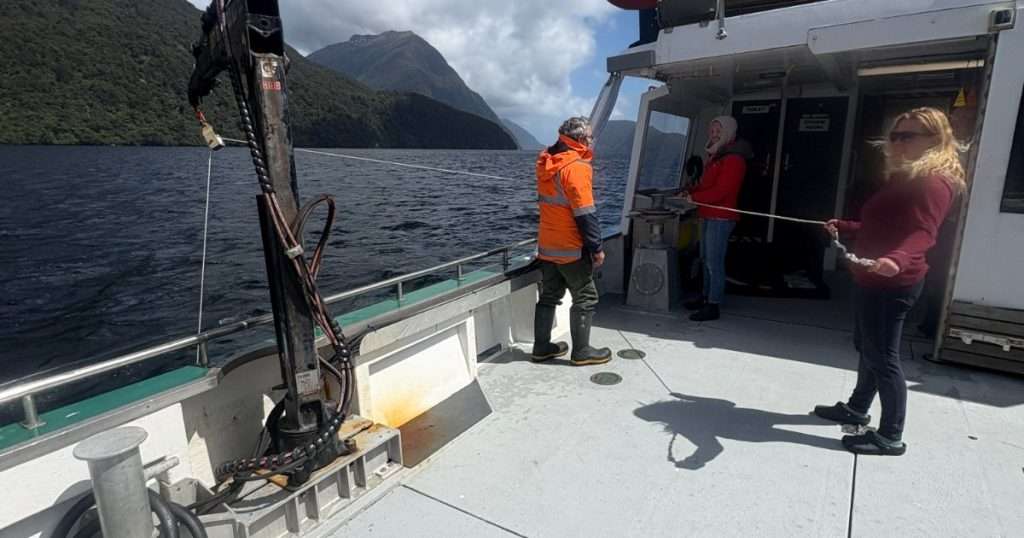

The Integrated Marine Observing System (IMOS) Coastal Wave Buoys Facility, led by Dr. Mike Cuttler and Professor Ryan Lowe from UWA’s School of Earth and Oceans and UWA Oceans Institute, recently deployed buoys at sites around the country, with at least one new wave buoy in every state, plus co-invested buoys from regional collaborators.
Dr. Cuttler said Australia had one of the longest coastlines in the world, which included numerous critical ecosystems and infrastructure.
“Our coastal zone is also where many of us live, work, and play, and we know over 87 percent of Australians live within 50 kilometers of the coast, with further growth predicted in the coming decades,” he said.
“Climate and human development are changing our coastal systems at an unprecedented rate, and more data is needed for planning to avoid or mitigate changes and sustainably manage this precious resource.”
The 23 new IMOS wave buoys will complement an existing network of offshore and nearshore wave buoys deployed around Australia, which are maintained by federal and state government agencies as well as university research groups.
These include partnerships with the Western Australian Marine Science Institution, WA Departments of Jobs, Tourism, Science and Innovation, Primary Industries and Regional Development, Tidal Moon, Kimberley Marine Research Station, and local governments.
They measure wave height, period, and direction as well as water temperatures in nearshore waters, with sites varying in depth from 10 m to 70 m. These small, solar-powered wave buoys are low-cost and relatively easy to deploy.
Moored to the sea floor, they will collect critical near-real-time data required to verify and improve marine forecasts, inform marine operations and recreation, and form the basis of an improved understanding of ocean and coastal processes.
The near real-time data is easy to view and download via a new national website, Aus Waves, which was created by Dr. Cuttler to collate data from IMOS wave buoys and merge it with existing websites created by regional partners to present the first nationally consistent platform for the display of and access to quality-controlled near real-time wave data.
Dr. Cuttler said the AusWaves website presented unique coastal wave data in a user-friendly manner, designed to meet the needs of a wide range of coastal stakeholders.
“Through visual displays and the ability to download wave and surface temperature data, this new website will enable wider uptake of the data around Australia,” he said.
Both real-time and delayed mode data are also available via the IMOS Australian Ocean Data Network (AODN) Portal as part of the ‘Wave buoys Observations – Australia – near real-time’ and ‘Wave buoys Observations—Australia -delayed (National Wave Archive)’ data collections.
IMOS is enabled by the National Collaborative Research Infrastructure Strategy (NCRIS). It is operated by a consortium of institutions as an unincorporated joint venture, with the University of Tasmania as Lead Agent.
The network of IMOS Coastal Wave Buoys is a key investment of the Coastal Research Infrastructure (CoastRI), which is a national initiative coordinated across 13 NCRIS capabilities.