Research into Sustainable Replenishment
Climate change is causing sea levels to rise, which also affects the safety, nature, and accessibility of the Scheldt estuary. To protect the coast and hinterland, it is necessary to nourish the coastline with sand. This allows the coast to rise with the sea level. The delivery of one million cubic meters of North Sea sand, spread over two locations, forms an important part of this.
With this practical test, Rijkswaterstaat wants to achieve two goals: to protect and nourish the coast of the Western Scheldt and to investigate how sediment moves in the Scheldt estuary. The sand replenishment should provide valuable information about the effects on safety, accessibility, and nature in the area.
Three Measures for Lower Emissions
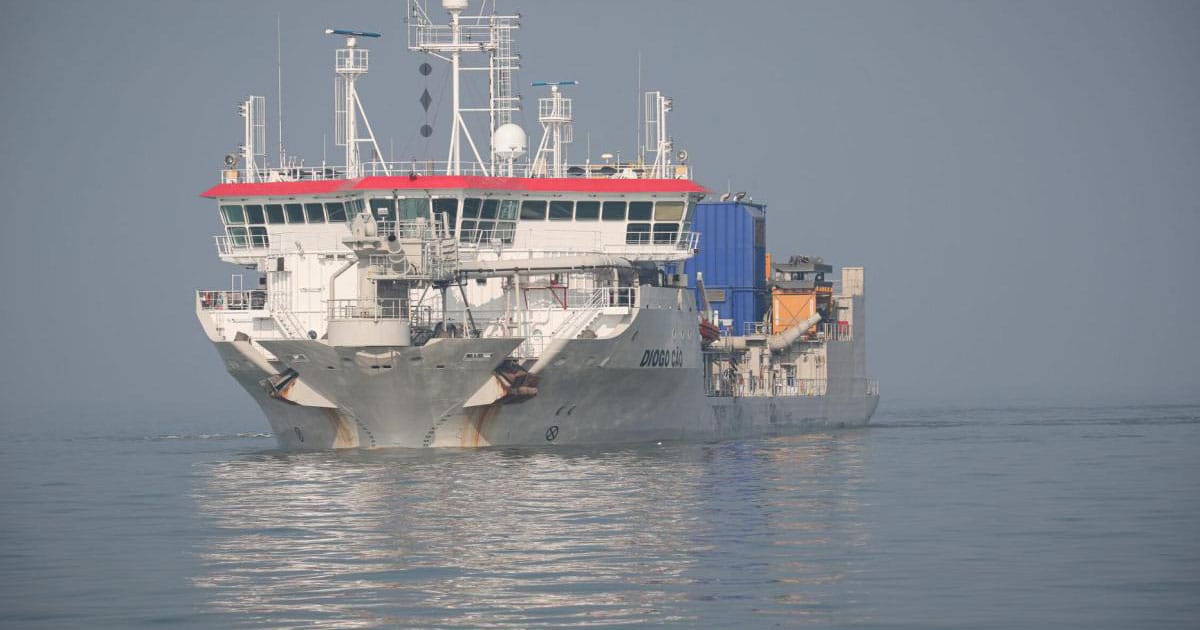
We are carrying out the sand replenishment with their ULEv vessels Tristão da Cunha and Diogo Cão. Their dual Ultra-Low Emission (ULEv) technology is a combination of a catalytic reduction and filter system that removes both NOx and particulate matter from the exhaust gases.
The vessels run on 100% biofuel, which significantly reduces Jan De Nul’s CO2 emissions compared to traditional fossil fuels.
The third measure is the emission monitoring system, which allows us to know in real time how much the ships are emitting. This enables us to optimize their operations and further reduce emissions.