
An analysis of passive acoustic data from four sites across the North Pacific and Arctic Oceans by NOAA and Oregon State University scientists demonstrated that ocean noise levels were significantly diminished during the COVID pandemic due to the abrupt slowdown of commercial ship traffic. In a new paper published in the Nature journal npj Acoustics, scientists report that ocean noise levels decreased by as much as 2 decibels (dB), or about 30%, as compared to pre- and post-pandemic years.
“The tragic COVID pandemic provided an unexpected view of the effects of reduced shipping traffic on underwater noise,” said Robert Dziak, Acoustics Program Manager for NOAA’s Pacific Marine Environmental Laboratory (PMEL). “Our findings can help provide a scientific basis for creating quieter marine habitats, particularly in areas important for vulnerable species.”

For decades, human-made noise in the ocean has been steadily increasing, primarily due to the increase in the number and size of container ships. About 90% of consumer goods travel by sea on enormous container ships operating 24 hours a day as they travel across the globe to deliver goods. Global ship noise has been predicted to double every 11.5 years, although with significant regional differences.
The widespread lockdowns and manufacturing restrictions that began in March 2020 drastically interrupted these trends, leading to a 4.1% decrease in global maritime trade. The reduction in vessel traffic presented a unique, though somber, natural experiment to observe how the ocean would respond to a quieter environment.
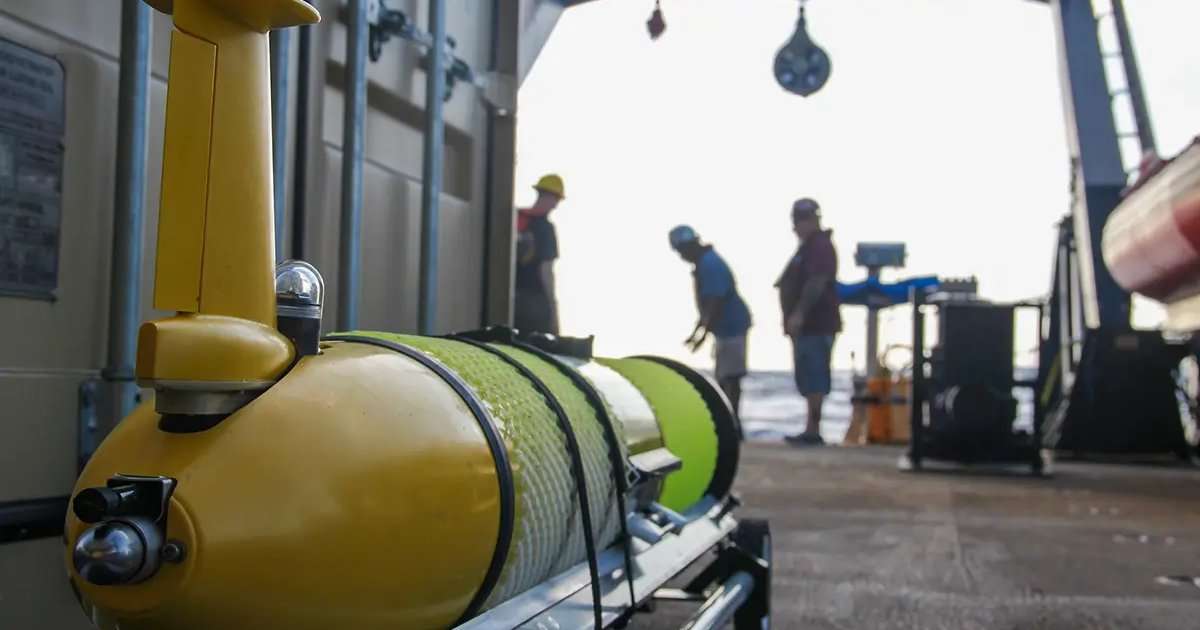
This long-term sound data was collected under the flagship Ocean Noise Reference Station Network, an array of 13 PMEL hydrophones deployed across US waters from the Arctic to the tropics. The network is a unique partnership between NOAA’s PMEL, National Marine Fisheries Service, Office of National Marine Sanctuaries, and the National Park Service. Now in its 10th deployment year, the network is specifically authorized by the National Defense Authorization Act of 2023, which mandates NOAA to perform ocean soundscape monitoring. Network data has been downloaded by a wide range of private companies and public entities.
The study focused on four key hydrophone sites: Ocean Station Papa in the Gulf of Alaska, the US Olympic Coast National Marine Sanctuary, Axial Seamount in the northeast Pacific, and the Beaufort Sea in the Alaskan Arctic Ocean. Researchers analyzed sound levels in key frequencies associated with ship noise, specifically the 63 hertz (Hz) and 125 Hz bands, prior to the pandemic in 2018 and 2019, during the pandemic in 2020, and after the pandemic in 2021 and 2022.

During spring and summer 2020, sound levels decreased by 1 to 2 dB, or roughly 10 to 30% from 2018 to 2019 levels and returned to pre-pandemic norms by late 2020 and 2021. From 2021 to 2023, sound levels varied across sites; Ocean Station Papa showed sustained lower levels due to reduced nearby ship traffic, while the Olympic Coast sanctuary saw similar or lower levels despite increased traffic.
The reduction in ship noise, while significant, was not as substantial as the 6 dB decrease observed in the Santa Barbara Channel during the 2007–2010 economic recession, or the 5 to 10 dB decrease in eastern Canada’s Bay of Fundy in the aftermath of September 11, 2001.
Co-author Samara Haver, a scientist with Oregon State University’s Cooperative Institute for Marine Ecosystem and Resources Studies, said that while several recordings were also analyzed for blue whale vocalizations, the study was not designed to include observing the effects of reduced noise on the behavior of marine mammals.
“But our findings of decreased ocean sound levels suggest that the environment changed during the pandemic,” Haver said. “As a result, blue whales and other large whales that vocalize in frequencies that overlap with vessel noise may have been able to communicate over longer distances or longer durations without potential interruption by vessel noise.”
Overall, the study underscores the complex interplay of human and natural factors shaping ocean soundscapes, and the value of long-term passive acoustic monitoring in tracking changes in ocean sound levels, said Dziak, who is based at Oregon State University’s Hatfield Marine Science Center in Newport, Oregon. While the pandemic provided a temporary respite from some human-generated noise, he said the long-term impacts and return to pre-pandemic conditions are still being evaluated. Future research pairing AI detection methods with passive acoustic monitoring could provide additional insights into vessel movement and its impact on the marine acoustic environment, Dziak said.
“We had a rare glimpse of a less noisy ocean,” he said. “It’s given us valuable baseline data for future conservation efforts and a deeper understanding of our planet’s underwater soundscape.”