Maritime defense is evolving in front of our eyes as tensions rise in the Baltic, where unregulated Russian “shadow fleet” tankers now move through NATO waters under shifting identities, creating what officials describe as a new front of hybrid warfare. To this day, maritime defense isn’t adapting to the pace at which maritime threats are constantly evolving, and layering multiple disconnected solutions only deepens the fragmentation.
Skana’s Alligator is the first amphibious vessel of its kind, combining the range and speed of a naval craft with the agility to operate anywhere, without the need for docks or coastal infrastructure. The platform can transition between land and sea, deploy autonomously or under human control, and transport payloads of up to 1,500 kg, including other autonomous systems such as Skana’s Stingray underwater vessel. Designed as part of Skana’s connected fleet, the Alligator communicates in real time with surface and subsurface vessels through the company’s SeaSphere resource allocation and mission planning system, enabling coordinated, cross-domain missions.
Skana’s earlier vessels, The Bullshark and Stingray, represent what drones did for air power: software-defined systems that can be deployed by the hundreds or thousands to extend naval presence and resilience. At the core of the software development are SeaSphere™, a resource allocation and mission-planning engine, and Vera, a proprietary execution layer that enables distributed command, autonomous teaming, and real-time adaptation.
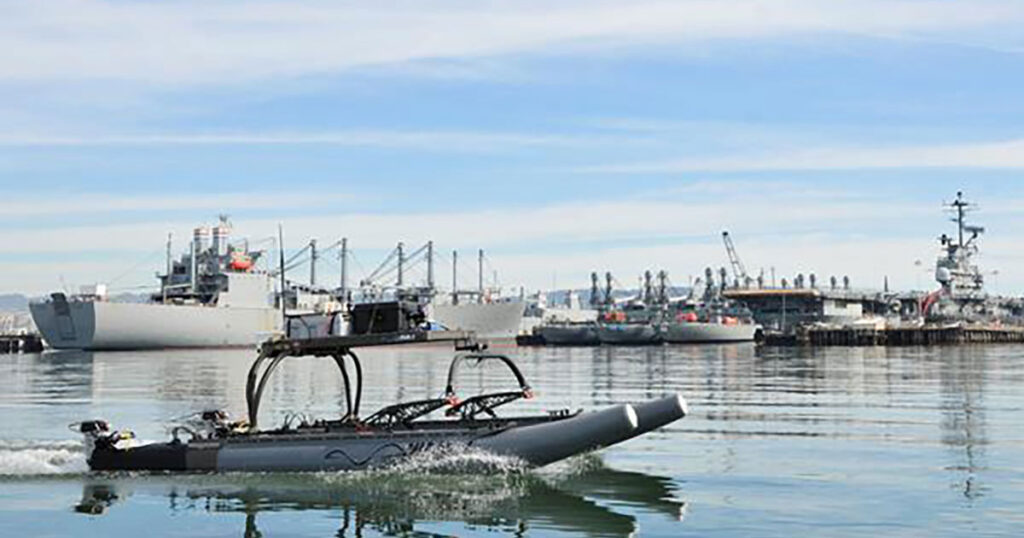
The Bullshark is a tactical ASV designed for multiple missions, including ISR (Intelligence, Surveillance, and Reconnaissance) and interdiction. It features a scalable design, a payload capacity of up to 150 kg, and functions as a communications hub to coordinate multiple surface and sub-surface assets.
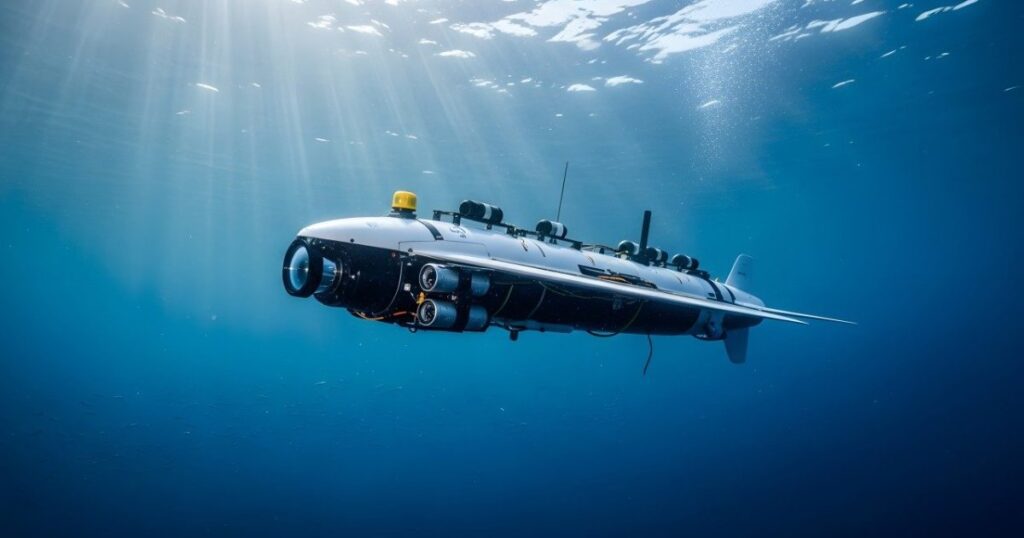
The Stingray is a loitering AUV designed for ISR, ASW (Anti-Submarine Warfare), and infrastructure protection in complex underwater terrains. It supports autonomous underwater navigation, seabed anchoring, silent standby, and reactivation mode. It offers a standard 24-hour battery life, extendable through a battery module, and can be launched from a designated underwater docking station, submarines, patrol boats, or other Skana or Naval vessels.
The Alligator is an autonomous amphibious vessel designed to deliver logistics, sensors, and personnel between water and land. It features a 1,500 kg payload capacity, a 300 nautical mile range, and a top speed of 40 knots. The vessel serves as a mobile launch and recovery node for underwater assets, including multiple Stingray AUVs, enabling operations far from existing ships or infrastructure. This extends naval reach across dispersed maritime environments.
“The maritime domain demands autonomy that can survive complexity, adapt instantly, and operate without compromise,” said Idan Levy, Co-Founder and CEO of Skana Robotics. “We are making advanced autonomous capabilities accessible and scalable, enabling wide deployment and synergy between systems. Our ecosystem of vessels and technologies supports real-time data sharing, modular reconfiguration, and both fully autonomous and remotely operated missions, offering navies unmatched operational resilience, adaptability, and flexibility.”