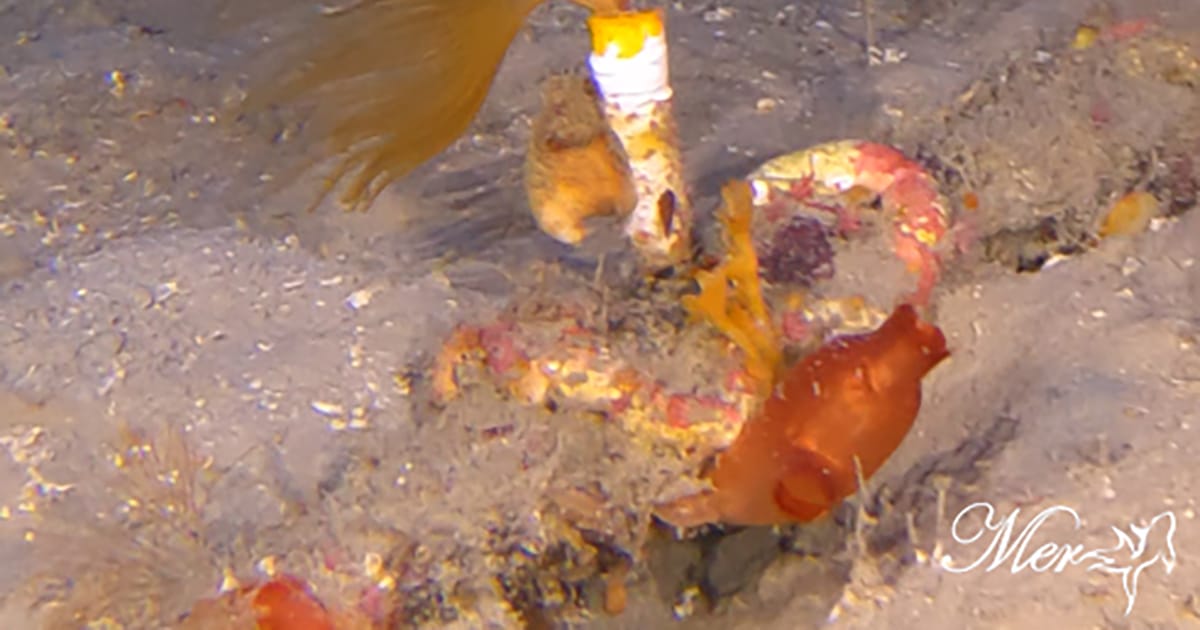
The surveys revealed extensive assemblages of sponges, corals, anemones, and other benthic organisms that create three-dimensional habitats and support rich marine life.
More than 200 species were recorded, including several not previously reported in Cyprus, many of them protected and/or threatened.
These mesophotic habitats act as biodiversity refuges and contribute indirectly to sustainable fisheries, strengthening the resilience of marine resources.
Despite the depth, the human footprint was evident. The team documented marine litter and lost fishing gear (ghost gear) that continue to affect marine life, marks from bottom-towed gear/trawling causing disturbance to sensitive habitats, the presence of alien species, and coral necrosis likely linked to ocean warming. These habitats develop extremely slowly and have limited capacity to recover once disturbed.
Unveiling the mesophotic zones of Cyprus. The MESOPHOS project. (Video credit: Marine & Environmental Research Lab)
The MESOPHOS findings confirm the presence of sensitive ecosystems at 50–200 meters and the pressures they already face.
There is an urgent need to adopt targeted protection measures such as spatial restrictions on damaging activities and active management/removal of litter and lost gear, together with long-term, systematic scientific monitoring.
Safeguarding this hidden natural wealth is essential for Cyprus’s marine heritage and for future generations.
The program was implemented by the Marine & Environmental Research (MER) Lab and funded by the Government of the United Kingdom through Darwin Plus (DPL00075).