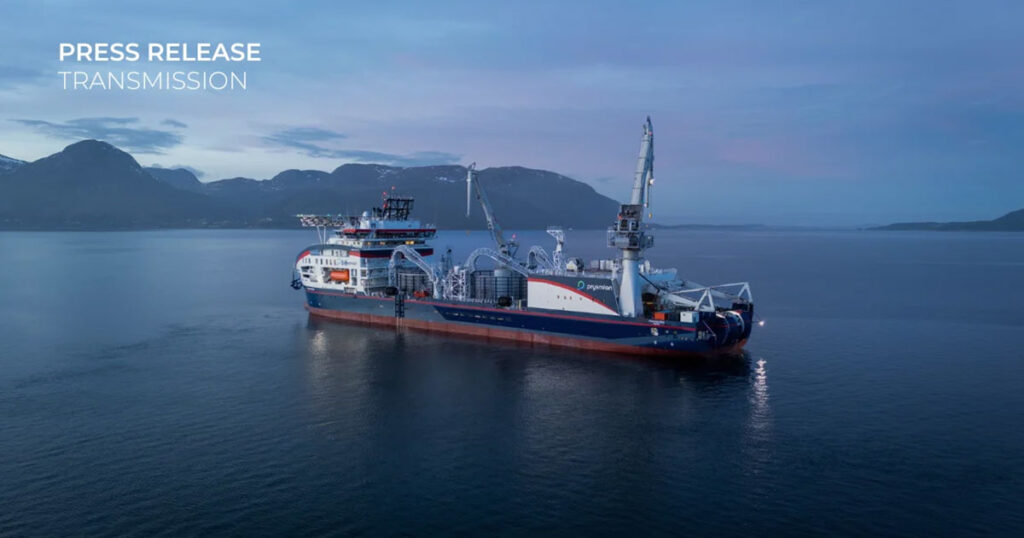
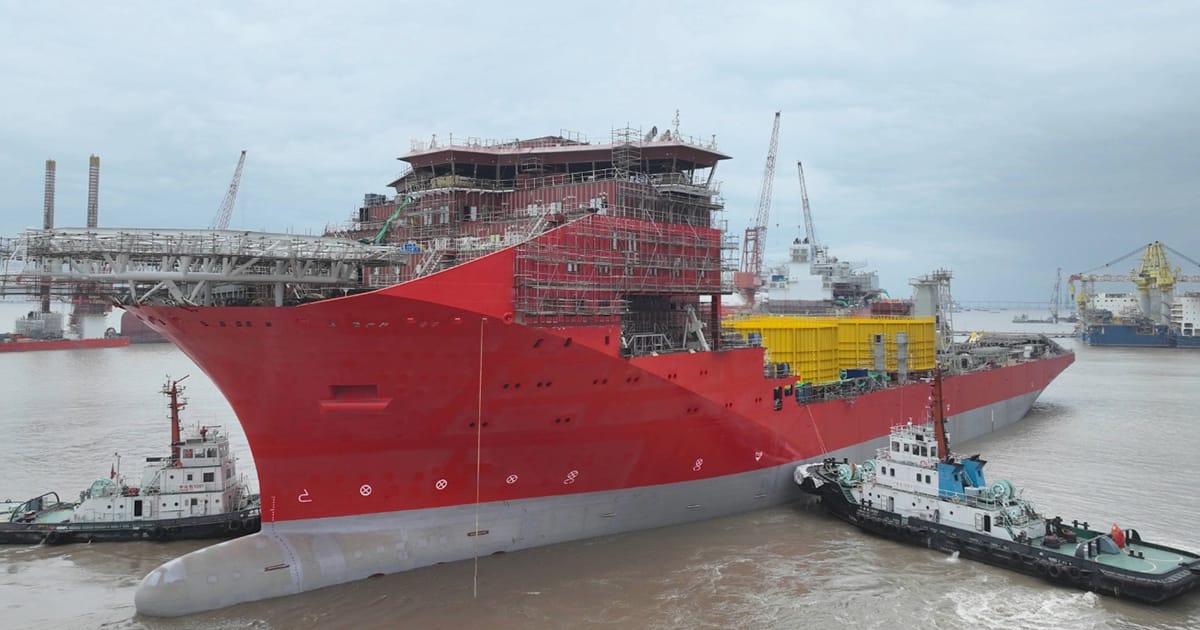
The launch took place by flooding the dry dock at the CMHI Haimen shipyard in China. The final vessel construction phase now begins, including sea trials.
With a loading capacity of 28,000 tonnes and a length of 215 meters, the Fleeming Jenkin is the largest cable-laying vessel in the world. She is specifically designed to install longer and heavier cables in ultra-deep waters up to 3,000 meters. Besides the Fleeming Jenkin, Jan De Nul is also building a second cable-laying vessel, the identical sister vessel William Thomson.
Wouter Vermeersch, Director Subsea Cables Offshore Energy at Jan De Nul: “The Fleeming Jenkin combines all the cable installation expertise we have built up over the past fifteen years. The entire vessel and the technologies on board were designed by our in-house specialists. The result is a vessel that operates very efficiently, reducing both the cost price and the ecological footprint of our projects.”
First Assignment
Once operational, the Fleeming Jenkin will immediately start her first assignment: the 2 GW Program by TenneT, the grid operator for the Netherlands and large parts of Germany. This 2 GW Program introduces a new generation of offshore grid connection systems that can each transmit up to two gigawatts. This is more than double the capacity of existing connections, usually between 700 and 900 megawatts. For comparison, an average nuclear power plant typically generates between 1 and 1.6 gigawatts. Fleeming Jenkin will install export cables on four of these 2 GW connections, bundling and laying four cables together. This results in a total of more than 2,800 kilometers of cable being installed over a distance of more than 700 kilometers.
Investing in a Reliable Energy Network
The global demand for subsea energy infrastructure is high. According to the European Network of Transmission System Operators for Electricity, around 400 billion euros will need to be spent by 2050 to build Europe’s transmission infrastructure for offshore energy, supporting Europe’s goal of 355 gigawatts of installed offshore wind capacity for renewable energy.
These investments are essential to make renewable energy reliable. Wind and solar production must match consumer demand, so energy must be transmitted efficiently. Subsea cables play a crucial role, bringing energy ashore and linking grids across countries and regions to balance shortages and surpluses.
Wouter Vermeersch: “The Fleeming Jenkin and her twin vessel William Thomson are the best vessels on the market for installing interconnection cables that connect energy grids over longer distances. These connections are crucial for building a reliable energy network based on renewable energy.”
Protection of Subsea Cables
Last week, Jan De Nul also announced a new vessel to protect subsea cables: the George W. Goethals. Due to their strategic importance, these cables can be a target for sabotage. The new vessel protects the cables with large rocks at a depth of up to 400 metres. It is Jan De Nul’s third rock installation vessel capable of transporting more than 30,000 tonnes of material.