
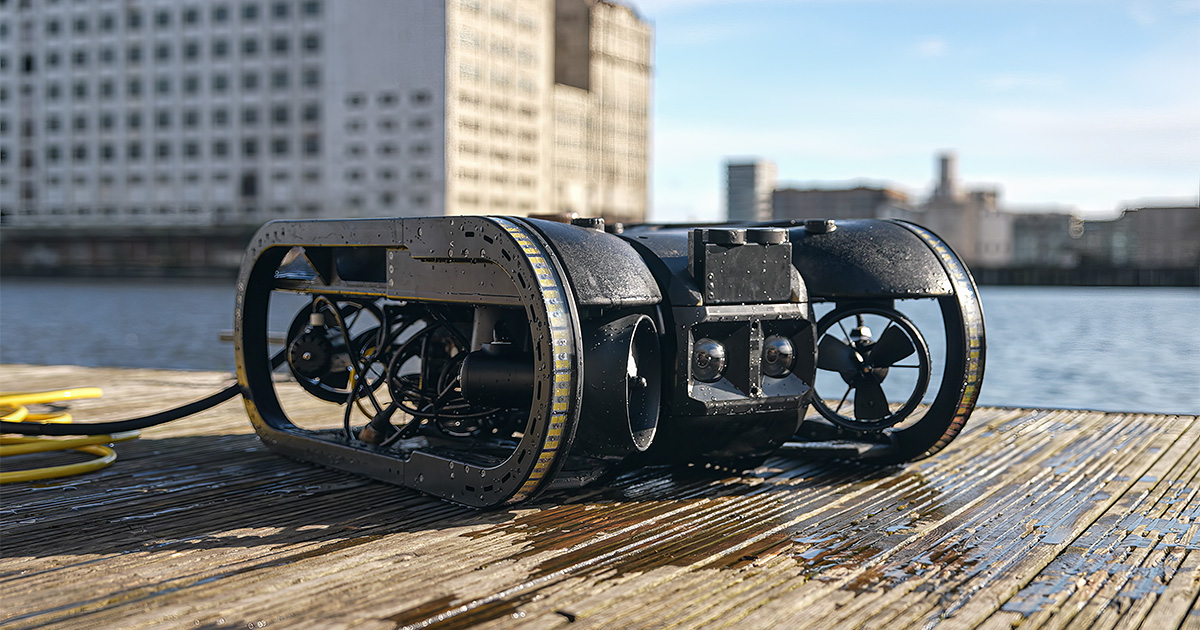
Deep Trekker’s portfolio of ROVs addresses these challenges by providing platforms optimized for offshore, subsea, and confined space inspections. The company’s vehicles are designed to maintain stability, deliver high-resolution data, and operate efficiently in harsh underwater environments.
At the core of Deep Trekker’s offshore capability is the SPECTRA ROV, which maintains stable station holding in currents up to 3 knots from any direction, with forward speeds exceeding 4 knots. Its seven-thruster, symmetrical configuration provides lateral movement speeds two to three times faster than comparable systems, enabling precise p p y g p inspection of subsea cables, splash zones, and port infrastructure despite crosscurrents and surface-driven turbulence.
Enhanced Operational Capacity
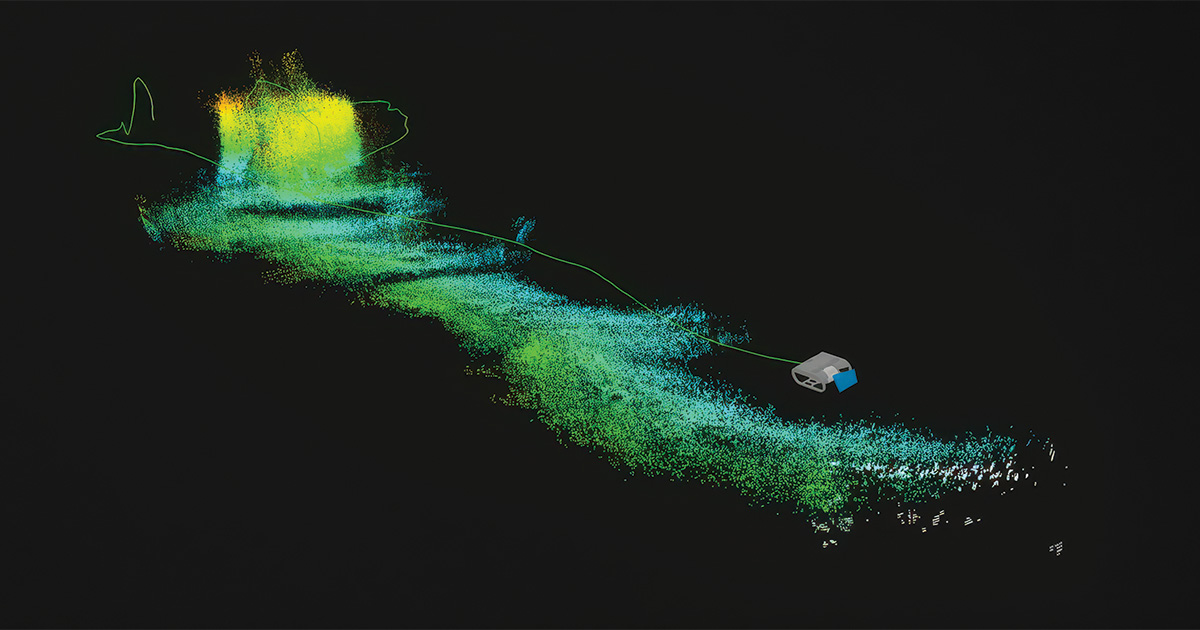
Spatial awareness is enhanced through real-time 3D Sonar SLAM, generating continuous point clouds while estimating vehicle position in GNSS-denied environments. Operators can visualize asset geometry during inspections, verify coverage in real time, and reduce the risk of incomplete datasets that require costly remobilization.
For condition assessment, SPECTRA ROVs incorporate factory-calibrated 4K stereo camera systems capable of producing metrically scaled 3D models without external markers. These systems support detailed inspections of cable protection systems, structural interfaces, and hull or harbor infrastructure, aided by powerful 300,000-lumen lighting that moves with the camera axis to maintain bright clarity in low-visibility water.
Operational efficiency is strengthened by onboard processing, eliminating the need for dedicated topside computing, and a modular design that allows thrusters, sensors, cameras, and power systems to be replaced in under 30 minutes—minimizing downtime during constrained vessel operations.
For defense applications, including port and harbor security, EOD support, and pre-dive reconnaissance, Deep Trekker ROVs provide stable maneuvering, increased payload capacity, and reliable positioning in dynamic environments. Repeatable survey paths, improved defect identification, and consistent documentation are supported across subsea and confined-space operations.
Expanding Portfolio
eep Trekker also offers the REVOLUTION, PIVOT, and PHOTON ROVs. The REVOLUTION features a rotating camera head with integrated sonar that can be repositioned independently of vehicle movement, ideal for high-current subsea inspections and industrial surveys. The PIVOT excels in tight, confined spaces like pipelines and tanks, while the PHOTON provides ultra-portable, high-resolution imaging for research and light industrial applications. The portfolio is complemented by the A-200 and A-150 pipe crawlers, VAC Utility crawler, and MAG crawler for inspections in pipelines, tanks, and complex infrastructure.
By combining robust ROV capability with advanced imaging and modular design, Deep Trekker enables operators to achieve controlled, repeatable inspections with high-quality data and minimal operational disruption.
For more information or to discuss your application, contact our team at [email protected] |deeptrekker.com