

Capabilities Align with Ambition
The defining advantage of USVs is scale, cost, and attritability. Traditionally, extending maritime coverage required more ships, more crew and more fuel. With USVs, scaling becomes a question of numbers rather than manpower. Fleets can be distributed across wide geographic regions, forming a network of sensors that monitor surface and subsurface domains. And if a sensor goes down, attrition is a feature not a failure in that the picture is not lost—a pixel is lost—and the network adapts. This approach aligns with the growing need for maritime domain awareness, where uncrewed systems complement crewed assets to enhance coverage while reducing cost and risk.
This is not theoretical. Around the world, governments are formalizing uncrewed capability as a central element of maritime operations: The United Kingdom through the Atlantic Bastion program suite; Australia through the SEA1200 program and establishment of its Maritime Autonomous Systems Unit; and the through US Golden Fleet concept, USV marketplace and other programs. Across NATO, signals are similarly clear.
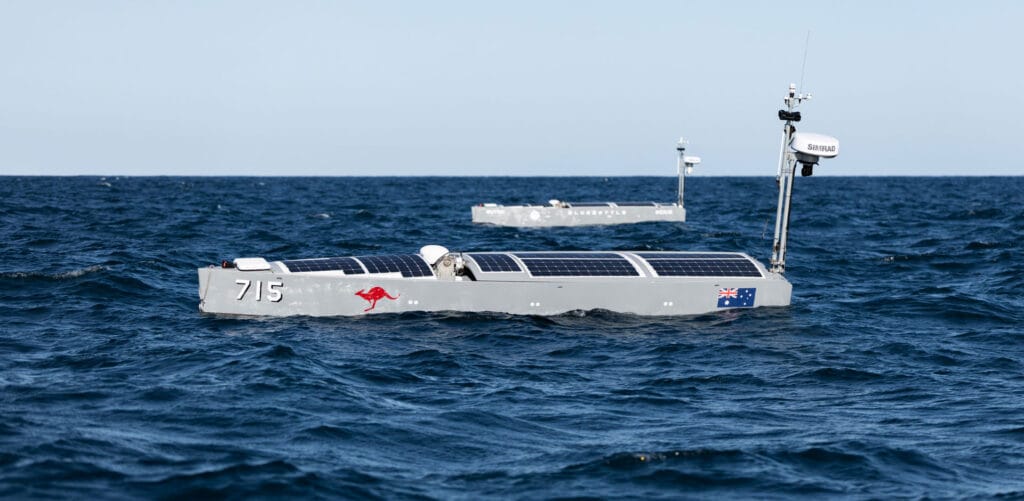
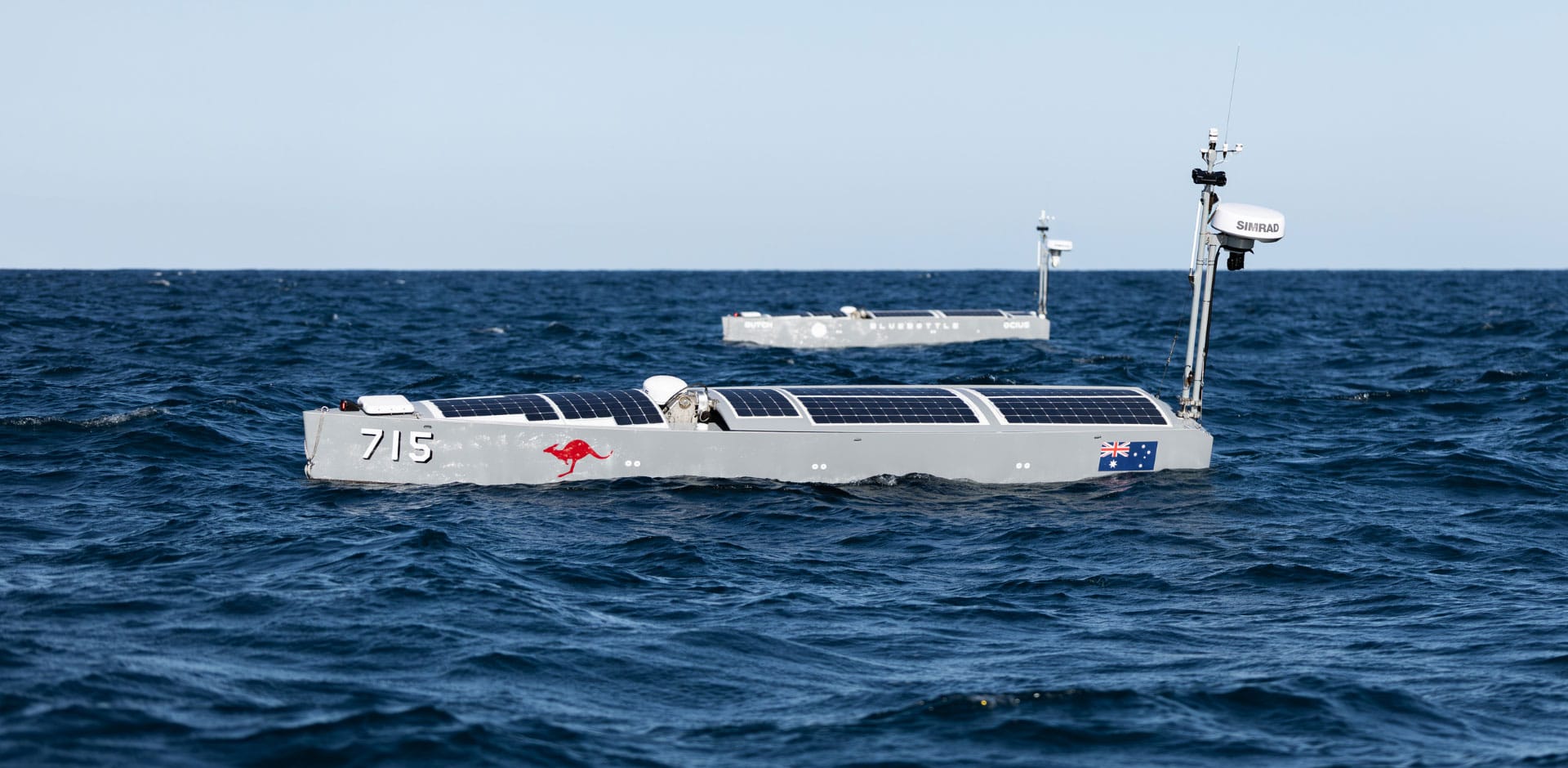
Renewable-powered platforms, capable of harnessing solar, wind and/or wave energy, such as Ocius’ Bluebottle USV, can remain on station for months at a time, operating autonomously with minimal logistical support. This fundamentally shifts maritime operations from episodic patrols to continuous presence. Bluebottle’s patented lowobservable design enables persistent surface and subsurface intelligence, surveillance and reconnaissance (ISR) across the maritime domain, delivering continuous over-thehorizon awareness. Instead of “snapshot” awareness, operators gain a pattern of life, persistent picture of activity across vast ocean areas.
Expanding Domain Awareness
This persistent, distributed model is particularly transformative for sub-surface detection. By deploying towed sonar arrays, USVs can contribute to anti-submarine warfare and undersea surveillance in ways previously reserved for highvalue platforms. Their low acoustic signature and low observability provide a unique advantage for quiet, continuous monitoring of underwater activity.
The value of scalable USVs extends well beyond defense. Hydrographic mapping can be conducted over extended periods without the need for crewed survey vessels, significantly expanding coverage. Similarly, USVs can support environmental monitoring, fisheries management and climate observation, collecting real-time data across regions that were previously too remote or costly to survey.
Integration Remains the Focus
What ties these applications together is not just autonomy, but integration. Modern USVs are increasingly networked, capable of transmitting data in real time and forming part of a broader digital maritime ecosystem. In this sense, they function less like individual vessels and more like “satellites of the sea”, forming distributed assets that extend the reach of maritime awareness to previously unmonitored regions.
The question is not whether USVs have a role to play, but how quickly they can be scaled and integrated. Governments, industry and scientific organisations are all confronting the same reality: the oceans are too vast, and too strategically important, to monitor using traditional methods alone.
As adoption of USV accelerates, they will not replace crewed platforms, but augment them. In the process, they will create a more resilient, responsive and informed approach to understanding and managing the maritime domain.