
The river quickly dismantled that assumption. The Ganga’s optical visibility runs to ten or fifteen centimeters. Tidal bores, constant turbulence, and heavy silt render any optical system effectively blind. The answer was sonar—but sonar in a turbulent, siltheavy tidal river is a different challenge from sonar in open water. Solving for imaging meant solving for everything around it: vehicle stability, operator interface, and field-deployable command infrastructure.
Cost-effective Solution
High-end multi-beam sonar systems delivered the performance—but not at a price point that could scale across India’s disaster management sector. Cerulean Sonar changed that equation. After encountering Cerulean’s forward-looking sonar through an Instagram video, Swarnab ordered a unit to validate it firsthand. The science was sound; the price point was viable. In environments they couldn’t control, Banergy made the call: bet on the technology.
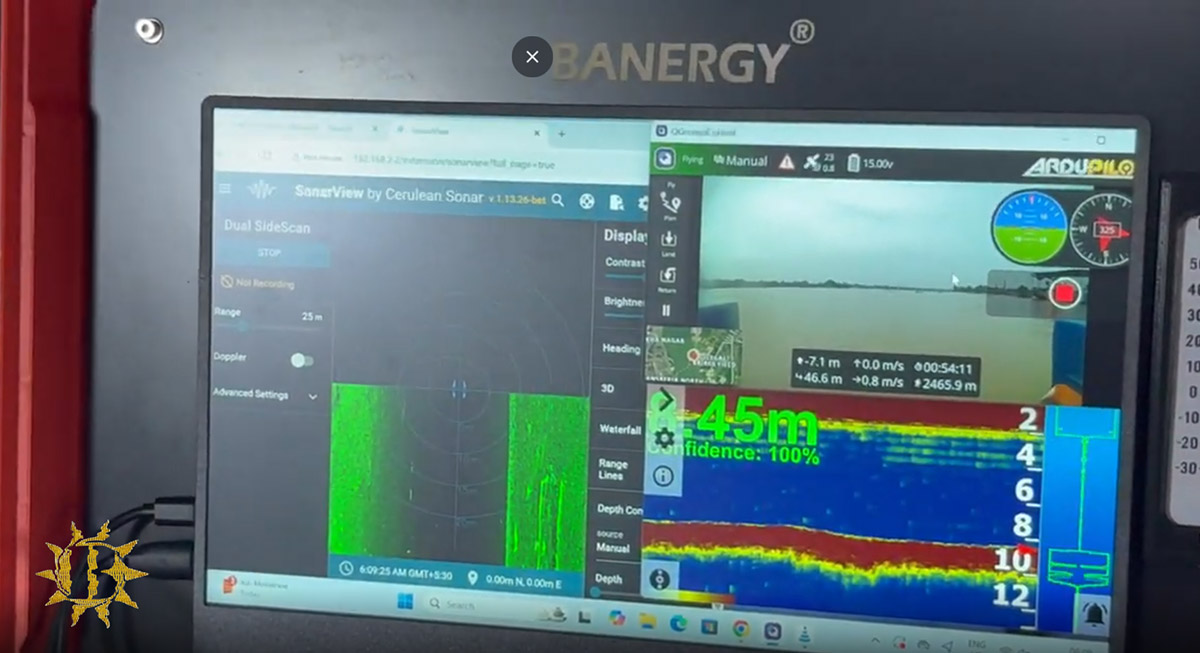
That bet held. Cerulean’s sonar threads through every layer of Banergy’s operational system—mounted on unmanned surface vessels for rapid riverbed mapping, integrated into ROVs for precise target investigation, and compact and affordable enough to deploy at the scale Indian government programs actually require.
Real-world Results
Before Banergy, search-and-recovery in a tidal Indian river meant manual radial search patterns, narrow tidal windows, and divers descending into zero-visibility water on a best guess. Typical mission time: three to four days. Night operations: impossible.
With the system deployed, that calculus inverted. The longest single mission Banergy has run concluded in hours. In Operation Basanti—recovery of a capsized 30-foot trawler—the system delivered GPS coordinates, vessel orientation, and precise diver attachment points. A diver descending without that information is searching. With it, they’re executing a plan.
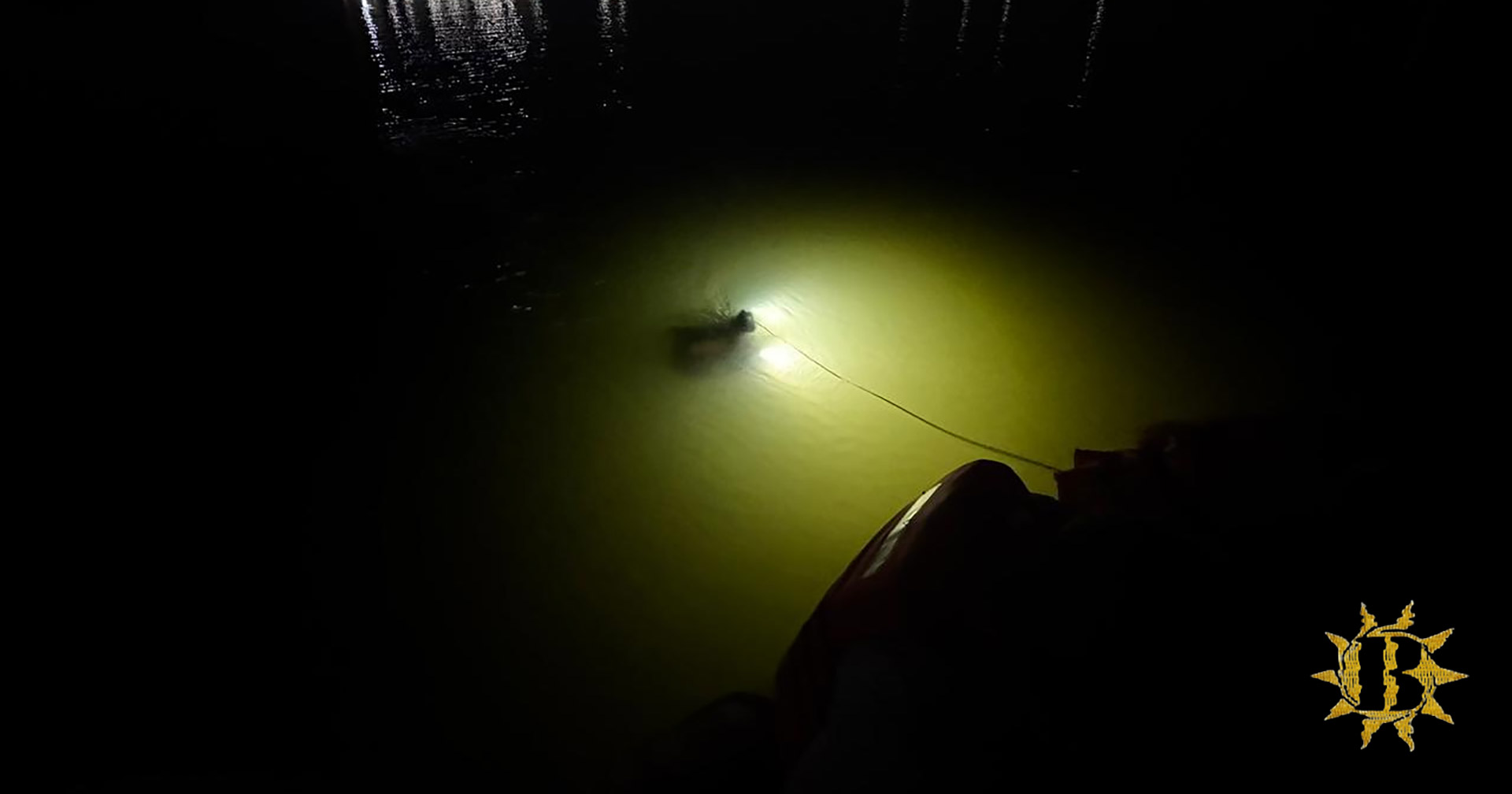
In one operation, a high-value sonar unit lost in the river was located, assessed, and recovered in four and a half hours—starting at 4 am in a thunderstorm, against a commander’s estimate of 72 hours. Sonar rescued sonar.
Built to Scale
Operational capability alone is not enough. Banergy built the knowledge infrastructure to match—a standardized training program modeled on military aviation procedure, ensuring any two certified operators share a common language and can work together immediately on arrival at an incident.
The longer-term vision is preemptive: robotic systems permanently stationed at India’s sacred river ghats, already in the water before an incident is reported. Cerulean’s combination of field-proven performance and accessible economics is foundational to that vision—it’s what makes permanent, scaled deployment viable rather than theoretical.
This is a market Banergy is building. And the technology making it possible is already proven in the hardest conditions it will ever face.